Ukraine’s largest drone barrage on Moscow in more than a year shows how volatile this war remains—and why Americans cannot afford more global chaos or blurred facts.
Story Snapshot
- Ukraine launched hundreds of drones at Russia, with Moscow suffering its biggest attack in over a year.
- Russian authorities report at least three to four deaths and more than a dozen injuries near the capital.
- Air defenses reportedly intercepted most drones, but some still hit residential and industrial sites.
- Conflicting casualty and damage claims highlight how hard it is to know what is really happening on the ground.
Massive Overnight Drone Raid Pushes War Deeper Into Russian Heartland
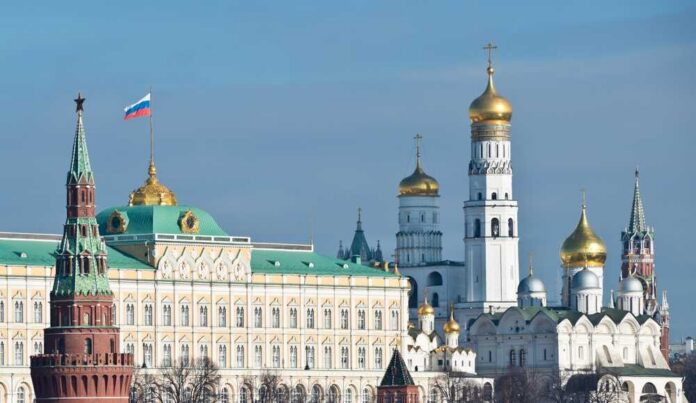
Russian officials say Ukraine unleashed one of the war’s largest drone attacks overnight, sending hundreds of unmanned aircraft toward Moscow and other regions across Russia. Local authorities reported at least three people killed in the Moscow area and a fourth in the Belgorod border region, along with more than a dozen wounded as drones or debris struck homes and apartment blocks around the capital.[3] This was described as Moscow’s most intense aerial assault in more than a year, underscoring how long-range strikes now define this grinding conflict.[3]
Russia’s Defense Ministry claims its air defenses destroyed more than 550 Ukrainian drones nationwide during the raid, suggesting only a fraction made it through to actual targets.[1][4] Moscow’s mayor said 81 drones aimed at the capital were shot down since midnight, yet even with those interceptions, several sites around the city were still damaged, including residential buildings and industrial facilities.[3][5] This “many launched, few confirmed hits” pattern fits the broader drone war: high volume, intense headlines, but murky data about what really got through and what was stopped.[1][2]
Civilian Casualties, Damaged Buildings, And Airport Disruption Near Moscow
Reports from Russian regional officials and international outlets converge on at least three deaths in the Moscow region, including a woman killed when a home was hit in the suburb of Khimki and two men killed in the nearby village of Pogorelki.[3][5] Injuries range from 12 to 16 people, many linked to damage near an oil refinery and hits on residential high‑rises.[3][5] Several apartment buildings, houses, and cars in outlying districts such as Istra and Naro‑Fominsk were also damaged, reinforcing that this strike reached deep into the capital’s outer ring.[3]
Moscow’s Sheremetyevo Airport, the country’s largest, reported that drone debris landed on its territory, forcing suspensions and disruptions to hundreds of flights before operations resumed.[3][4] Even without catastrophic airport destruction, that level of disruption near a strategic transport hub shows how drone warfare can rattle critical infrastructure with relatively cheap systems. For Americans who watched our own airspace shut down over a single Chinese spy balloon, the idea of swarms of drones menacing a major city is a sobering reminder of modern vulnerabilities.[4]
Military Targets, Symbolic Messaging, And Competing Narratives
Ukrainian President Volodymyr Zelensky framed the strike as proof that Ukrainian “long‑range sanctions” had reached the Moscow region, signaling to both Russians and Western audiences that Ukraine can hit far‑behind‑the‑front infrastructure.[3] Commentators and secondary reports point to a mix of alleged targets: the Kapotnya oil refinery near Moscow, the Anstra factory in Zelenograd, and fuel storage facilities across Moscow’s broader region.[1][5][6] Ukraine’s military objective, according to these accounts, is to degrade Russian capacity to wage war by stressing energy and industrial nodes rather than simply terrorizing civilians.[5]
Russian authorities counter with a different story: that most of the hundreds of attacking drones were intercepted, that damage was limited, and that the main visible effects were debris and defensive activity rather than successful hits on hardened sites.[1][2][4] Their Defense Ministry cites 556 or more drones downed across the country, but offers no public radar logs or engagement records to substantiate those numbers.[1][4] Meanwhile, Western outlets and independent footage confirm only a limited number of specific impact locations, leaving both sides room to spin this as either a devastating demonstration of reach or a largely contained raid with tragic but limited fallout.[1][2]
Information Fog, Wartime Censorship, And What Americans Should Watch
Al Jazeera and other outlets report that Moscow authorities banned journalists and emergency workers from posting images of drone strikes or their aftermath, limiting outside verification of both damage and interception claims.[3][6] At the same time, many dramatic details about supposed refinery fires or destroyed storage tanks come from YouTube commentators and recap channels rather than primary documents, satellite imagery, or on‑site forensic reports.[1][4][5][6] That mix of censorship on one side and social‑media hype on the other makes clear numbers about casualties and damage hard to pin down with confidence.
#Breaking ;
#Ukraine carried out a massive overnight drone assault on Moscow and surrounding areas, described by #Russian officials as the biggest attack on the capital in more than a year.Russia’s Defence Ministry said 556 Ukrainian drones were intercepted across the… pic.twitter.com/lFyfya4kPd
— PolicyInsights (@Policyinsts) May 17, 2026
For an American conservative audience, this chaotic information environment has real implications. First, it drives home why Washington must avoid sleepwalking into escalation based on incomplete or politically spun “intel” pushed by either Moscow or Kyiv. Second, it highlights the need for a strong but focused United States—one that secures its own borders, energy grid, and airspace before writing more blank checks abroad. Finally, it reminds us why free speech and a skeptical press are essential; without them, citizens cannot hold leaders accountable when war narratives are shaped more by censorship and algorithms than by hard facts.[3][4]
Sources:
[1] YouTube – Ukraine targets Moscow with ‘massive’ drone attack, killing …
[2] YouTube – Ukraine pounds Moscow in blistering drone attack in huge …
[3] YouTube – One of Ukraine’s largest drone attacks kills 3 in Moscow …
[4] YouTube – Ukraine Fires 600 Drones at Russia in ‘Largest Attack in a …
[5] YouTube – Ukraine launches one of its biggest-ever drone strikes on …
[6] Web – ‘Largest’ Ukraine drone strike of war hits Moscow leaving …