
Democrats are building another pre-Election Day lead in key battlegrounds, raising the stakes for Republicans to match it on Election Day turnout.
Story Highlights
- Reports show Democrats leading early votes in several competitive states, echoing past patterns.
- Arizona and Pennsylvania previously showed large Democratic shares of early ballots.
- Georgia logged record early, in-person turnout in a recent midterm cycle.
- Experts caution early votes signal voting mode, not final results.
Early Voting Patterns Show Democratic Lead In Battlegrounds
The Hill reported that Democrats are outpacing Republicans in early voting across multiple battleground states, with gains compared to past cycles where Democrats also led the pre-Election Day vote. That pattern mirrors earlier cycles in which early ballots skewed blue in Arizona, Nevada, and Pennsylvania before Democrats won marquee Senate races. These reports track ballots cast before Election Day and compare partisan composition where state or modeled data are available.
CNN previously cited Catalist data showing Arizona pre-election ballots tilted toward Democrats by registration, with Democrats at 44 percent and Republicans at 33 percent in 2022. In Pennsylvania at a similar point, Democrats accounted for 73 percent of early ballots, while Republicans accounted for 19 percent, according to the same dataset. Those figures reflected who voted early by party registration or model, not confirmed candidate choice, but they showed clear mode preferences.
Georgia’s Heavy Early Turnout Highlights Scale, Not Party
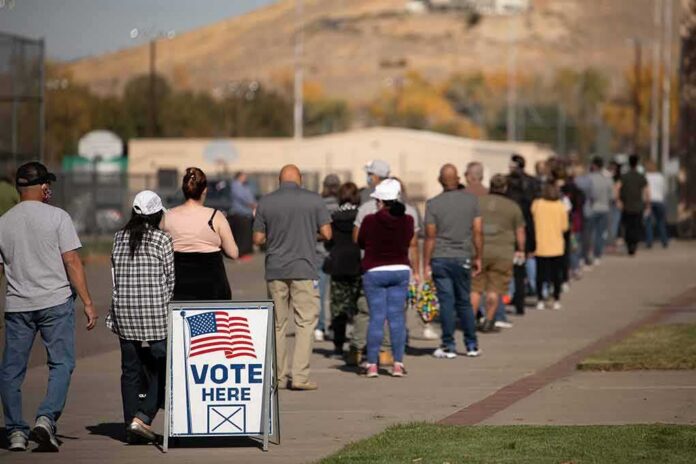
The Georgia Secretary of State reported an all-time midterm early turnout record, with 2,288,889 voters casting early ballots through November 4 in 2022, including 231,063 on the final day. That official figure proves the size of the early vote, but it does not show partisan breakdown or candidate support. High early participation creates a large voter pool, yet it does not reveal whether Democrats or Republicans gained more net votes from those ballots.
The Hill’s reporting underscores that Democrats often rely more on mail and early in-person votes, while many Republicans prefer to vote on Election Day. That split affects the public picture in the final weeks. Large early numbers can look like momentum for one side even when the other side plans a late surge. Campaigns in both parties now organize their field work around these known timing habits.
What Early Votes Do—and Do Not—Tell Us
Early vote counts show when people vote, not simply which side will win. Analysts warn that early voting measures ballot timing and method more than overall turnout or final margins. Party-registration snapshots can overstate a lead if the other party concentrates votes on Election Day. Early leads also mix mail ballots and early in-person ballots, which do not perform the same in every state due to rules and voter habits.
Academic research adds context on turnout effects. One well-known study of the 2004 and 2008 elections linked stand-alone early voting to lower overall turnout, while Election Day registration raised turnout, suggesting timing rules can shift, rather than expand, participation. A congressional legal memorandum summarized similar findings, citing turnout reductions of several points from early voting when not paired with other reforms. These studies do not predict winners; they explain how voting rules can reshape behavior.
Why Republicans Care About Closing The Early Gap
Republican leaders and activists remember past cycles where Democrats banked votes early and survived Election Day swings. Reports again show Democrats leading the pre-Election Day count in key states this year, which pressures Republican campaigns to either chase mail ballots, expand early in-person operations, or deliver a strong Election Day turnout to offset the early gap. The math is simple: ballots in the box cannot be lost to late-breaking events or bad weather.
For readers, here is the bottom line. Early voting trends can map campaign strategy and energy, but they do not lock the final outcome. Democrats often front-load votes, which shapes headlines. Republicans can still win by turning out their voters when polls open on Election Day. Stay focused on casting your ballot on time, helping neighbors vote legally and securely, and supporting robust election integrity so every lawful vote counts.
Sources:
thehill.com, apnews.com, cnn.com