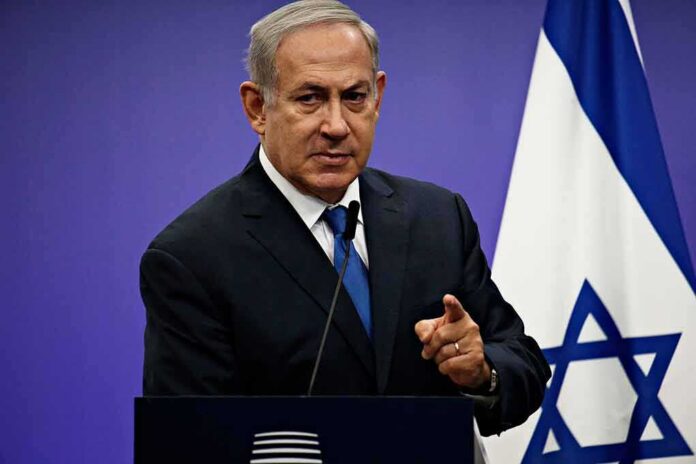
Israel’s central bank publicly rejected Prime Minister Benjamin Netanyahu’s talk of using cryptocurrency to dodge sanctions, igniting a fight over money, sovereignty, and control.
Story Highlights
- Netanyahu said advisers are studying cryptocurrency and blockchain as a backup if banking sanctions hit Israel.
- The Bank of Israel said crypto cannot bypass sanctions and urged focus on key trade ties.
- Opposition leaders and economists warned of damage to investment, jobs, and Israel’s tech sector.
- Netanyahu later said crypto is only one option and may not be used at all.
Netanyahu Floats Crypto as Sanctions Contingency
Prime Minister Benjamin Netanyahu said Israel must prepare for possible banking sanctions and confirmed he asked advisers to study cryptocurrency and blockchain as part of a contingency plan. He framed the move as planning, not a switch to a new currency. Reports describe blockchain as a decentralized system that does not rely on a single central authority, which is why it is being explored as a fallback channel. His remarks pushed a once-technical debate into Israel’s prime-time politics.
Netanyahu later clarified that crypto is only one option among many and might not be used. He said the effort is about readiness, not about replacing Israel’s financial system. That position leaves room for other tools and signals a focus on resilience over radical change. Still, the idea of building a “bypass economy” set off alarms across Israel’s financial class and among his political opponents, who warned of serious economic risks if sanctions materialize.
Central Bank Rebuffs Crypto Workaround Claims
The Bank of Israel responded with a direct public warning. The central bank said cryptocurrency cannot be used as a route to bypass sanctions. It urged the government to keep strong ties with major trading partners and to focus on preventing sanctions in the first place. That message carries institutional weight and undercuts the idea that digital coins could replace the functions of global banks and providers under pressure.
The bank’s stance aligns with past global enforcement trends. When sanctions bite, regulators extend rules to new intermediaries and exchanges. Even if a blockchain can move tokens, businesses still need banks, insurers, shipping, and legal clearance to receive goods. Critics say that is the real choke point. They argue a crypto ledger does not solve acceptance by foreign companies that must follow compliance rules or risk penalties, fines, or loss of licenses.
Opposition and Economists Warn of Isolation Costs
Opposition leaders argued the idea would isolate Israel, scare off investors, and choke the tech sector. They said no serious overseas buyer will pay in tokens to avoid banks. They warned that pensions and investments could suffer, jobs could fall, and national security could weaken if Israel pivots toward a sanctions workaround image. A group of 109 economists, executives, and former officials expressed deep concern and said broad sanctions would raise unemployment and tank foreign investment.
These critics tied the risk to real-world trade. They asked how an Israeli tech firm would reliably get paid without normal banking rails. They stressed that major companies answer to compliance departments and regulators. They will not risk secondary sanctions to accept coins that must still be cashed out somewhere. That argument lands with business leaders who know settlement, custody, and insurance remain linked to the regulated financial system.
What Is Known, What Is Missing, and Why It Matters
Public reporting does not show a detailed plan. There is no published design, team list, budget, or legal framework. Some officials reportedly said they were unaware of a formal initiative. That gap makes it hard to judge how any crypto channel would work at scale or prove it is better than existing tools in a crunch. Supporters frame the study as prudent planning. Opponents call it a reckless signal that invites economic isolation.
For American readers, this fight is a warning about policy that tries to outrun markets and regulators. Sanctions are tools that rely on control points: banks, payment firms, insurers, ports, and energy networks. Crypto can move value, but it does not force a supplier to ship goods or an insurer to cover cargo. If a nation bets on a crypto end-run, it may still hit the same compliance wall. Planning is wise; promising a magic exit is not.
What Conservatives Should Watch Next
Conservatives should watch three things. First, whether Israel publishes any technical or legal blueprint with clear guardrails. Second, whether major partners signal they would accept any crypto-based payments without violating sanctions law. Third, whether central banks and regulators tighten rules on wallets, mixers, and exchanges again. Those steps would test the claim that crypto can keep trade flowing when politics turn hard, or whether it remains a niche lane for limited activity.
Sources:
middleeasteye.net, en.bloomingbit.io, israel.com, thejc.com