

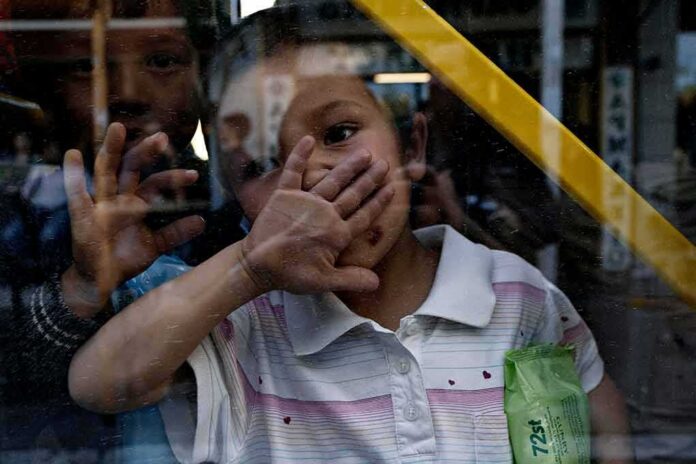
Federal watchdogs say too many migrant children vanish from government oversight after release, raising fresh safety alarms and demands for accountability.
Story Highlights
- Federal audits document gaps in sponsor vetting and post-release follow-up for migrant children.
- Homeland Security’s Inspector General says Immigration and Customs Enforcement cannot always track released children.
- Senate Republicans reported weak cooperation with trafficking probes and missing address data from Health and Human Services.
- Evidence shows risk exposure inside the system but does not prove return to home countries is safer.
What federal watchdogs found about child safety gaps
Health and Human Services’ Office of Inspector General reviewed sponsor safety checks and post-release contact for unaccompanied children. Investigators found case files missing required screening documents, and many releases occurred while background checks were still pending. Some files never recorded the check results later. Those gaps leave children less visible to caseworkers after placement and raise clear safety concerns documented in the audit’s measured, specific findings. The report urged tighter screening, better records, and a follow-up system when outreach fails.
The Department of Homeland Security’s Inspector General reached a related conclusion about oversight after release. The audit said Immigration and Customs Enforcement cannot always monitor the location and status of unaccompanied children once they leave federal custody. That weakness affects basic tracking, court appearance support, and welfare checks. When the government cannot confirm where a child is, it cannot confirm if the child is safe. The report presses agencies to close those monitoring gaps and improve data integrity.
Where the system breaks down after release to sponsors
Sponsor vetting is supposed to verify identity, screen for abuse records, and confirm safe housing. The Health and Human Services audit found that some case files lacked proof that all required checks were done, and some releases moved forward before checks were finished. Missing updates later meant no clear record of results. These are not abstract errors; they are preventable process failures. They make it harder to spot a risky sponsor, to intervene quickly, or to help a child who misses a check-in call.
Post-release contact should be routine and documented. When calls are not answered, there should be a defined next step. The Inspector General recommended a mechanism to flag and follow up on children who do not receive timely contact. That is common sense. Families expect the federal government to at least know if a child is reachable. These audits show that paperwork shortcuts and weak data systems can produce blind spots that bad actors exploit, while also failing well-meaning sponsors who need guidance.
Trafficking probes and the fight over information sharing
Congressional oversight added another red flag. A Senate Health, Education, Labor and Pensions Committee statement said Homeland Security briefed Senator Grassley that the Office of Refugee Resettlement did not fully comply with many subpoenas or requests in trafficking investigations. The statement said investigators lacked last-known addresses for children and sponsors and did not receive identities of other household members. That kind of missing data slows any welfare check or rescue effort.
These congressional claims are advocacy statements, not court findings. But they align with the core audit picture: weak records and slow information flow undermine child safety and public trust. Law enforcement needs timely addresses and household details to knock on doors, confirm welfare, and pursue leads. If agencies hold back or cannot produce reliable data, children pay the price. That is why transparency, fast cooperation, and firm accountability matter to every parent and grandparent reading this.
What the evidence shows—and what it does not
The watchdog reports prove real failures in screening, follow-up, and tracking. They do not prove that every unlocated child was trafficked, and they do not prove that return to home countries would be safer. Policymakers should avoid inflated numbers and stick to what is known. The immediate job is to fix screening, confirm contact, and share records quickly when risk appears. That approach protects kids, upholds the rule of law, and respects taxpayers.
The debate will continue. Advocacy groups warn that rapid return can also be dangerous for some children. That point underscores a basic truth: safety decisions must rest on verified facts, not hopes or slogans. Until agencies close the gaps the auditors identified, the system invites risk and erodes trust. President Trump’s team can act now: complete checks before release, document results, track outcomes, and deliver data to investigators without delay.
What comes next for parents, taxpayers, and Congress
Congress should demand child-level outcome reporting that links screening to confirmed results, including safe reunifications, abuse findings, or trafficking referrals. Agencies should audit all releases made before checks were complete and disclose how many were later flagged. Homeland Security and Health and Human Services should build a shared, auditable record that shows where a child is, who answered, and what happens after a missed contact. These are practical, constitutional steps, not politics.
Americans love children and hate exploitation. Most sponsors are family who want to help, and they deserve a system that works. That starts with basics: verify, document, follow up, and share. When government does the fundamentals, predators have fewer shadows to hide in, and honest families get faster support. That is the path that protects kids, guards the public purse, and restores confidence in our borders and our values.
Sources:
npr.org, oig.hhs.gov, congress.gov, msmagazine.com