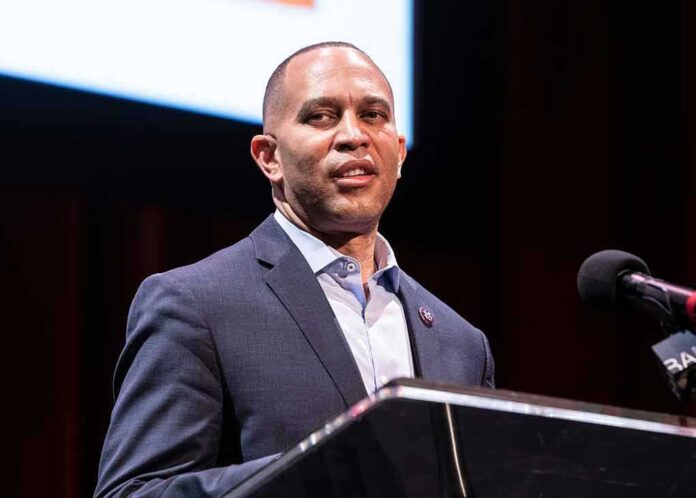
Top House Democrats talk tough on “accountability,” yet dodge clear answers on impeaching President Trump or his team as they size up their new power.
Story Highlights
- Hakeem Jeffries says Democrats will focus on affordability and “accountability,” not promise impeachment on day one.
- Jeffries also says Democrats have not ruled impeachment in or out and will “follow the facts”.
- Media reports note some Democrats weighed impeachment talk, but leaders downplayed it after the election.
- Analysts warn impeachment fights are risky, lengthy, and rarely end in removal by the Senate.
Democrats Signal Power Shift While Sidestepping an Impeachment Pledge
House Democratic Leader Hakeem Jeffries said Democrats would put affordability and accountability first after winning the House. He did not commit to impeaching President Trump or any official. He said the caucus would follow the facts, apply the law, and be guided by the Constitution before choosing next steps. He repeated that affordability issues like housing, health costs, and energy prices would be front and center, keeping impeachment off any public day-one agenda.
Jeffries also drew a clear line on process. He said Democrats have not ruled impeachment in or out. He framed impeachment as a constitutional tool that requires evidence and care, not a campaign slogan. A joint Democratic leadership statement earlier described impeachment as a “sacred” vehicle for abuse of power cases, while stressing the party would focus on lowering costs and using available oversight tools. That stance leaves room for probes but avoids a guaranteed impeachment timeline.
Mixed Signals: Base Rhetoric Versus Leader Discipline
Post-election media chatter suggested some Democrats were preparing impeachment paths. Yet Jeffries told reporters that no member of his caucus had raised impeachment with him, and he emphasized affordability and accountability instead. That gap shows a split between activist pressure and leadership caution. Coverage also noted Democrats worry an impeachment push could backfire and help Trump politically, a fear some outlets echoed after the so-called blue wave. Leaders appear to be cooling passions, not stoking them.
Outside voices on the left and right have fueled expectations anyway. Liberal commentators framed a Democratic House as holding the constitutional levers for subpoenas, hearings, and articles of impeachment. Conservative voices warned that a quick impeachment could energize Trump’s voters and distract from inflation, border security, and crime. Historical guidance backs caution: impeachment is rare, complex, and full of political risk that can reshape public opinion and stall real policy work.
What Oversight Could Look Like If Democrats Move
Committee control would let Democrats call witnesses, demand records, and hold hearings. That power could target policy disputes, ethics claims, or national security decisions. Jeffries’ words suggest they will build any case, if one emerges, by gathering facts first and matching claims to law and the Constitution. That means months of document fights and depositions, not show votes. It also means the White House will answer, point by point, under oath or in writing.
Senate math still decides removal. Conviction needs a two-thirds vote, a bar rarely met in American history. Analysts describe impeachment as a delicate, time-consuming process with heavy political and legal tradeoffs. For conservatives, that means a House impeachment would likely become a messaging war, not a removal. The smarter fight will be policy: energy costs, the border, crime, and spending. Voters feel those every day. That is where Republicans can win ground fast while Democrats argue over probes.
Sources:
washingtonexaminer.com, heraldtribune.com, ohio.binnews.com, huffpost.com, cambridge.org