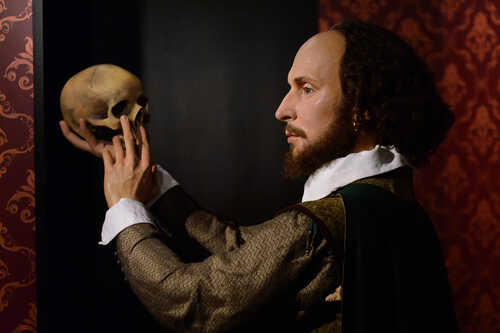
In a surprising twist that has reignited the decades-old Shakespeare authorship debate, a feminist historian is making a bold claim: the true author of Shakespeare’s celebrated works was not the man from Stratford-upon-Avon, but a Black Jewish woman named Emilia Bassano. This assertion, laid out in a new book, alleges that systemic racism and misogyny erased Bassano’s legacy, favoring a white male narrative. The controversial claim has sparked intense discussions, with critics questioning the evidence and warning of “woke history’s” impact on traditional scholarly research.
Story Highlights
- A new book claims Shakespeare’s works were authored by Emilia Bassano, a Sephardic Jewish woman.
- Feminist historian Irene Coslet asserts the historical misattribution is rooted in racism and misogyny.
- Critics argue the lack of evidence and the controversial nature of the claim.
- This revelation has stirred discussions on “woke history” and its impact on traditional narratives.
Historian’s Bold Claim on Shakespeare’s Identity
In January 2026, feminist historian Irene Coslet published The Real Shakespeare, asserting that the true author of Shakespeare’s plays was not William Shakespeare but Emilia Bassano. Bassano, England’s first published female poet, is described by Coslet as a Sephardic Jewish woman of North African descent. This claim challenges the long-held belief of Shakespeare’s authorship, attributing the misattribution to systemic racism and misogyny that favored a white male narrative.
Coslet’s assertion has reignited the Shakespeare authorship debate, a controversy dating back to the 19th century. Detractors question the evidence backing her claims, noting that prior theories about Bassano focused on her Jewish heritage and court connections without suggesting African descent. Critics argue that Coslet’s narrative may be ideologically driven, aimed at challenging Eurocentric historical perspectives.
Shakespeare Was a Black Jewish Woman – Claims Feminist Historian https://t.co/Fd045kANgK Why does this madness continue?
— m o d e r n i t y (@ModernityNews) January 26, 2026
The Backlash and Skepticism
Historians and scholars have expressed skepticism about Coslet’s claims due to a lack of concrete evidence supporting the notion of Bassano’s African ancestry. Rafal Heydel-Mankoo, a historian, criticized the book on TalkTV, dismissing the theory as speculative and lacking factual basis. He emphasized that historical records and portraits of Bassano depict her as having Venetian and English roots, with no indication of African heritage.
Despite the backlash, Coslet’s book has gained attention for its provocative take on historical narratives, appealing to those interested in re-evaluating traditional interpretations through a social justice lens. However, the mainstream academic community continues to view the assertion as a fringe theory, unlikely to alter the consensus on Shakespeare’s authorship.
Implications and Ongoing Debates
The release of The Real Shakespeare has fueled ongoing debates about the role of identity politics in historiography. Short-term, the book has sparked discussions on “woke history,” with critics warning of the potential erosion of trust in scholarly research. Long-term, it remains to be seen whether such claims will gain traction or remain a controversial footnote in the broader Shakespeare authorship discourse.
As the debate continues, the conversation around the book highlights the tension between traditional academic narratives and contemporary efforts to address historical biases. While the claim of Shakespeare being a black Jewish woman may be dismissed by many scholars, it underscores the ongoing interest in revisiting and challenging established historical accounts.
Watch the report: Woke Historian Claims Shakespeare Was ‘Black Jewish Woman’
Sources:
William Shakespeare was a ‘Jewish woman of north African descent’
Emilia Lanier theory of Shakespeare authorship
Reform Judaism: Were Shakespeare’s Plays Actually Written by a Jewish Woman?
Shakespeare was black writer Emilia Bassano, new book claims