Iran’s proxy network is turning the Red Sea into a second choke point—just as Iran squeezes the Strait of Hormuz—putting global energy prices and American wallets back in the crosshairs.
Story Snapshot
- Houthi leader Abdul Malil al-Houthi warned of military action against shipping near a key Red Sea strait tied to oil and LNG flows to Europe.
- Iran’s pressure on the Strait of Hormuz has already slashed tanker traffic by an estimated 70–80%, threatening a route that carries about 20% of global oil supply.
- Oil prices have surged above $100 a barrel as markets price in the risk of simultaneous disruptions at two major maritime chokepoints.
- Saudi Arabia has increased exports from its Red Sea terminal at Yanbu using pipelines to bypass Hormuz, but capacity and security limits remain.
Houthi Threats Expand the Battlefield to the Red Sea
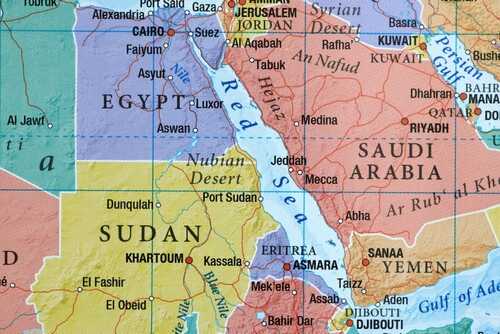
Houthi leadership in Yemen has escalated rhetoric toward commercial shipping, warning it is prepared to strike vessels near the Bab el-Mandeb gateway to the Red Sea. That narrow passage links Gulf energy and cargo flows to the Suez Canal and European markets, making it strategically valuable even when the primary crisis is elsewhere. The warning follows months of Houthi-linked attacks and harassment that previously drove many ships to detour, sharply increasing freight costs.
Those earlier Red Sea disruptions matter now because the current crisis is no longer confined to “risk premiums” on paper. The Red Sea route had already been under strain since late 2023, when shipping firms began rerouting around the Cape of Good Hope to avoid attacks, adding weeks to transit times. With a new U.S.-Iran war timeline cited across reporting, the Houthis’ posture functions as a pressure multiplier on top of Iran’s actions in Hormuz.
Hormuz Pressure Is the Core Supply Shock—And It’s Already Visible
Iran’s leverage is strongest at the Strait of Hormuz, a maritime bottleneck through which roughly a fifth of global oil typically passes. Reporting and maritime analysis indicate tanker traffic has dropped dramatically—often described as a 70–80% decline—signaling a partial blockade effect even if some tankers still transit under special arrangements. In practical terms, fewer tankers moving means tighter supply, higher insurance costs, and more volatility for consumers far from the Middle East.
President Trump’s posture has been framed in blunt deterrence terms, and the stakes are easy to understand for Americans still fed up with the inflationary hangover of the early 2020s. Oil above $100 a barrel is not an abstract metric; it raises costs for trucking, groceries, home heating, and manufacturing inputs. The research also notes freight costs had already tripled during earlier Red Sea disruptions, showing how quickly global shipping pain gets passed down to families and small businesses.
Saudi Arabia’s Yanbu Pivot Helps—but It Doesn’t Solve the Chokepoint Problem
Saudi Arabia has responded by increasing crude flows to its Red Sea export terminal at Yanbu via east-to-west pipeline infrastructure intended to bypass Hormuz. Maritime intelligence cited describes a surge in tanker activity tied to Yanbu, including multiple departures early in the crisis period and a larger wave of very large crude carriers repositioning toward the terminal. This is a real mitigation step, but it is also a reminder that alternatives can be strained near capacity.
The catch is that bypass routes do not eliminate the broader threat environment. If the Bab el-Mandeb becomes unreliable due to drone and missile threats from Houthi-controlled coastal areas, then the “backup route” inherits many of the same risks that pushed ships away from the Red Sea in the first place. Analysts cited in the research also highlight the danger of maritime mining, which could halt or slow traffic for extended periods, compounding supply shocks.
What the Evidence Shows—and What It Still Can’t Prove
Multiple sources describe the Houthis as aligned with Iran and functioning as a kind of regional “pressure valve,” allowing Tehran to raise costs for adversaries without always taking direct responsibility. Forecasting analysis referenced in the research also suggests Houthi activity can intensify based on triggers tied to the broader U.S.-Iran confrontation. At the same time, expert commentary notes the Houthis’ ability to truly “close” Bab el-Mandeb is more limited than Iran’s leverage at Hormuz.
The most responsible conclusion is that the Red Sea is at heightened risk but not yet fully shut, while Hormuz disruption is already measurable via the sharp falloff in tanker traffic. That distinction matters for policy: preventing escalation is different from reacting after a closure occurs. For Americans, the constitutional concern is not overseas maritime law—it is the familiar pattern where foreign crises become excuses for domestic overreach, emergency spending, and new bureaucratic powers at home.
Sources:
https://www.itv.com/news/2026-03-10/the-houthis-irans-allies-threaten-another-trade-route-to-europe
https://windward.ai/blog/march-11-maritime-intelligence-daily/
https://globalsecurityreview.com/red-sea-uncertainty-a-2026-forecast-for-the-houthis-actions/