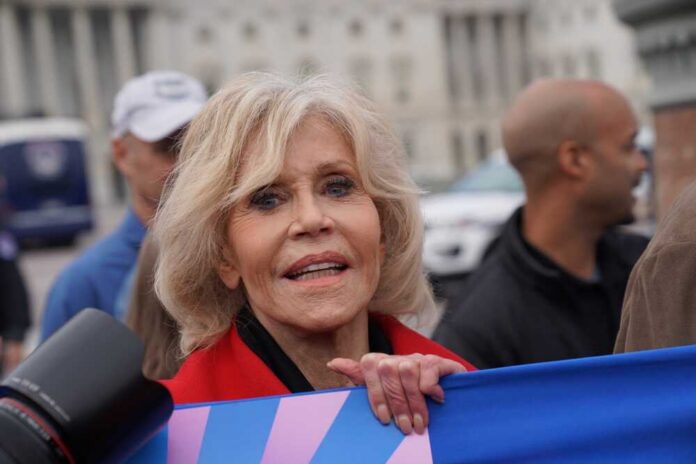
Hollywood activist Jane Fonda is trying to turn a corporate media merger into a Trump-era censorship scare—despite the hard reality that CNN’s real crisis is collapsing trust and shrinking leverage.
Story Snapshot
- Jane Fonda protested a Paramount Skydance deal for Warner Bros. Discovery (owner of CNN) at the March 15, 2026 Vanity Fair Oscars after-party.
- Fonda warned the merger could bring layoffs, higher prices, and political pressure on CNN, claiming the network would “have to cave” to Trump.
- Paramount Skydance CEO David Ellison has publicly vowed CNN will keep its editorial independence, while the White House dismissed Fonda’s criticism.
- Separate reporting indicates Warner Bros. Discovery previously explored an exclusive track with Netflix for key assets, and Paramount challenged the process as unfair.
Fonda’s Oscars protest targets the Paramount-WBD deal
Jane Fonda appeared March 15, 2026, at the Vanity Fair Oscars after-party wearing a “Block the Merger” pin and used the red-carpet spotlight to oppose Paramount Skydance’s accepted offer for Warner Bros. Discovery, the parent company of CNN. Fonda told Variety the merger could mean job losses and higher prices, and she argued it would expose CNN to political influence during President Trump’s second term.
Fonda’s public messaging also leaned heavily on her personal connection to CNN’s origin story. Fonda was married to CNN founder Ted Turner from 1991 to 2001, and she has framed the network’s early identity as a “trusted” brand that should be insulated from consolidation and outside pressure. Her comments, however, describe a predicted outcome rather than documenting specific new controls imposed through the deal.
What’s confirmed vs. what’s asserted about “caving” to Trump
Fonda’s central claim is that CNN would “have to cave” to Trump if Paramount controls Warner Bros. Discovery. The reporting establishes that she made the allegation and linked it to broader concerns about merger reviews and political pressure, but it does not provide evidence that the Trump administration has directed regulators to punish CNN through this specific transaction. The White House response characterized Fonda as irrelevant and dismissed her argument.
Paramount Skydance CEO David Ellison has responded publicly by vowing CNN’s editorial independence. That pledge is significant because it is on-the-record and directly addresses staff anxiety, but it is still a promise rather than a structural guarantee. If regulators review the transaction, the key constitutional concern for Americans across the spectrum is whether government power is applied neutrally—because politicized regulation can be abused by any administration, left or right.
Inside the deal drama: Netflix talks, Paramount’s complaint, and uncertainty
The merger fight is also complicated by reports that Warner Bros. Discovery pursued other options before accepting Paramount Skydance’s offer. Separate coverage indicates Netflix had been in an exclusive track tied to Warner Bros. Discovery assets such as the film and TV studios and HBO Max, including mention of a large breakup fee. Paramount later sent a letter accusing Warner Bros. Discovery of favoring Netflix and questioning the fairness of the sales process.
That matters because the public debate is not only ideological; it is also procedural and financial. The available research notes uncertainty over the exact timing of Warner Bros. Discovery’s acceptance and conflicting signals about whether Netflix ultimately backed away. With limited deal documents in public view, outside observers should be cautious about treating any one narrative—left or right—as settled fact until regulators and companies release more specifics.
Layoffs, prices, and consolidation: the tangible risks Americans can measure
Fonda argues mergers are generally “bad for workers,” and the research points to industry consolidation pressures that can translate into layoffs, fewer creative jobs, and reduced bargaining power for guild workers. The same background also references precedents at Paramount involving major cost-cutting and the elimination of DEI programs, underscoring how corporate restructuring often follows mergers regardless of politics. Those are measurable outcomes voters and consumers can track.
Jane Fonda slams Paramount-WBD merger, warns CNN will 'have to cave' to Trump https://t.co/gyMp5CKE9y via @foxnews
— Chris 🇺🇸 (@Chris_1791) March 17, 2026
For conservatives, the more practical takeaway is that legacy media companies are fighting for survival after years of credibility problems and audience fragmentation. If CNN changes ownership, the public will judge results the old-fashioned way: transparency, accuracy, and whether the network can regain trust without leaning on culture-war panic. Meanwhile, any attempt by government to strong-arm speech through regulatory threats would raise First Amendment alarms no matter which party is in power.
Sources:
Jane Fonda slams Paramount-WBD merger, warns CNN will ‘have to cave’ to Trump
Jane Fonda op-ed: The WBD deal puts