
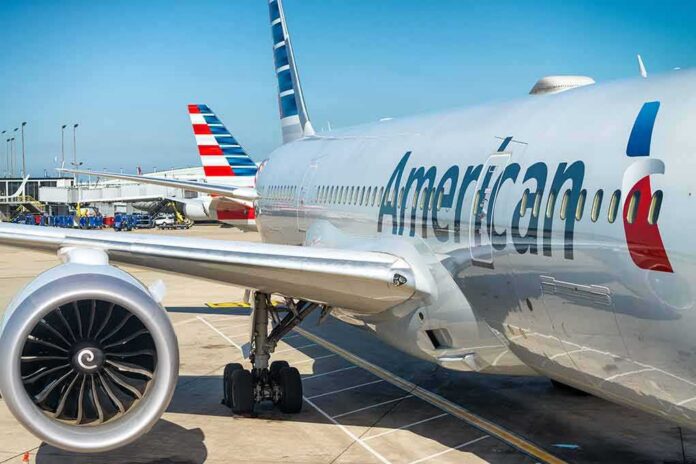
American Airlines’ new Me@Work scorecard is sparking privacy fears because flight attendants say they were tracked before they were told.
Quick Take
- American Airlines launched Me@Work to score flight attendants using data from the past 12 months.
- The union says workers were not given clear access to the data behind their scores.
- American says the tool is for self-improvement, not discipline, and current scores do not affect pay or assignments.
- The dispute is now centered on California privacy rules and worker rights to review and correct data.
Me@Work Puts Employee Tracking in the Spotlight
American Airlines rolled out Me@Work in April, and the system assigns each flight attendant a monthly score. Reporting says the score draws from a rolling 12 months of data, including passenger surveys, attendance, operational performance, delay codes, and report timing. That mix has turned a routine workplace tool into a fight over surveillance, trust, and how far an airline can go when it grades its own crew.
The union, the Association of Professional Flight Attendants, says American compiled data on individual workers without giving them a fair way to see it, fix it, or challenge it. The complaint matters because California privacy law gives workers the right to know what is collected, to access it, and to correct inaccurate personal information. If the airline did not provide clear notice and a usable request path, the legal risk rises fast.
American Says the Tool Is Not Punishment
American’s public position is that Me@Work is meant to help employees improve, not to punish them. One public summary says the scores currently have no effect on pay or work assignments. That point will matter if the company has to show regulators or arbitrators that the system is informational, not a hidden discipline tool. For now, the company’s statement does not answer the union’s notice and access complaints.
That gap is the heart of the dispute. The airline may say the system helps workers see how they are doing, but the union says the score was built from data employees could not independently review. The difference between “feedback” and “tracking” is not small. In a state like California, where privacy rules stress notice and correction rights, the details of what workers were told will decide a lot.
Why Conservative Readers Should Care
This fight is bigger than one airline. It shows how corporate and government-style data systems can start small and still end up controlling daily work. A company can call a scorecard “self-improvement” and still leave workers wondering who is watching, what is being saved, and whether a bad complaint can stick to their record. That kind of power deserves real limits, clear notice, and proof that errors can be fixed.
American Airlines' new Me@Work monitoring system has sparked a dispute with flight attendants over workplace surveillance that tracks a year of performance data including passenger surveys and Teams activity. 🔥 #NewsFireGR #News…
Read here 👇👇https://t.co/4Ti3uv2l5h— NewsFire.GR (@NewsFireGR) July 24, 2026
The public record here does not show a court ruling or a regulator’s finding yet, so the dispute is still open. But the facts already point to a familiar problem: employers collecting more data than workers expect, then asking for trust after the fact. American Airlines has privacy channels in other parts of its business, but the current reporting does not show the company has released the Me@Work notice, correction process, or scoring rules.
Sources:
nypost.com, instagram.com, paddleyourownkanoo.com, insideflyer.com, jobs.aa.com, calawyers.org, my.aa.com