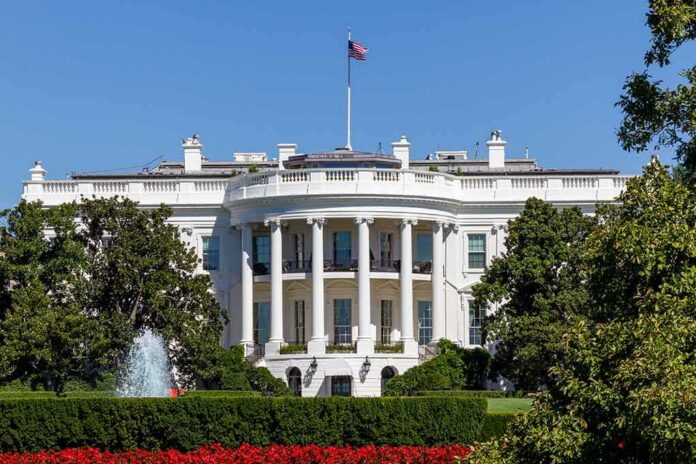
The White House kept network TV cameras out of President Trump’s Oval Office meeting with China’s Xi Jinping, allowing only still photos while a press-pool standoff froze live coverage.
Story Highlights
- Oval Office talks were closed to TV; only still photographers were briefly allowed in.
- Major networks withheld pool coverage amid a dispute over access bans on select outlets.
- The White House argued access is a privilege and set tight press terms during Xi’s visit.
- Press-pool fights have precedent, but this one hit during a high-stakes state visit.
What Actually Happened Inside the White House
Associated Press reporting said the Oval Office meeting between President Trump and President Xi was scheduled as closed press. At the last minute, the White House admitted only still photographers to capture images and denied entry to the rest of the pool. That meant no live TV footage from inside the room as talks began, even with two world leaders present and markets watching for signals on trade and security.
The limited access aligned with the White House’s stated view that press entry is not a right. An official statement in recent days framed White House access as a privilege and defended removing certain outlets from the grounds after years of hostile coverage. The statement said the First Amendment protects publication, not a guaranteed hard pass, briefing room seat, or pool slot. That posture set the tone for tighter control during a sensitive diplomatic visit.
Why There Were No Network Pool Cameras Rolling
The major television networks had already pulled out of their pool rotation after the White House blocked select outlets from duties. The New York Times reported the collective pause in pool coverage, which broke decades of practice, as a solidarity move. Crews were physically present for parts of the visit but declined to roll for the pool until access rules were even and predictable again. That left a major state arrival and meeting without standard live images.
The Hill described reporters from ABC, CBS, NBC, and Fox News as on site but continuing the boycott while the status of the banned outlets remained unsettled. With the rotation stalled, the usual shared feed never started. In practical terms, that meant Americans saw fewer live shots of key moments and had to rely on official photos, foreign feeds, or later clips compiled from non-pool sources.
How This Press Standoff Fits the Larger Pattern
Past access fights show a clear pattern: when an administration narrows entry, the press corps sometimes acts together, and visibility becomes leverage. A BBC explainer noted the press pool has been a battleground before, including under past presidents. When the government opens spaces to the press, viewpoint-based exclusions face legal and political pushback. Closed events, like tightly controlled Oval Office sessions, give the White House more discretion over who gets in and what the public sees.
Trump and Xi talked about Iran, Ukraine, the Korean Peninsula, trade, and Taiwan during about 90 minutes of formal talks. Chinese state media says Xi asked Washington to oppose Taiwanese independence. No major trade or AI safety deals were announced.
Xi ends his visit today by… pic.twitter.com/r6KUc00PAq
— John Luke (@yesknow) September 25, 2026
Reason’s legal analysis highlighted court rulings that limit viewpoint discrimination in areas broadly opened to the press, while allowing more control in nonpublic forums. That legal edge helps explain why images from still photographers were allowed while live video access was off the table. The mix kept some transparency without ceding full broadcast control during complex diplomacy with China, where small missteps can echo through markets and alliances.
What It Means for Viewers, Accountability, and Policy
For viewers, the blackout means fewer real-time cues on tone, body language, and emphasis during critical talks on trade, the Taiwan Strait, and technology. For accountability, it sharpens the question of who sets the terms of public access to the presidency. The White House says it seeks order, fairness, and security. Parts of the press say selective bans chill scrutiny. The tension will continue unless both sides agree on clear rules that apply evenly to everyone.
Conservatives care about two principles here: strong leadership on the world stage and a press that reports facts without partisan spin. The White House enforced tight controls during high-stakes diplomacy and still allowed still photos to document the moment. The networks chose not to provide a pool feed until access disputes were resolved. Both decisions carry tradeoffs. The path forward is simple common sense: equal rules, consistent enforcement, and focused coverage of what actually affects American families.
Sources:
youtube.com, apnews.com, cnn.com, cbsnews.com, newrepublic.com, straitstimes.com