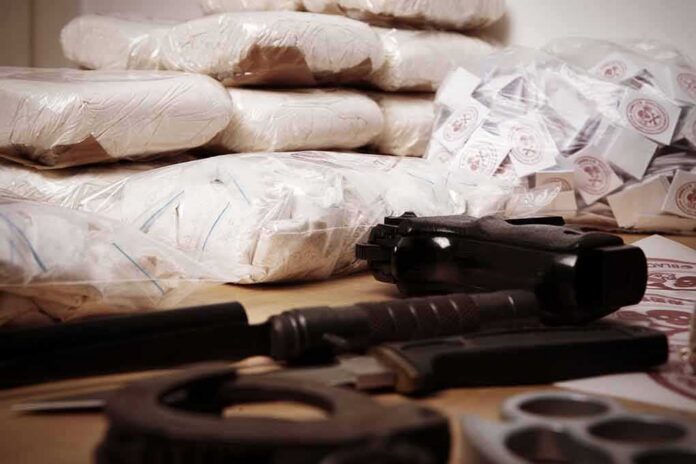
A massive banana shipment arriving in Italy from Ecuador was hiding $290 million worth of ultra-pure cocaine in plain sight.
Story Snapshot
- Italian police seized about 770 kilograms of extremely pure cocaine hidden among banana pallets in a refrigerated container at the port of Vado Ligure.
- The 650 brick-style packages were worth an estimated 250 million euros, nearly $290 million, on the street.
- The bust is one of the largest anti-drug operations at the port and part of a wider surge in cocaine smuggling using fruit shipments.
- Global cartels are exploiting weak borders and trade systems, turning everyday food shipments into rolling drug pipelines toward Europe and beyond.
Record Banana Shipment Bust Shocks a Key European Port
Italian authorities say border police and financial police uncovered roughly 1,700 pounds of cocaine in a single refrigerated container at the port of Vado Ligure in northwest Italy. The container arrived from Ecuador packed with dozens of pallets of bananas, which looked like a normal food shipment at first glance. Hidden inside were 650 individual packages of what police describe as extremely pure cocaine, carefully stashed among the fruit to dodge basic checks and blend into routine trade flows.
Police reports and video show officers opening the container and pulling brick-shaped packages from gaps around the banana pallets. Officials estimate the street value of the drugs at about 250 million euros, equal to nearly $290 million, based on typical sales in Europe’s black markets. Italian financial police and customs officials call this one of the largest drug seizures in the port’s recent history, underscoring how major criminal networks now treat food cargo as a standard cover for large-scale cocaine runs.
How Cartels Turn Fruit Trade Into a Cocaine Highway
This seizure fits a larger pattern that has been building for years: huge cocaine loads hidden in fruit shipments moving from Latin America into European ports. Europol reporting shows European Union countries seized a record 323 tonnes of cocaine in 2022, with many large hauls tied to banana containers from Ecuador and Colombia. Spain’s largest single cocaine bust in 2023 involved 9.5 tonnes concealed in bananas from Ecuador, proving this concealment method is now routine practice for well-organized cartels.
Similar operations have hit other ports across Europe, showing how broad the pipeline has become. Italian police at Gioia Tauro previously seized 2.7 tonnes of extremely pure cocaine hidden in refrigerated banana containers from Ecuador, with a street value over 800 million euros. Portuguese authorities intercepted 4.2 tonnes of cocaine in banana pallets from Colombia, bound for several European markets and worth more than 100 million euros. Each haul points to the same strategy: use legitimate fruit exports, rely on weak inspection rates, and flood Western societies with drugs while law-abiding families just assume they are buying normal produce.
What This Means for Border Security, Trade, and American Allies
The Vado Ligure bust shows how international crime networks test and probe global shipping systems, looking for the easiest path around law enforcement. Italian Guardia di Finanza officials say they used targeted analysis of shipping routes from South America to flag this container, showing how data-driven policing can still catch clever smugglers. But the steady rise in these seizures also means many other shipments probably slip through, fueling addiction, gang violence, and corruption far from the ports where the containers first arrive.
For American conservatives watching from across the Atlantic, this case is a warning about what happens when borders, customs, and trade checks are treated as afterthoughts instead of core national defense. The same cartels weaponizing banana shipments to pump cocaine into Europe also target North America, taking advantage of overloaded inspectors, loose oversight, and political leaders who downplay the threat from organized crime and open-border style policies. Strong port security, serious consequences for traffickers, and close cooperation with allies are essential if the United States wants to keep similar multi-million-dollar drug loads from entering American communities and destroying families.
Sources:
facebook.com, nampa.org, mezha.net, lefigaro.fr, discoveritalianriviera.com, trasportoeuropa.it