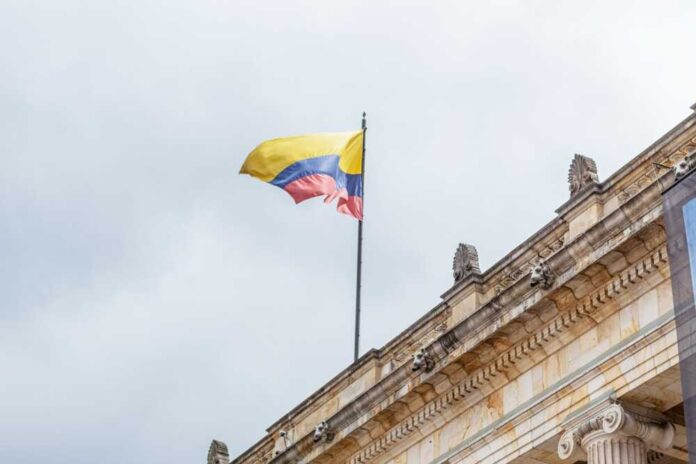
Colombia’s new president-elect has pledged to open an embassy in Jerusalem, putting his country on the front line of the global fight over Israel’s capital and shaking up Latin America’s foreign policy map.
Story Snapshot
- Colombia’s president-elect Abelardo de la Espriella vows to open an embassy in Jerusalem and restore full ties with Israel.
- The move reverses outgoing leftist President Gustavo Petro’s break with Israel over the Gaza war.
- The incoming foreign minister has already told Israel’s government that Colombia will open the Jerusalem embassy.
- This follows the model set by the United States under President Trump and other right-leaning leaders who backed Jerusalem as Israel’s capital.
Trump-Aligned President-Elect Sets Pro-Israel Course
Abelardo de la Espriella, a right-wing lawyer and businessman, has been elected president of Colombia after a razor-thin runoff win over leftist senator Iván Cepeda. During the campaign, de la Espriella used his official social media accounts to promise that in his government he would install Colombia’s embassy in Jerusalem, signaling a clear break from past “neutral” positions on the Israel–Palestine conflict. He also pledged to restore diplomatic relations with Israel and build a relationship “like never before,” echoing his close alignment with United States President Donald Trump’s foreign policy vision.
Reporting from outlets such as Al Jazeera and The Occidental Observer describes de la Espriella as a far-right, strongly pro-Israel figure who wants Colombia to follow the path set by the United States and recent Latin American allies like Argentina under President Javier Milei. His core positions include moving Colombia’s embassy from Tel Aviv to Jerusalem and renewing a strategic alliance with Israel on security and technology, themes he repeated in meetings with Colombia’s Jewish community. These steps set Colombia up to become one of a small group of nations with full embassies in Jerusalem, not just trade offices or consulates.
Reversing Petro’s Break with Israel and Restoring Ties
Outgoing President Gustavo Petro, a leftist, severed Colombia’s diplomatic relations with Israel in 2024, accusing the country of “genocide” in Gaza and joining legal actions against it at the International Court of Justice. Under Petro, Colombia imposed sanctions and took a hard pro-Palestinian line, putting long-standing ties with Israel on ice and angering many conservatives who support strong security cooperation against terrorism and organized crime. Before Petro, former President Iván Duque had already opened a trade and innovation office in Jerusalem as a satellite of the Tel Aviv embassy, seen as a nod toward recognizing Israeli sovereignty over the city.
De la Espriella’s victory therefore marks a sharp swing back to a pro-Israel stance, consistent with a wider pattern in Latin America where right-leaning leaders undo leftist foreign policy moves. According to reports, Colombia’s incoming government has agreed in high-level talks to fully restore ties with Israel, return ambassadors to both capitals, and relocate Colombia’s diplomatic mission from Tel Aviv to Jerusalem. The president-elect has already spoken with Israeli President Isaac Herzog and Foreign Minister Gideon Sa’ar about rebuilding relations, and Sa’ar publicly celebrated the win of the “pro-Israel” Colombian candidate known as “The Tiger.”
Embassy Pledge, Legal Friction, and Regional Pushback
Colombia’s incoming foreign minister Omar Bula Escobar has informed Israel’s foreign minister that the country will open an embassy in Jerusalem, making Colombia one of a handful of nations to take that step. This comes despite long-standing United Nations resolutions and legal arguments that discourage establishing embassies in Jerusalem due to the city’s disputed status under international law. Legal scholars have noted that there is a broad international norm against diplomatic missions in Jerusalem, which means Colombia’s move will likely draw criticism in global forums and from governments that back a divided or internationalized city.
Early reactions already show that regional and Muslim-world organizations see the plan as a dangerous break from past positions. The Organisation of Islamic Cooperation has condemned reports that Colombia intends to open an embassy in Jerusalem, warning that such a step violates United Nations resolutions and undermines the rights of Palestinians. Some Latin American governments that lean left or maintain strong pro-Palestinian stances may also push back, arguing that Colombia is tying itself too closely to United States and Israeli strategic interests. International media have framed de la Espriella as “far-right” and “fanatically pro-Zionist,” language that signals more fights ahead in the court of public opinion.
Promises, Power Limits, and What Comes Next
Even with strong campaign pledges and early diplomatic talks, there are still practical hurdles before a Colombian embassy opens its doors in Jerusalem. As of now, no formal executive order, official decree, or budget law has been published to authorize and fund the relocation, so the timeline and logistics remain unclear. De la Espriella’s party holds only a small number of seats in Colombia’s Congress, which may slow efforts to approve embassy costs or update foreign policy laws. There is also no public record yet of a chosen building site or an appointed ambassador whose official seat would be Jerusalem, steps that would lock in the change.
Still, the direction is unmistakable: Colombia’s next president has staked his foreign policy on a firm stand with Israel and a break from globalist pressure against recognizing Jerusalem as Israel’s capital. For conservatives in the United States and across the Americas who support limited government at home but strong alliances against terrorism abroad, this is a clear win that builds on President Trump’s historic embassy move in 2018. The coming months will show whether Colombia’s institutions and regional partners accept this shift or try to block it, but for now, Jerusalem is once again the stage for a major clash between nationalist leaders and international bureaucracies.
Sources:
insiderpaper.com, infobae.com, aljazeera.com, easternherald.com, blogs.timesofisrael.com, youtube.com, en.wikipedia.org, co.usembassy.gov, newsy-today.com, latinamericanpost.com, allisraelnews.com, facebook.com, tv7israelnews.com, aa.com.tr, arabamerica.com, jpost.com