
After Iran’s attacks on three commercial ships near the Strait of Hormuz, Pete Hegseth says America will make Tehran “pay” — and this time, the Trump administration is backing that promise with real firepower.
Story Snapshot
- The United States confirms Iran attacked three commercial vessels near the Strait of Hormuz, violating a ceasefire.
- Qatar and Saudi Arabia blame Iran for strikes that set tankers on fire and threatened global energy supplies.
- U.S. Central Command hit about 90 Iranian military targets to punish attacks on civilian shipping.
- Pete Hegseth backs a tough Trump response and warns Iran will face steep costs for every strike.
Iran’s Attacks on Civilian Ships Ignite a New Flashpoint
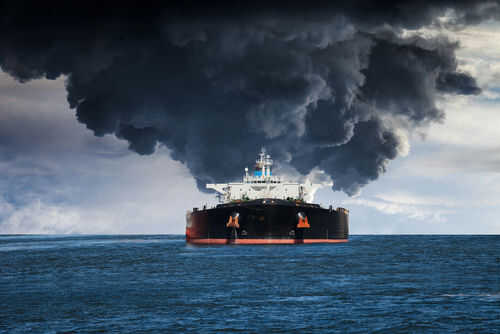
U.S. officials say Iran fired on three commercial vessels in Oman’s territorial waters near the Strait of Hormuz, breaking a ceasefire that was supposed to calm the region. These ships were not warships. They carried energy supplies for the world and were crewed by civilian mariners simply doing their jobs. According to reporting, at least one Qatari liquefied natural gas tanker and a Saudi crude oil carrier suffered major damage and fires after missiles were launched at them. This kind of attack targets the lifeblood of the global economy and challenges the long-held principle that international shipping lanes must stay free and open.
Qatar did not mince words after its tanker Al Rekayyat was hit. The Qatari Foreign Ministry publicly blamed Iran and called the strike a “serious and clear violation of international law,” saying Iran is “fully legally accountable” for the attack and any damage. A spokesperson stressed that the strike was an attack on global energy security and the safety of international navigation. When a major energy producer holds Iran fully responsible, it sharply undercuts Tehran’s efforts to hide behind vague claims or shadowy “unverified sources.” For American readers, that Qatari statement is an important sign that U.S. concerns are shared by regional partners and not just “Washington spin.”
Trump Administration Response: Heavy Costs for Iran’s Aggression
Faced with these attacks, the Trump administration did not sit on its hands. U.S. Central Command reported that American forces carried out waves of precision strikes against Iranian military assets along Iran’s coastline. These strikes hit about 90 targets, including air defense systems, coastal surveillance gear, missile and drone storage sites, naval capabilities, and logistics infrastructure that supports attacks on shipping. Another Central Command release said more than 60 small boats linked to Iran’s Islamic Revolutionary Guard Corps were also struck to “impose heavy costs” for Iran’s violation of the ceasefire and its attacks on three commercial vessels in the strait. This is exactly the kind of firm, targeted response many conservatives have long demanded instead of endless finger‑wagging and weak sanctions.
Reports say the Trump team has also pushed Iran on the diplomatic front. According to U.S. officials cited in media, the administration gave Tehran a deadline to publicly admit that the Strait of Hormuz is open, to commit to ending attacks on commercial shipping, and to accept that all lanes through the strait must stay open without tolls or control games. That demand lines up with core American values: free trade, free navigation, and no foreign regime deciding who can move energy and goods through a critical waterway. It also sends a clear message that the U.S. will not let Iran turn the strait into a bargaining chip or a choke point for the world economy.
Pete Hegseth’s Warning and Iran’s Weak Excuses
Against this backdrop, Pete Hegseth’s vow that the U.S. will make Iran “pay” speaks to many frustrated Americans. For years, they have watched Iran harass ships, arm terror groups, and test red lines while globalist leaders responded with talks that went nowhere. Now, with Iran hitting civilian tankers and threatening vital sea routes, Hegseth argues that strong military action is not “escalation” but overdue accountability. His message fits the Trump administration’s strikes that directly target the tools Iran uses to attack shipping and intimidate neighbors. To many conservatives, this looks like finally matching tough words with serious action instead of empty press releases.
Iran’s own story about these attacks is much weaker. Iranian television floated claims that the Qatari tanker was hit only after ignoring warnings, yet Tehran avoided officially taking responsibility. A senior Iranian official even told Reuters that recent incidents came from “an errant part of their system,” as if missiles and fires on tankers were simple mistakes rather than planned actions. Meanwhile, neither U.S. Central Command nor Iran’s Revolutionary Guard has given public detail on the exact tanker incident, leaving a gap that Iran tries to fill with excuses. But when Qatar and other sources point directly to Iranian forces, and when the U.S. responds with precise strikes on the very units tied to these attacks, many readers will see the “errant system” line as another effort to dodge blame rather than a serious defense.
Sources:
news.un.org, cnn.com, aljazeera.com, npr.org, facebook.com, reuters.com