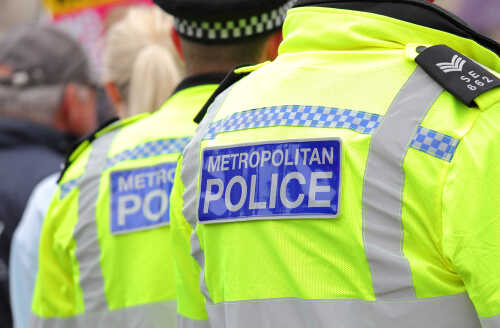
Five armed officers dragged an Irish comedian off a flight over his gender-critical posts — and now the U.K.’s top police force has been forced to apologise, pay him £25,000, and scrap part of its social media speech-policing policy.
Story Snapshot
- The Metropolitan Police issued an “unreserved” apology to Graham Linehan, calling its investigation “unacceptable.”
- Five armed officers arrested him at Heathrow over gender-critical posts on X, but prosecutors later dropped the case.
- An internal review admitted officers wrongly targeted his views on transgender issues instead of any real threat of violence.
- The force paid Linehan £25,000 and says it will stop pursuing “non-crime hate incidents” after the backlash.
Armed Heathrow Arrest Over Social Media Speech
, the Irish comedy writer behind “Father Ted,” was arrested at Heathrow Airport in September 2025 over three gender-critical posts he made on X. Five armed Metropolitan Police officers detained him on suspicion of a public order offense linked to alleged incitement to violence. He was questioned for hours and became so stressed his blood pressure reportedly spiked and he needed hospital care afterward. The complaint came from a former officer who identifies as transgender, claiming his posts stirred up hatred.
The Crown Prosecution Service reviewed the case and announced the following month it would take no further action against Linehan. That decision meant all charges were dropped and there would be no trial, undermining the idea that his comments met the legal standard for criminal incitement. Linehan then said he intended to sue the Metropolitan Police for wrongful arrest and breach of his right to free speech. His challenge grew into a test case on whether British police can treat lawful gender-critical speech like a violent threat.
Met Police Admits “Unacceptable” Failures
After a five-month internal investigation, Inspector Matt Hume of the Metropolitan Police’s Directorate of Professional Standards issued a formal apology to Linehan. In a report seen by several outlets, Hume admitted “the service provided was not acceptable” and recognised the distress the case caused. He wrote, “I apologise to Mr Linehan for the shortcomings in this investigation,” saying both the investigation and arrest phases lacked the level of care people expect from the force. This is a rare admission from a major police service that it mishandled a politically charged speech case.
The same report said officers had wrongly focused on the gender-critical nature of Linehan’s posts instead of the specific allegation of incitement to violence. That finding backs his claim that the arrest was really about his views, not about a clear and present threat. Hume also noted the inquiry was hampered by an inexperienced trainee detective and poor supervision, signalling deeper problems in how the force handles controversial online speech. Despite these failings, none of the officers involved will face formal discipline, only what the report calls “learning through reflection.”
£25,000 Payout and End of “Non-Crime Hate” Policing
The Free Speech Union, which supported Linehan, reports that the Metropolitan Police has now paid him £25,000 in compensation. The payment follows his civil action for wrongful imprisonment and comes alongside the written apology for how his case was handled. For many free speech advocates, this financial settlement is proof the force accepts that treating gender-critical posts like a violent offense was unjust and heavy-handed. Some critics argue the amount is still low for the stress and damage caused by an armed arrest over lawful speech.
@_Buzz_Saw
Met Gives Graham Linehan £25,000 and Another Apology https://t.co/gKcQXhEUlE via @guidofawkes— The Emperor Poofius Maximus (@IlPoofto) July 9, 2026
On the same day prosecutors dropped the case, the Metropolitan Police announced it would stop investigating so-called “non-crime hate incidents.” These incidents involved logging and sometimes probing lawful speech that someone found offensive, even when no crime had been committed. The force said the concern around Linehan’s case helped drive that change. For conservatives, this is a key shift: police time should go to real crime, not to chasing citizens over unpopular opinions. Yet some activists complain the policy move is a “capitulation” to pressure from free speech groups.
Warning Sign for Free Speech and Policing Trends
Linehan’s ordeal highlights a wider pattern in the United Kingdom, where police make more than 30 arrests a day over online messages judged “offensive” or “annoying” under broad communications laws. Civil liberties groups say these arrests create a chilling effect, making people afraid to speak plainly about hot-button issues like gender, immigration, or national identity. Freedom House has already flagged a decline in internet freedom in the U.K. linked to increased criminal charges for online speech. Elon Musk has even slammed the country’s approach as “real fascism” after reports of over 12,000 speech-related arrests in a single year.
For American readers who value the First Amendment, the Linehan case is a clear cautionary tale. In Britain, police can still arrest someone at gunpoint for social media posts that would be fully protected speech in the United States. Here at home, where the Trump administration stresses law and order and respect for the Constitution, this foreign episode shows what happens when vague “hate” laws and woke ideology mix with broad police powers. When officers are trained to treat disagreement as danger, free societies start to look a lot less free.
Sources:
thegatewaypundit.com, christian.org.uk, freespeechunion.org, foxnews.com, reddit.com, facebook.com, thetimes.com, bbc.com