
When Argentina’s players turned a World Cup victory lap into a Falklands protest, FIFA’s political double standard was on full display.
Story Snapshot
- Argentina players twice displayed “Las Malvinas son Argentinas” banners, triggering and now risking FIFA discipline.
- FIFA fined Argentina’s federation 30,000 Swiss francs in 2014 for the same message before a Slovenia friendly.
- Rules against “provocative political action” give global sports bureaucrats sweeping control over speech on the field.
- Selective enforcement lets woke and globalist narratives slide while hammering messages tied to national sovereignty.
Argentina’s Banner: What Happened Then and Now
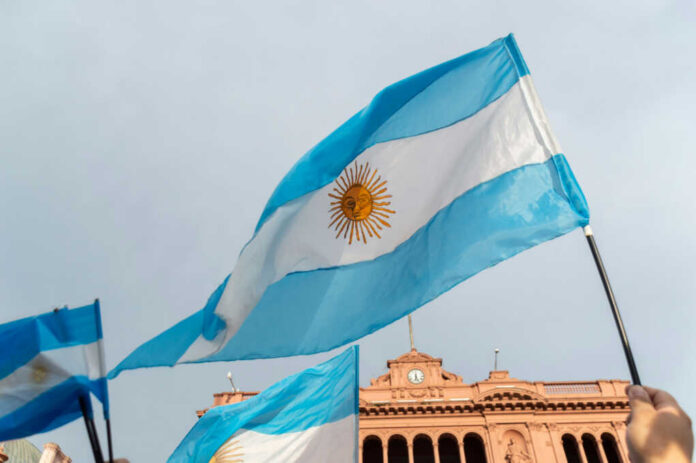
Before a 2014 World Cup warm-up match against Slovenia in La Plata, Argentina’s players posed behind a large banner reading “Las Malvinas son Argentinas,” meaning “The Falklands are Argentine.” The banner clearly backed Argentina’s claim to the Falkland Islands, a British territory that was the focus of a bloody war in 1982. Several players stood with the banner on the pitch before the game, and images spread quickly through international media coverage.
FIFA opened disciplinary proceedings against the Argentine Football Association, saying the act broke rules on “prevention of provocative and aggressive actions” and “team misconduct.” The chair of the disciplinary committee called the display an “evident violation” of stadium safety rules that forbid provocative political messages. Argentina’s federation was invited to submit its side of the story and any evidence, but the full reasoning behind FIFA’s final decision has never been made public in detail.
FIFA’s Punishment and Power Over Political Speech
FIFA’s disciplinary committee fined Argentina’s federation 30,000 Swiss francs, roughly £20,000, and issued a formal reprimand for the banner incident. World football’s leaders said the message violated Article 60 of stadium safety rules on political action and Article 52 of the disciplinary code on team misconduct. FIFA also reminded teams that political messages are banned at matches, adding this case to a long list of fines and warnings used to keep stadiums “apolitical.”
Across global soccer, FIFA has relied on financial sanctions to police political symbols, from territorial slogans to human-rights protests to identity flags. Research on FIFA’s history shows the group often pressures players and federations with fines, kit bans, and threats, claiming to protect the game while really guarding commercial interests and sponsor comfort. Critics argue this creates a system where powerful bureaucrats decide which messages are “too political” and which fit the approved global narrative.
Selective Enforcement and the Sovereignty Double Standard
Argentina’s Falklands banner clash shows how FIFA’s rules can be enforced unevenly. Reuters has noted that in later years, FIFA tolerated or did not punish some political gestures, such as Norway’s protests over Qatar, even though similar rules were in place. At the same time, FIFA cracked down hard on other expressions, including territorial claims and certain identity symbols, depending on which governments and sponsors might be upset.
That selective enforcement worries many conservatives, because it mirrors a broader globalist pattern: speech tied to national sovereignty or traditional values gets labeled “provocative,” while progressive or woke causes receive softer treatment or quiet approval. When unelected sports officials can decide which national claims are allowed on a banner, it echoes the way international bodies try to shame countries like the United States for defending their own borders, energy policy, and constitutional rights.
Why This Matters to American Fans and Patriots
Watching FIFA punish a national team for a simple statement about disputed territory should raise red flags for American patriots. The same logic used against Argentina’s Falklands claim can be used to silence messages that defend the United States, support our troops, or stand up for secure borders and national identity. When “political action” is defined by distant regulators, free speech inside stadiums becomes whatever global managers say it is.
Breaking: Argentina may face a FIFA fine after players displayed a banner reading “Malvinas (Falkland Islands) are from Argentina” following their match against England. 🇦🇷🏝️
FIFA prohibits political messages during official events, and BBC Sport notes a similar incident occurred…— west (@WGeebouy) July 16, 2026
In 2026, under a Trump administration that is pushing back on globalist overreach, this kind of controversy is a warning. International sports bodies show how quickly rules can turn into tools to shame nations and control culture. For conservative fans who love both country and competition, the Argentina banner fight is a reminder: the battle over sovereignty is not just in parliaments and courts. It is also on the field, in the chants, and on the banners that bureaucrats are eager to erase.
Sources:
independent.co.uk, bbc.com, si.com, vanguardngr.com, theguardian.com, sport1.de, espn.com, skysports.com, facebook.com, washingtontimes.com, football.dhgate.com, sportspolicy.org