New York City voters are now watching their mayor walk into a mosque under chants calling for violence abroad—while City Hall’s moral “neutrality” is rarely applied the same way to Christianity at home.
Story Snapshot
- Mayor Zohran Mamdani attended a Ramadan celebration at a Staten Island mosque hosted by the Muslim American Society (MAS) where he was introduced by an activist tied to extreme anti-Israel rhetoric.
- The introducer, Abdullah Akl, was reported to have led chants including “Strike, strike Tel Aviv” and “intifada” before presenting the mayor to the crowd.
- Mamdani’s Ramadan outreach has included a Gracie Mansion iftar with Columbia activist Mahmoud Khalil as Khalil faces a pending deportation case.
- The controversy lands as New York faces heightened security concerns after authorities disrupted an ISIS-inspired bomb plot tied to a separate protest event.
Ramadan Event Puts City Hall Optics Under a Microscope
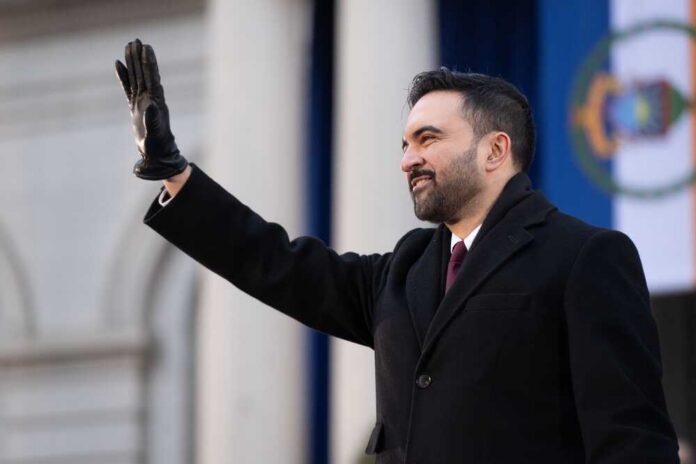
New York City Mayor Zohran Mamdani attended a Ramadan celebration at a Staten Island mosque hosted by the Muslim American Society, where he was introduced by Abdullah Akl, an activist reported to have a record of inflammatory anti-Israel rhetoric. Reporting described Akl leading chants that included “Strike, strike Tel Aviv” and “intifada” before welcoming Mamdani “straight from City Hall.” Mamdani and Akl did not respond to requests for comment in the reporting.
The factual question for New Yorkers is not whether public officials may attend religious events—they can and often should. The issue is the setting and the messenger. When an elected executive appears at an event where a featured voice has promoted or amplified rhetoric tied to political violence, it predictably erodes public confidence. That concern intensifies in a city still managing deep community tensions after the post–Oct. 7 wave of protests and backlash.
Who Is Abdullah Akl and Why the Introduction Matters
Coverage described Akl as a MAS official with a history that has drawn scrutiny, including a Harvard Extension investigation tied to antisemitic posts, participation in rallies featuring “From the River to the Sea” chants and flag burning, and an arrest at a pro-Hamas protest in 2024. The same reporting said Akl publicly framed Mamdani as an ally while signaling he would “hold” him “accountable” on anti-Israel demands. Those details shape how the mayor’s appearance is interpreted.
Mamdani’s defenders can fairly argue that a mayor routinely meets constituents and community groups without endorsing every speaker’s prior comments. The problem is that this particular event reportedly placed Mamdani on stage immediately after the most provocative slogans, turning what could have been routine outreach into a highly charged political tableau. For a city struggling to keep interfaith peace, officials typically try to avoid avoidable flashpoints—especially ones that look like tolerance for extremist messaging.
City Hall’s Pattern: Appointments, Antisemitism Office Changes, and School Prayer Push
The mosque appearance fits a broader narrative that critics say has followed Mamdani since his election and inauguration. Reporting cited multiple City Hall personnel decisions and associations that have angered Jewish organizations and pro-Israel New Yorkers, including replacing Rabbi Moshe Davis from the Mayor’s Office to Combat Antisemitism and elevating figures tied to groups that blamed Israel for the Oct. 7 attack. Separately, MAS has pushed for prayer spaces in dozens of NYC public high schools alongside Students for Justice in Palestine.
Limited-government conservatives often judge these disputes by a simple standard: the city’s role should be to protect public safety and equal rights, not to platform ideologues or play favorites among faiths. New York has every legal right to accommodate religious practice within constitutional bounds, but it also has a duty to ensure public institutions do not become pressure points for factional politics. School-based prayer accommodations, in particular, demand careful guardrails so coercion, activism, and classroom disruption do not follow.
Khalil at Gracie Mansion and the Immigration Enforcement Fault Line
Mamdani’s Ramadan profile expanded further when he hosted a Gracie Mansion iftar with Mahmoud Khalil, a Columbia activist whose case has become a flashpoint. Mamdani said, “Mahmoud is a New Yorker, and he belongs in New York City,” and criticized federal detention as a First Amendment issue. Reporting also said Khalil was released in June 2025, but remains in deportation proceedings tied to alleged fraud on his green card—an allegation not resolved in the cited accounts.
With President Trump back in office, the federal posture toward immigration enforcement and visa or green-card fraud is expected to be stricter than under the Biden years. That creates an unavoidable clash when a city’s leadership publicly champions activists with unresolved immigration allegations. New Yorkers can support religious liberty and peaceful advocacy while still expecting lawful vetting, due process, and consistent enforcement. When leaders blur that line, they risk signaling that politics—not standards—decides who gets defended.
Sources:
Zohran Mamdani Ramadan Mahmoud Khalil