

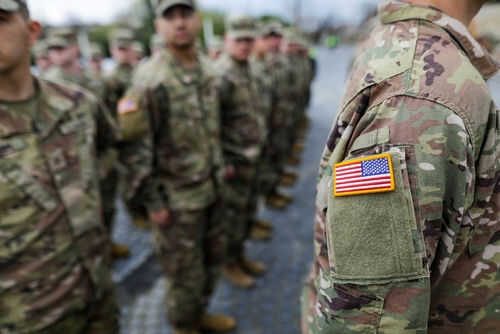
America’s young men now face automatic enrollment in the military draft registry without consent, raising alarms over government overreach into personal freedoms.
Story Snapshot
- The Selective Service System shifts to automatic registration for men aged 18-25 starting December 2026, using federal databases.
- Mandated by the FY2026 NDAA signed by President Trump in December 2025, this ends self-registration requirements.
- Aims to streamline compliance and cut administrative costs, but sparks concerns about privacy and expanded federal data sharing.
- No active draft planned since 1973, yet automation ensures near-100% enrollment for potential emergencies.
NDAA Mandates Shift to Automation
President Donald Trump signed the FY2026 National Defense Authorization Act in December 2025, directing the Selective Service System to implement automatic draft registration. This law transfers responsibility from individuals to federal agencies, integrating data sources to enroll eligible men aged 18-25. Previously, men had to self-register within 30 days of turning 18, with options until age 26. The change addresses compliance gaps, as about 95% already register voluntarily.
Timeline and Regulatory Progress
On March 30, 2026, the Selective Service System submitted its proposed rule to the Office of Information and Regulatory Affairs for review. Media reports emerged in early April, confirming the December 2026 rollout. As of April 9, the rule remains under OIRA scrutiny, with no final approval yet. This process builds on bipartisan congressional support in the NDAA, focusing on operational efficiency amid low draft likelihood.
Implementation will redirect SSS staff from outreach to readiness tasks, saving costs. Eligible U.S. citizens and immigrants face automatic inclusion, eliminating manual steps but tying non-prior registrants to federal benefits like student loans and jobs.
Historical Context and Precedents
The Selective Service System originated under the 1980 Military Selective Service Act, following the Vietnam War draft’s end in 1973. It maintains a standby conscription mechanism for national emergencies, with self-registration mandatory since then. State-level DMV linkages and auto-voter models served as partial precedents, but federal automation marks a new era of data integration.
Past NDAA debates, like 2021-2022 pushes for women’s registration, failed. This male-only policy persists, easing burdens on youth while ensuring preparedness. Conservatives value strong defense readiness, yet question unchecked government database access without explicit consent.
Impacts on Americans and Government
Young men gain convenience, avoiding penalties for forgetting registration, but lose choice in a system that auto-enrolls them via unspecified federal data like DMV or IRS records. SSS anticipates near-perfect compliance, boosting crisis mobilization. Economically, it cuts outreach expenses; socially, it eases youth burdens but fuels privacy fears in an era of deep state skepticism.
Both conservatives frustrated by big government expansion and liberals wary of elite control share unease over federal overreach. This departs from founding principles of limited authority, prioritizing efficiency over individual liberty. No draft looms, but the precedent expands inter-agency data sharing, echoing broader failures to serve everyday Americans chasing the dream through hard work.
Sources:
American Men Are Set to Be Automatically Registered for the Draft. Here’s What to Know
Automatic registration for US military draft eligible men to begin in December
Automatic registration for US military draft to begin in December: Here’s what it means
Automatic registration for US military draft to begin in December: Here’s what it means
US to automatically register men for military draft