A 1,200‑pound endangered giraffe vanishes from a Texas ranch, goes viral, and exposes how lax exotic‑animal rules can put rural families at risk.
Story Snapshot
- Gracie, a young endangered giraffe, escaped a Texas exotic breeding ranch and roamed free for nearly two weeks.
- Local law enforcement and ranchers used helicopters, aviation crews, and drones to track her across rugged Hill Country terrain.[1][3]
- Viral memes, rumors, and even AI‑generated images turned a serious search into online entertainment, blurring fact and fiction.[7]
- The case highlights Texas’ booming exotic‑animal industry, weak fencing rules, and growing risks to landowners and wildlife.[5][17]
A giant giraffe loose in the Hill Country
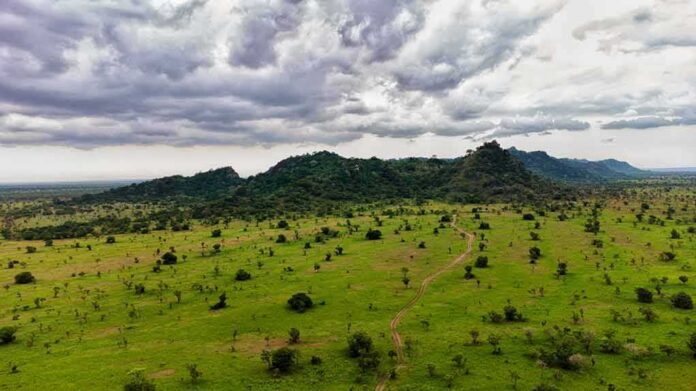
Mid‑June in Real County, Texas, a young reticulated giraffe named Gracie slipped out of Cedar Hollow Ranch, an exotic animal breeding operation about 100 miles west of San Antonio.[1][5] Ranch owner Vic Jones said Gracie wandered into a canyon corner of the property that other giraffes had avoided, then found a way past the high game fence and left the ranch.[1][3] Gracie, about three to four years old and roughly tree‑height tall, suddenly became the most unlikely “missing person” case in Texas Hill Country.[1][7]
Real County Sheriff Nathan Johnson treated the escape like a major incident, alerting the county’s roughly 2,700 residents to watch for the towering animal in their pastures and along rural roads.[1] Jones first sent helicopters over about 7,500 acres searching rugged canyons and brush, but they could not spot her.[1][3] A game camera later caught Gracie wandering west of Leakey, only a few miles from the ranch, proving she had not left the area but was hiding in the thick Hill Country scrub.[2][3]
Two‑week search with modern tools and old‑fashioned grit
The search for Gracie stretched to nearly two weeks, drawing aviation crews, helicopters, and drones into the effort as ranch hands and deputies tried to track one huge animal in miles of broken terrain.[5] Sheriff Johnson called it his “first missing giraffe case” and brought in detectives to help.[4] A few sightings came from the south, but each time searchers arrived, Gracie had already moved on.[1][3] A $5,000 reward offered by Jones encouraged tips, but also risked false reports from people chasing quick cash.[1]
After days of searching, a game camera image near Leakey gave officials a better idea of her path.[2] On a Friday, more than seventy‑two hours after the sheriff’s office formally logged her missing, Gracie’s owner and a pilot finally spotted her during an aerial sweep about four miles south of Cedar Hollow Ranch.[2] She was still in the Texas Hill Country brush, roughly three miles from her last known camera sighting and surprisingly close to home.[2][3] Authorities reported she looked healthy, and the owner began working with a veterinarian to plan a safe capture and return.[2]
Viral memes, AI images, and confused information
While locals worried about safety and property damage, the internet turned Gracie’s escape into a comedy show. Social media posts joked about Texans hunting for a giraffe instead of deer, and one law enforcement foundation even shared AI‑generated images of Gracie “helping” train drones, mixing fantasy with reality.[7] Rumors claimed she had wandered as far as Nacogdoches, despite the game camera and aerial reports keeping her near Leakey.[7] These false claims and edited pictures made it harder for people to know which sightings were real.
"Sheriff Nathan T. Johnson told News4 San Antonio that Gracie the giraffe had a “catch me if you can sucker’s attitude” when she was located during an aerial search."
Gracie the giraffe found miles from enclosure — weeks after escape from Texas ranchhttps://t.co/1bSkWhulY5
— Jody Kennedy (@KennedyJodyJ) June 27, 2026
Local animal groups even argued online over whether she had really been found yet, with one Real County rescue account briefly insisting she was still missing while major outlets reported her discovery.[11][12] That confusion shows how fast‑moving social media can drown out careful law enforcement work and clear facts. When jokes, memes, and AI images spread faster than sheriff updates, rural families are left guessing what is true, even when a 1,200‑pound animal is involved.
Exotic‑animal boom and risks for rural Texans
Gracie’s escape is not just a one‑off odd story. It fits into a much larger pattern of exotic animals slipping out of private ranches across Texas. Cedar Hollow is part of a booming exotic breeding business that sells animals like giraffes, antelopes, and deer to collectors, zoos, and hunting ranches.[5][21] An estimated 5,000 Texas landholders now keep exotic animals, and many herds roam wide open Hill Country landscapes.[5] Ecologists warn this is creating an “unregulated wildlife experiment” that can reshape native habitat.[7][20]
Hunters and rural landowners have seen escaped axis deer, elk, fallow deer, and other foreign species taking over pastures and competing with native game.[17][18] After one major storm, ranchers reported hundreds of millions of dollars in losses as exotic livestock fences failed and herds scattered, proving how fragile the system can be when nature pushes back.[17] For conservatives who value property rights, local control, and responsible stewardship, Gracie’s brief taste of freedom is a reminder that weak state rules on exotic fencing and ownership can leave ordinary Texans dealing with the fallout when someone else’s animals get loose.
Why this odd story matters to constitutional conservatives
This case also highlights a deeper issue about government focus and priorities. Texas law heavily regulates dangerous species like lions and tigers, yet places fewer limits on other exotic mammals, even when they can reshape entire landscapes or threaten livestock.[1][2] That patchwork invites more escapes and more pressure for future state or federal crackdowns. Each viral incident gives big‑government activists fresh talking points to push broad restrictions on private ranching, gun ownership near wildlife areas, and even land use, instead of fixing specific safety gaps like fencing standards.
For constitutional conservatives, the better answer is not sweeping bans, but clear, local rules that make ranchers truly responsible for keeping their animals contained. Strong property rights should go hand‑in‑hand with strong accountability. Gracie’s escape shows that when private operations let animals slip out, sheriffs, neighbors, and taxpayers end up carrying the risk. Fixing that problem with common‑sense local policy now can protect family land, native wildlife, and limited government tomorrow—without inviting Washington to use stories like Gracie’s as an excuse for more overreach.
Sources:
[1] Web – Missing 1200-pound giraffe Gracie found 2 weeks after wandering away …
[2] Web – Giraffe escapes Texas ranch | FOX 7 Austin
[3] Web – Giraffe Gracie Escapes Texas Ranch – Apple Podcasts
[4] Web – Texas giraffe escapes ranch, prompting search across the Hill Country
[5] Web – Missing giraffe Gracie still on the loose in Texas Hill Country …
[7] Web – Gracie the giraffe is still missing in the Texas Hill Country, almost …
[11] Web – A giraffe named Gracie escaped in Texas. No one can seem to find her
[12] Web – Gracie has NOT been found! Real County Animal Rescue-Shelter …
[17] Web – There’s an escaped giraffe on the run in Texas. Why was … – Yahoo
[18] Web – The Truth about Texas’ Exotic Wildlife
[20] Web – r/ecology – Escaped exotic animals are changing the Texas landscape
[21] Web – Escaped exotic animals are changing the Texas landscape