

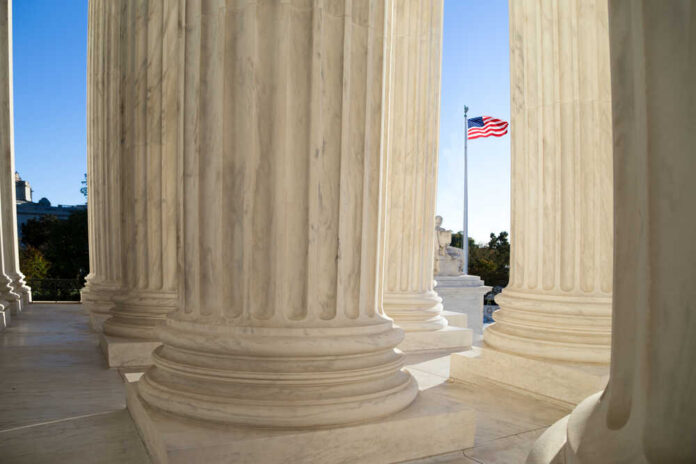
President Trump’s potential opportunity to reshape the Supreme Court for a third time has Washington state lawmakers bracing for another bitter confirmation battle that could cement conservative dominance for generations.
Story Snapshot
- Trump successfully placed three justices during his first term, fundamentally shifting the court’s ideological balance rightward
- Washington Democrats view another conservative nomination as an existential threat to abortion rights, healthcare access, and civil liberties
- Republicans celebrate the possibility of extending constitutional originalism on the nation’s highest court
- The Supreme Court’s independence from Trump’s policy preferences has occasionally frustrated both the former and current president
Trump’s Supreme Court Legacy Already Reshapes Judiciary
President Donald Trump nominated three Supreme Court justices during his first term, fundamentally altering America’s judicial landscape. Neil Gorsuch filled Antonin Scalia’s seat in 2017, Brett Kavanaugh replaced Anthony Kennedy in 2018, and Amy Coney Barrett succeeded Ruth Bader Ginsburg in 2020. These appointments created a solid conservative majority that has delivered landmark decisions on abortion, gun rights, and regulatory authority. The strategic selection of young jurists ensures conservative influence for decades, fulfilling Trump’s campaign promise to appoint originalist judges who interpret the Constitution as written rather than as a living document.
Washington State Reactions Reveal Deep Partisan Divide
Washington lawmakers responded to Trump’s previous Supreme Court nominations with fierce partisan rhetoric that foreshadows future battles. Democratic Representatives Adam Smith and Pramila Jayapal warned that conservative justices threaten Roe v. Wade protections, workers’ rights, and LGBTQ equality, urging voters to mobilize against what they characterized as a partisan assault on fundamental freedoms. Governor Jay Inslee criticized nominees’ positions on reproductive rights. Republican Representative Dave Reichert countered by praising Trump’s selections as highly qualified jurists committed to rule of law and constitutional fidelity, advocating swift confirmations to restore the court’s full complement.
Court Independence Frustrates Presidential Expectations
Despite Trump’s appointments, the Supreme Court has issued rulings that defied his administration’s policy goals, demonstrating judicial independence that frustrates politicians across the spectrum. Justice Gorsuch authored a 2020 decision extending workplace discrimination protections to LGBTQ employees, surprising conservatives who expected stricter constitutional interpretation. The court also preserved DACA protections for immigrants brought to America as children, blocking Trump administration efforts to dismantle the program. Trump publicly criticized these decisions through social media, expressing disappointment that his appointees did not reliably advance his policy agenda. This pattern reveals a fundamental tension between political expectations and judicial independence that concerns citizens who believe government serves elite interests rather than constitutional principles.
The prospect of another Trump Supreme Court nomination intensifies concerns shared by Americans across the political spectrum about whether our institutions truly serve the people. Democrats fear continued erosion of rights they consider fundamental, while some conservatives question whether even Republican-appointed justices will consistently uphold limited government principles. Both sides increasingly recognize that the confirmation process has become a proxy battle for deeper frustrations with a political establishment that seems more concerned with maintaining power than addressing the economic anxiety and social fragmentation affecting millions of ordinary Americans struggling to achieve prosperity through hard work and determination.
Long-Term Implications for Constitutional Governance
Another conservative Supreme Court appointment would extend rightward influence on American jurisprudence well into the 2050s, shaping decisions on abortion access, gun rights, religious liberty, environmental regulations, and executive power. The Dobbs decision overturning Roe v. Wade in 2022 demonstrated how Trump’s appointments enabled conservative legal victories that seemed impossible during previous administrations. Future rulings could further limit federal regulatory authority, expand Second Amendment protections, and reinforce traditional interpretations of constitutional text. For supporters, this represents restoration of founding principles and individual liberty against government overreach. For critics, it threatens hard-won civil rights protections and empowers corporate interests over working Americans, deepening divisions in an already fractured nation.
Sources:
Washington Lawmakers React to President Trump’s Supreme Court Nominee
GOP, Democratic Voters Weigh In On Trump’s Supreme Court Nominee