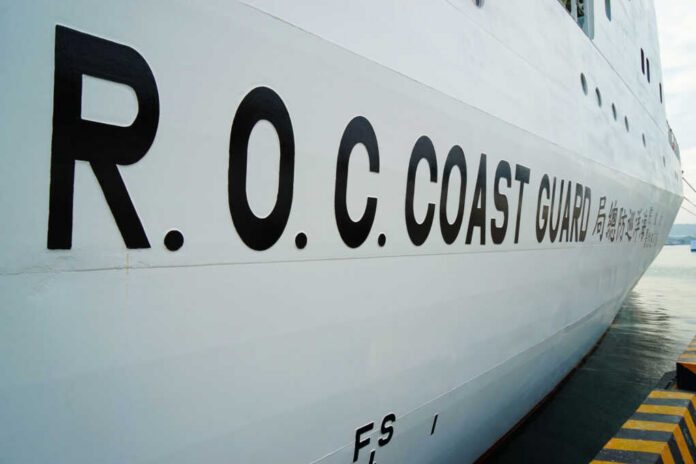
A Chinese coast guard ship just spent nearly a full day testing Taiwan’s defenses near a strategic island, raising fresh questions about how far Beijing is willing to push in contested waters while Washington watches.
Story Snapshot
- Chinese and Taiwanese coast guard ships faced off for roughly 22 hours near the Taiwan‑run Pratas Islands in the northern South China Sea.
- Taiwan says the Chinese ship disabled its identification system, a move officials view as a deliberate probe of their response.[1]
- The encounter unfolded in “restricted waters” claimed by Taiwan and included sharp radio clashes over sovereignty.[5]
- The standoff highlights China’s growing use of gray‑zone pressure tactics that can quickly pull in the United States and its allies.[1][3]
Chinese Ship Presses Into Pratas Waters, Then Backs Off
Taiwan’s coast guard says the confrontation began when it detected a Chinese coast guard vessel heading toward the Pratas Islands, a remote but strategically placed outpost at the northern entrance to the South China Sea.[5] Taiwan dispatched its cutter Taichung, which closed on the intruder in what Taipei calls “restricted waters” around the Taiwan‑run atoll.[5] Officials report the tense encounter lasted about 22 hours, with the two ships at one point separated by just a single nautical mile.[1]
During the face‑off, Taiwanese authorities say the Chinese ship went dark by switching off its identification system for a period, behavior they regard as a deliberate test of how Taiwan would respond under pressure.[1] Video and reporting describe the area as “contested,” underscoring that Pratas, also known as Dongsha, sits inside overlapping claims where Beijing increasingly asserts control.[1][5] After repeated warnings from Taichung and a prolonged standoff, Taiwan says the Chinese vessel finally exited the restricted waters and moved away from the island.[5]
Radio Clash Over Sovereignty Shows Beijing’s Gray‑Zone Playbook
Taiwan’s coast guard reports that the two sides engaged in what it called an “intense verbal confrontation over sovereignty” as they circled each other near Pratas.[5] The Chinese crew reportedly broadcast that it was on a routine patrol and declared that China held sovereignty and jurisdiction over the island and surrounding seas.[2][3] In response, Taiwanese officers radioed back that Pratas is Taiwan’s territory and urged the Chinese ship to leave, calling on its sailors to “return and strive for democracy.”[2][3]
This kind of law‑enforcement‑labelled confrontation fits what security analysts describe as China’s gray‑zone tactics: using coast guard and other non‑navy assets to change facts in disputed waters without firing a shot.[3] By pushing into sensitive areas, disabling ship identification, and then insisting the mission is “routine,” Beijing can probe defenses and normalize its presence while claiming it is simply enforcing domestic law.[1][3] That incremental pressure lets China erode the status quo step by step, a pattern conservatives have seen before in the South China Sea and beyond.[3]
Why This Matters for America’s Security and Taxpayers
Pratas may look like a speck on the map, but it sits near key shipping lanes and at the top of the South China Sea, a region central to global trade and America’s economic security.[5] Every time China’s coast guard pushes into contested waters and forces a smaller democracy to scramble ships, it tests not just that country’s resolve but also Washington’s credibility as a security partner. Taiwan has already expelled Chinese vessels near Pratas multiple times this month, suggesting a rising operational tempo.[4][5]
The Taiwanese and Chinese coast guards engaged in a tense standoff for a second day near the strategically located Pratas Islands at the top of the South China Sea. A Chinese Coast Guard vessel was spotted 21 nautical miles northeast of the Pratas Islands, leading to an intense… pic.twitter.com/INcJbjw7ga
— 武蔵 Æýà 🇯🇵 | NAATO (@Musashi_AEya) May 24, 2026
For Americans worried about endless foreign entanglements, incidents like this are a reminder that weakness and confusion invite more aggressive probing from authoritarian regimes. The Trump administration has pressed allies to spend more on their own defense and has pushed back on Beijing’s expansionism, but gray‑zone moves like this standoff show the challenge is far from over. When China uses coast guard ships instead of warships, it aims to stay just below the threshold that would trigger a clear‑cut response, while still undermining freedom of navigation and the security of democracies on the front line.[1][3]
Sources:
[1] YouTube – Chinese Coast Guard Vessel Standoff Near Pratas Island
[2] Web – Chinese Coast Guard Vessel Standoff Near Pratas Island – video …
[4] Web – Taiwan Expels Chinese Coast Guard Ship Close to Pratas Island
[5] Web – Taiwan says coast guard vessel in standoff with China ship – A News