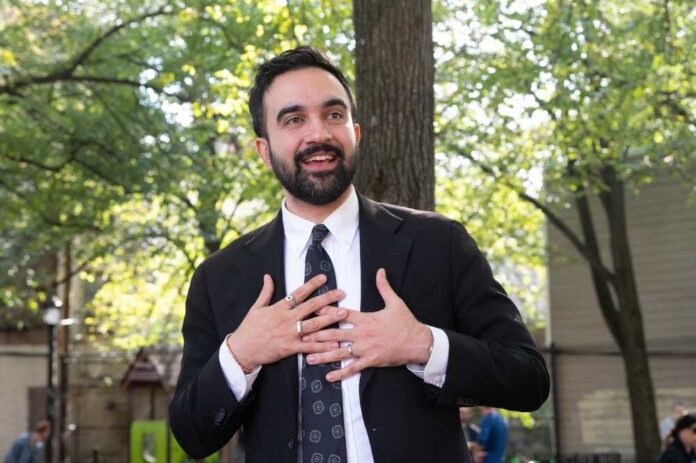
New York City Mayor Zohran Mamdani wants taxpayers to fund a study that could lead to slavery reparations checks for Black New Yorkers, even as the city faces a $5.4 billion budget hole.
Story Snapshot
- Mamdani signed a pledge in May to push reparations policies if elected mayor, and he won the race on November 4.
- His administration set aside $500,000 for community talks on reparations while the city battles a $5.4 billion deficit.
- City law already requires a reparations study and a “Truth, Healing, and Reconciliation” plan under Local Laws 91 and 92.
- The New York City Commission on Racial Equity has moved forward with grants and a research team solicitation to carry out that study.
- State law says only the legislature and governor, not a study commission, can approve any final payments.
Mayor Backs Reparations Pledge Before Winning Office
Mamdani was the only mayoral candidate who signed a pledge in May promising to champion reparations policies as mayor. His November 4 win made him the leader of a city now positioned to become one of the first in the nation to formally study paying restitution for slavery. He has since reaffirmed that support publicly.
New York City set aside $500,000 to fund community discussions on reparations and other assistance for Black New Yorkers, according to internal communications dated January. More than two dozen groups are tied to the effort, even as the city stares down a $5.4 billion budget deficit that could mean cuts to core services.
City Law Already Requires a Reparations Study
New York City did not wait for Mamdani to start this process. The City Council passed Local Laws 91 and 92 in 2024, creating a Truth, Healing, and Reconciliation process and ordering the NYC Commission on Racial Equity to study reparations for descendants of enslaved people. The council vote was 41 to 8, a wide margin showing strong support inside city government.
That 2024 legislation was not symbolic. Reporting at the time noted the bills could pave the way for possible monetary or non-monetary compensation to descendants of enslaved New Yorkers, and one outlet estimated the effort could eventually involve billions in taxpayer funding. Then-Mayor Eric Adams signaled support for the bill before leaving office.
Grants and a Research Team Show the Study Is Moving
The Commission on Racial Equity has already begun spending money to advance the study. The commission gave more than $200,000 to progressive community groups to discuss reparations, a move critics labeled a “boondoggle” given the city’s fiscal strain. In April 2026, the commission put out a solicitation seeking an outside research team to conduct the full reparations study required under city law.
Reparations Advocates Want More Than an Apology
National groups pushing reparations have been clear that a study is just the first step. The National Association for the Advancement of Colored People (NAACP) describes reparations as financial recompense for African-Americans whose ancestors were enslaved, including a national apology, cash payments, land grants, and rights to the cannabis industry. That broader vision gives context to why conservatives worry the New York City study is a launching pad, not a neutral research project.
Mamdani’s transition team also includes economist Darrick Hamilton, a reparations activist who argues the American economy and government policy remain built on racial devaluation. Hamilton has previously floated proposals tied to guaranteed income and reparative payments, giving City Hall a direct advocate inside the mayor’s own economic team.
State Law Limits Who Can Actually Approve Payments
A similar effort at the state level shows reparations studies do not automatically turn into checks. The New York State Community Commission on Reparations does not have authority to distribute financial payments. Its job is only to study the issue and make recommendations, with any final decision resting with the state legislature and governor. That same limit likely applies to New York City’s study, meaning any payout would still need separate approval from elected lawmakers.
Still, the direction is unmistakable. A mayor who pledged to champion reparations, a $500,000 fund for community talks, a commission already handing out grants, and a formal research solicitation all point toward New York City building the case for eventual payments. Taxpayers footing a $5.4 billion deficit gap may soon be asked to foot this bill too, whether they signed up for it or not.
Sources:
twitchy.com, capitalbnews.org, telegraph.co.uk, nyc.gov, nypost.com, ny.gov, voanews.com