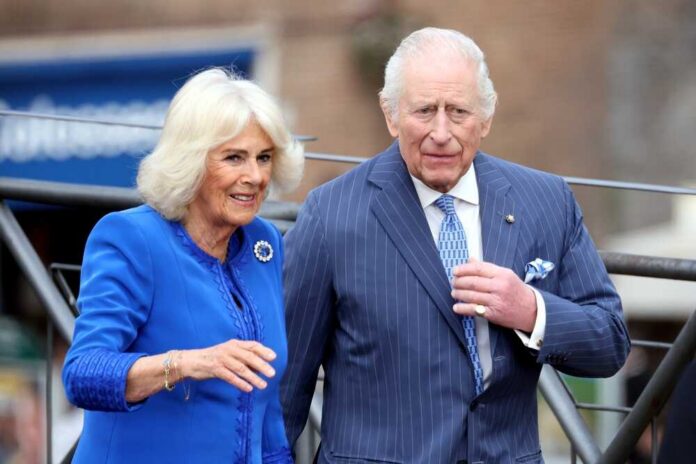
King Charles III used the U.S. Capitol’s biggest bipartisan stage to press America back toward NATO, Ukraine aid, and climate policy—right as Washington is already boiling over with distrust and division.
Story Snapshot
- King Charles III addressed a joint session of Congress on April 28, 2026, in his first official U.S. visit as monarch.
- Charles referenced a recent shooting tied to the White House Correspondents’ Dinner and warned against efforts to “foment discord.”
- His remarks emphasized NATO’s value, continued support for Ukraine, and cooperation on climate issues, drawing attention to alliance debates under President Trump.
- Coverage framed parts of the speech as “coded” diplomatic pressure, reflecting friction between the Trump administration and UK leadership over alliance commitments.
A rare royal appearance meets a tense American moment
King Charles III delivered a historic address to a joint session of the U.S. Congress on Tuesday, April 28, 2026, the centerpiece of a four-day American visit that also included a meeting with President Donald Trump and a state dinner. British monarchs seldom speak to Congress, and the setting carries symbolic weight: it’s designed to project unity. Charles leaned into that symbolism while speaking during a period of deep political distrust in the United States.
Charles also anchored his message in domestic instability by referencing a recent shooting connected to the White House Correspondents’ Dinner. In framing the attack as an attempt to harm leadership and inflame division, he placed political violence and social fragmentation at the center of his warning. That choice matters because it connects foreign-policy appeals—like alliance commitments—to the basic issue voters across parties keep raising: whether national leadership can still keep order.
NATO and Ukraine: reassurance to Congress, pressure on the White House
Charles highlighted NATO and unity against external threats, with Ukraine as the immediate test case. The timing is not accidental. The Russia-Ukraine war continues to define Western security planning, while U.S. voters remain split on the cost and scope of international commitments. In that environment, even a carefully worded royal speech can read like a nudge toward continued engagement, especially when delivered directly to U.S. lawmakers.
Reporting and analysis around the speech emphasized how the monarch’s language can operate as “coded” diplomacy—subtle enough to preserve the appearance of neutrality, but specific enough to be heard by decision-makers. That dynamic is amplified under President Trump, whose supporters generally prefer “America First” burden-sharing and whose critics fear he could weaken alliances. Charles’s decision to praise NATO’s role fits the UK’s interest in keeping Washington firmly anchored to transatlantic security.
Climate messaging collides with America’s energy and cost-of-living debate
Charles also called for unity on climate change, a consistent theme of his public life. In today’s U.S. politics, climate cooperation often becomes a shorthand for much larger disputes: energy independence versus regulation, affordable power versus mandates, and whether global institutions exert too much influence over domestic choices. The speech did not settle those arguments, but it pushed the conversation back toward multilateral coordination at a moment when many Americans are focused on inflation, prices, and sovereignty.
For conservative audiences, the key question is not whether the environment matters, but how policy is implemented and who pays. Climate goals that translate into higher home energy bills, weaker fossil fuel production, or heavier federal rules tend to hit working families first. Charles’s call for unity may resonate as a moral appeal, but U.S. lawmakers still have to translate it into policies that don’t punish consumers or undermine the energy security that makes American industry competitive.
Why the “special relationship” message lands differently in 2026
Charles’s appearance also followed visible strain between U.S. and UK political leadership. UK Prime Minister Keir Starmer publicly criticized Trump after remarks related to Afghanistan and allied risk-sharing, adding edge to what is usually presented as smooth coordination. Against that backdrop, the speech’s emphasis on alliances and shared sacrifice can be read two ways: reassurance that the partnership endures, or a public reminder that Britain expects U.S. commitments to remain steady.
Queen Elizabeth II’s 1991 address to Congress is the closest modern precedent, and that historical echo matters because it frames NATO as an institution that prevented catastrophe when freedom was under threat. Charles drew on that lineage while speaking in a very different era—one defined less by Cold War clarity and more by domestic polarization, distrust of elites, and arguments over whether Washington’s foreign commitments match the priorities of average citizens.
The political bottom line: unity rhetoric vs. voter distrust
Charles’s speech aimed for unity—against violence, against division, and in support of collective security—but the U.S. reality is that trust in institutions remains low across the spectrum. Conservatives often see global forums and elite consensus as vehicles for overspending and diluted sovereignty. Many on the left see the system as captured by wealth and power that blocks opportunity. A royal appeal to shared purpose can sound lofty while Americans are asking more basic questions about competence, accountability, and who actually benefits.
King Charles calls for unity on climate change, Ukraine in congressional speechhttps://t.co/Cafx6ITdvj
— Human Events (@HumanEvents) April 28, 2026
Politically, the address put alliance and climate themes back in the headlines during a Trump term in which Democrats are positioned to resist and Republicans must govern. The measurable impact will not come from the applause lines, but from whether Congress and the White House translate the symbolism into decisions on NATO posture, Ukraine support, and energy strategy. For voters who believe government is failing them, the test is simple: will any of this improve security and affordability at home?
Sources:
King Charles challenges Trump on NATO, Ukraine in speech
King Charles’ Speech to Congress Delivers Pointed Messages