
Russia’s war-driven economy, propped up by desperate central bank injections, now faces a deepening recession in 2026, exposing the fragility of Putin’s authoritarian model amid failed Western collapse predictions.
Story Highlights
- Russian GDP contracted 1.5% in Q1 2026, with forecasts of deeper recession ahead due to manufacturing declines and budget deficits reaching 1.9% of GDP.
- Oil revenues continue plunging, reserves depleted to $35 billion, while inflation and high interest rates strain consumers and businesses.
- Central Bank records massive repo lending, like 3.6 trillion rubles, revealing banking system’s dependency on Kremlin liquidity.
- Recurring “collapse” warnings since 2022 highlight overreliance on war spending, echoing elite mismanagement Americans distrust in their own government.
War Economy Strains Intensify in 2026
Russia’s GDP fell 1.5% year-on-year in the first quarter of 2026, according to the Russian State Statistics Service. Commercial transportation and construction sectors led the decline, with negative trends in 20 of 24 manufacturing industries. The federal budget deficit widened to 1.9% of GDP, totaling 4.6 trillion rubles. These figures rule out stabilization or growth, signaling forecasts of a deeper, protracted recession. This mirrors the unsustainable fiscal paths driven by endless military outlays, a cautionary tale for nations entangled in foreign conflicts.
Revenue Plunge and Reserve Depletion
Oil and gas revenues dropped 27% year-on-year in July 2025, hitting lows not seen in years, while grain exports reached their lowest since 2008. National Wealth Fund reserves shrank to $35 billion by May 2025 from a 2022 peak of $135 billion. A disastrous harvest yielded only 130 million metric tons of grain, down 18% from 2022 peaks due to frost and drought. These shocks expose Russia’s vulnerability to sanctions, weather, and war costs, much like how globalist policies have left American energy independence under threat.
Central Bank Interventions Mask Cracks
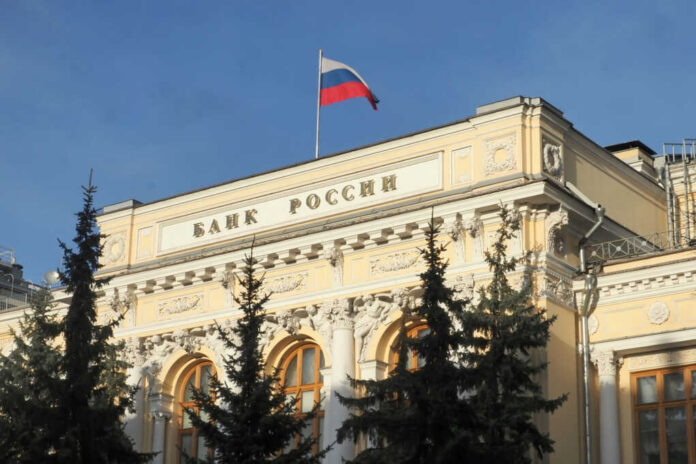
The Central Bank of Russia provided record repo lending, injecting 3.6 trillion rubles on December 23, 2025, as banks absorb government bonds to fund deficits. Interest rates hit 17% before recent 200 basis point cuts to spur growth. Economy Minister Maxim Reshetnikov warned in June 2025 that the nation teeters on recession’s brink. Oxford Economics forecasts GDP at 1.2% for 2025 and under 1% for 2026-2027. This liquidity dependence underscores a distorted war economy, prioritizing defense over prosperity.
Experts like Tatiana Orlova of Oxford Economics describe Russia as “teetering on the brink,” with Anders Åslund noting a fast-approaching fiscal crunch. Yet predictions of imminent collapse since 2022 have not materialized, thanks to central bank maneuvers. Inflation persists as a pressure valve, while war sectors grow at the expense of civilian industries. Consumers face higher prices, farmers battle crop failures, and businesses grapple with high rates and investment declines in oil, gas, and construction.
Implications for Putin and Global Order
Short-term risks include recession, debt servicing woes, and constrained investment; long-term stagnation could limit war efforts and force policy shifts. Kremlin tax hikes burden taxpayers, while social pressures from uneven growth mount. This unsustainable model, dominated by Putin’s military priorities, reveals power dynamics where banks serve state needs over market realities. For Americans in 2026, under President Trump’s America First leadership, it validates rejecting endless wars and elite-driven spending that erode individual liberty and economic freedom.
Both conservatives frustrated by past overspending and liberals wary of growing divides share dismay at government failures. Russia’s plight reinforces that corrupt elites, like the deep state, prioritize power over people. As Republicans hold Congress, vigilance against similar fiscal traps ensures the American Dream endures through limited government and self-reliance, not foreign entanglements.
Sources:
Russia economy recession harvest season disaster Ukraine war Putin
Russia-Ukraine war: Is Russia’s economy really on the brink of collapse?