

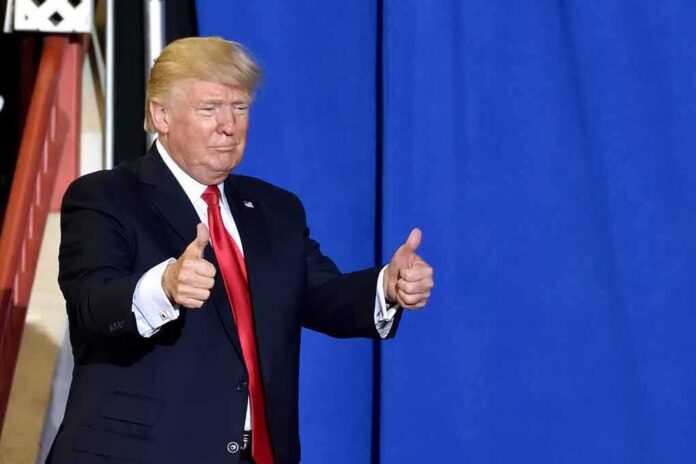
President Trump vowed to be “Mr. Veto” if Democrats seize Congress, signaling a hard stop to any left-wing wish list using a constitutional brake that Democrats likely cannot override.
Story Snapshot
- Trump said the presidential veto is his “ultimate power” and he is ready to use it.
- He expects repeated vetoes to force Democrats to negotiate on spending and policy.
- Analysts say Democrats would likely lack votes to override vetoes if they control Congress.
- Trump also pointed to recent Supreme Court rulings that strengthen core executive authority.
Trump’s Stated Plan: Use the Veto to Block a Progressive Agenda
President Trump told CBS News he would become “Mr. Veto” if Democrats take the House and Senate. He called the veto his “ultimate power” and said he is ready to use it to block bills that raise spending, weaken the border, or revive green mandates that drive up energy costs. He described a simple theory: he would veto bad bills until Democrats agree to real deals that serve taxpayers. He framed this as protecting the Constitution’s separation of powers and fiscal sanity.
Trump’s bargaining model rests on math and pressure. The Constitution lets a president block a bill unless two-thirds of both chambers vote to override. Analysts say Democrats, even with majorities, would almost certainly fall short of that threshold. That makes the veto a powerful shield against expansive spending packages, gun-control pushes, and open-border policies a progressive Congress might try to send to his desk. Trump’s message to voters was direct: divided government does not mean a blank check for the left.
The Constitutional Leverage: What the Veto and Courts Allow
The veto is clear, constitutional, and time-tested. Congress can pass a bill with simple majorities, but the president can stop it cold. Only a supermajority override can revive it. Trump said he will use that tool as needed, and he tied his broader view of executive authority to Supreme Court rulings. In 2024, the Supreme Court recognized immunity for core presidential acts and presumptive immunity for other official acts in Trump v. United States, strengthening protection for lawful executive duties.
Trump also referenced a 2026 Supreme Court decision he called Trump v. Slaughter. Reports say the Court struck down “for cause” removal limits for Federal Trade Commission commissioners, expanding presidential removal authority over certain independent agency leaders. Legal summaries describe the holding as broad but focused on officials who exercise executive power. That means the decision could let the president remove some agency heads who block lawful policy, but the exact boundaries still face later tests and possible congressional responses.
What This Means for Policy Fights on Spending, Borders, and Energy
If Democrats run Congress, they can schedule votes and drive messaging. But the veto lets Trump shut the door on bills that raise deficits, weaken border enforcement, curb gun rights, or push costly climate mandates. A two-thirds override would require a large, bipartisan coalition. Analysts say Democrats would not have that in a typical midterm map. That gives the White House leverage to demand tighter spending, stronger border tools, and pro-growth energy measures before any deal moves.
Independent agencies may also see change. The reported removal ruling limits insulating “for cause” protections in some settings, which can reduce bureaucratic resistance to elected policy. But experts note the Federal Reserve may remain an exception, and courts will likely refine where the line sits. In short, the president’s veto power is settled and immediate; the reach of removal power is expanding but still being mapped by judges and, potentially, by new laws from Congress.
How Conservatives Should Read the Road Ahead
Trump’s stance signals a guardrail for taxpayers, parents, and law-abiding gun owners. The veto is a shield against bloated spending, soft-on-crime bills, and cultural mandates that reach into schools and family life. The Supreme Court’s immunity decision protects the office when it carries out core duties, which can reduce lawfare that distracts from governing. Still, every clash will be case by case. Courts will judge agency disputes, and Congress will try to use oversight and riders to squeeze the White House.
The bottom line is simple. If Democrats control Congress, they can pass messaging bills, but President Trump can stop them. He can then demand serious talks on border security, energy supply, and living within our means. That is how the Constitution was built to work. The people elect a president to execute the laws, not to sign every bill. Expect hard lines, then focused deals where they make sense for the country—and no deal when it sells out American sovereignty or family values.
Sources:
cbsnews.com, congress.gov, mediaite.com, csmonitor.com, theregreview.org