President Trump has stunned Washington and Wall Street by lifting the ban on Nvidia’s AI chip sales to China, triggering a global outcry over national security risks and handing Beijing a potential boost in the tech arms race.
At a Glance
- Trump administration reverses ban on Nvidia’s AI chip sales to China.
- Nvidia CEO Jensen Huang confirms shipments of H20 chips will resume.
- China accounts for 13 percent of Nvidia’s annual revenue.
- Critics warn AI chips could enhance China’s military capabilities.
- Move comes amid broader U.S.-China trade negotiations.
A Billion-Dollar Reversal
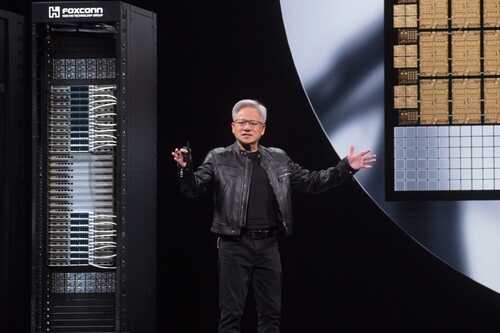
Nvidia, America’s AI chip powerhouse, is back in business with China after the Trump administration quietly lifted a controversial ban on exports of its high-powered H20 chips. Nvidia CEO Jensen Huang announced that the company has been granted permission to apply for export licenses, paving the way for renewed sales to Chinese firms. The decision, made public after Huang’s high-profile meetings with Trump and subsequent visit to Beijing, signals a major policy shift just months after stringent export controls threatened to sever U.S. tech from the Chinese market. According to the Washington Post, Huang expressed confidence that deliveries could start soon, thanks to a modified chip design tailored to meet regulatory limits.
Watch a report: Nvidia Gets US Green Light to Sell Better AI Chips to China
National Security vs. Corporate Profits
The decision is already sparking intense debate within security circles. Critics warn that Nvidia’s cutting-edge AI technology, even in its modified form, could still accelerate China’s military advancements. A former Commerce Department official cited by the Washington Post cautioned that disentangling commercial AI applications from military use in China is “very hard if not impossible.” While Nvidia’s stock soared by more than 5 percent on the news, the national security implications are far murkier.
The reversal coincides with a broader thaw in U.S.-China trade relations. Alongside the chip decision, the administration has eased restrictions on rare-earth mineral exports, further aligning with ongoing negotiations that aim to stabilize economic ties between the two superpowers. Yet analysts warn this détente may be short-lived, especially if geopolitical tensions reignite, potentially leading to a reinstatement of chip bans or new tariffs on semiconductors.
Strategic Risks Loom Large
Proponents of the policy shift argue that allowing U.S. companies like Nvidia to operate in China maintains American leadership in AI innovation and keeps the global market dependent on U.S. technology. However, others see it as a short-sighted concession that strengthens a strategic rival. A comprehensive analysis by the Associated Press underscores that while this may boost corporate profits, the long-term risks to national security remain unresolved.
The debate over AI, trade, and national security is far from settled. With the 2025 election looming and global tech supremacy on the line, Trump’s high-stakes gamble will face intense scrutiny—not just from political opponents but from voters wondering whether this is economic pragmatism or a perilous sellout to Beijing.