

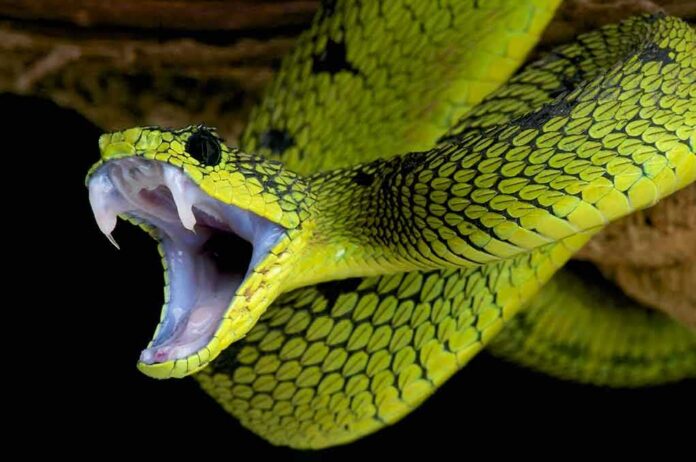
A single, highly venomous sea snake on a Southern California beach is not an omen of invasion; it’s a precise barometer of rare ocean conditions that, every so often, push tropical life briefly into view along our coast.
At a Glance
- A yellow-bellied sea snake washed ashore at Crystal Cove State Beach on September 11 — a species seldom recorded in California.
- Experts say this is the first documented California appearance since 2018 and one of only a handful of confirmed records since 1972.
- Unusually warm water and El Niño patterns historically coincide with these rare incursions of tropical species.
- Risk to beachgoers is low if the animal is left alone; injuries occur when people handle debilitated snakes.
What Happened at Crystal Cove
On a Friday night in mid-September, Jackie Aguilar and her family encountered a sluggish sea snake on the sand at Crystal Cove State Beach in Orange County. After looking into it, she concluded it was a yellow-bellied sea snake, a conclusion later echoed by a certified marine naturalist interviewed by local media. The sighting quickly circulated in broadcast segments and short online articles, both because the snake is genuinely dangerous if mishandled and because it is extraordinarily rare in California. The Los Angeles Times framed the incident within its historical context: the last time this species was documented in the state was 2018.
The rarity is more than a journalistic flourish. Since systematic record-keeping began in the 1970s, biologists and museum curators have tallied only a small number of confirmed appearances statewide. The Natural History Museum of Los Angeles County’s curatorial record and field confirmations put the figure at roughly a half-dozen over decades — a base rate that makes any fresh occurrence notable.
How a Tropical Snake Reaches a California Beach
The yellow-bellied sea snake (Hydrophis platurus, historically Pelamis platura) is a pelagic specialist — an open-ocean snake that spends its life at the surface slicks of warm tropical and subtropical waters in the Pacific and Indian Oceans. It swims with an oar-like, flattened tail; breathes at the surface; and can absorb small amounts of oxygen through its skin, a physiological tweak that allows long, drifting intervals between breaths. California lies outside its normal range. To appear here at all, water masses must help it along.
Two mechanisms matter. First, episodic warm-water anomalies deepen and expand the warm surface layer in the eastern Pacific. Second, altered currents and wind fields can entrain tropical organisms — from sea snakes to hammerheads — and raft them poleward. El Niño years are classic setups: weakened trade winds reduce equatorial upwelling and shift warm water east, reorganizing current lanes that can ferry tropical drifters north. California’s sparse but telling sea snake records cluster with these events.
Why This Sighting Is So Rare — and So Telling
Experts emphasize the base rate: California has logged only a handful of confirmed yellow-bellied sea snakes in more than five decades. The Los Angeles Times, citing museum expertise, places the count at about six since 1972, with two in Orange County in 2018 — and none since, until now. Independent natural history compilations and museum records corroborate that scale of rarity. A single beach video can make the phenomenon feel common; the records say otherwise. This is why scientists mobilize around these events — to document, sample if possible, and fit a new data point into a long, sparse series that connects biology to ocean physics.
The timing matters as well. Most California detections have come between late fall and mid-winter, aligning with the seasonal pulse of El Niño’s coastal influence. An arrival in mid-September is early relative to many past episodes, which is why curators and field biologists treat it as an informative outlier rather than a random curiosity.
Venom, Risk, and Responsible Behavior
Yellow-bellied sea snakes carry potent neurotoxic venom designed for subduing fish at sea; envenomation can cause serious systemic effects. But the danger calculus for beachgoers is counterintuitive. These snakes are built for water. On land they are inefficient, dehydrating quickly, and often severely stressed — which makes them appear approachable and, to the untrained eye, in need of “help.” That is when most human injuries happen. Experts interviewed in this and prior California encounters stress a simple rule: do not touch or attempt rescue. Give the animal space, notify lifeguards or park staff, and let trained personnel handle documentation and disposition.
Public safety messaging around these incidents is consistent: the animal is not a threat if left alone. The risk lies in well-meaning intervention. Even debilitated snakes can bite if handled, and antivenom availability for an exceptionally rare event is not a guarantee. If you must act, confine your action to alerting authorities.
El Niño, Warm Years, and the Pattern Behind the Headline
California’s coast experiences occasional pulses of warm-water fauna during strong El Niño and other anomalously warm years — dorado near Dana Point, hammerheads off Newport, bluefin persisting late into the season. A sea snake on the sand is the most photogenic symbol of that broader process, but it is one datapoint within a patterned set. The museum and media record put five of the six historical California sea snake appearances in El Niño years, which aligns with what oceanographers expect when the eastern Pacific warms and stratifies.
Framing that pattern correctly matters for public understanding. This is not a population shift or a creeping new normal of tropical snakes colonizing our beaches. It is a transport phenomenon superimposed on interannual variability — brief, rare, and instructive. For scientists, each verified snake is a chance to sample genetics, assess condition (were they starving, injured, or simply exhausted?), and trace the likely current pathways that delivered them. For managers, it is a reminder to keep frontline staff briefed on protocols for unusual wildlife, especially in parks and city beaches that see high foot traffic.
What to Do if You Encounter One
– Do not touch, prod, or attempt to move the animal — even with sticks or beach debris. Neurotoxic snakes can deliver medically significant bites even when sluggish.
– Create distance and keep pets away. Ask onlookers to give the snake a wide berth.
– Notify lifeguards, park rangers, or local animal control. If possible, provide a precise location and a brief video taken from a safe distance. This documentation helps biologists maintain the sparse but valuable record of California occurrences.
The Bottom Line
One yellow-bellied sea snake on a Southern California beach is a scientific breadcrumb, not a trend. The best evidence ties these rare appearances to episodic warm-water intrusions, particularly during El Niño. Treat the animal with deference and distance, and let the sighting do its quiet work: adding one more point to a decades-long line that connects what we see on the sand to the vast, shifting machinery of the Pacific Ocean.
Sources:
people.com, timesofindia.indiatimes.com, latimes.com, upi.com, surfer.com, economictimes.indiatimes.com, cbsnews.com