

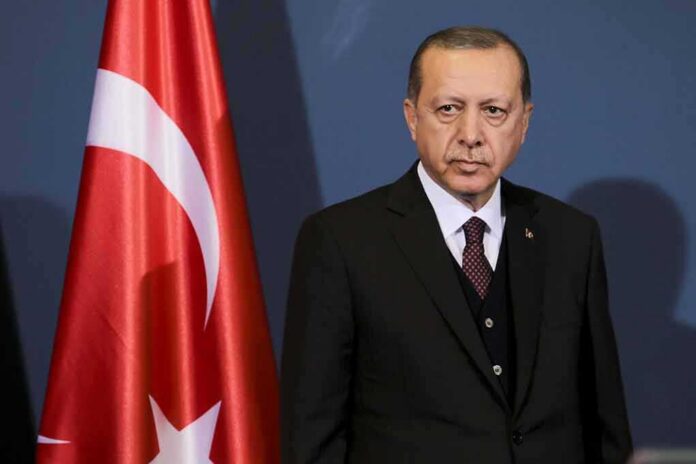
Israel’s defense chief told Turkey to “take in Hamas members” from Gaza, sharpening a risky feud with a NATO power.
Story Snapshot
- Israeli minister Israel Katz urged Turkey to take Hamas members, even naming Antalya.
- Reports link his remark to broader calls for removing Gaza’s population.
- Turkey and allied states rejected any displacement plans as unlawful.
- Katz has a record of pushing Gaza migration ideas in past comments.
Public Challenge to Turkey Over Hamas Safe Havens
Israeli Defense Minister Israel Katz publicly suggested that Turkey should take in Hamas members from Gaza and said President Recep Tayyip Erdoğan could invite them to Antalya, noting there was “a lot of space” without Israeli tourists. Reports framed the remark as part of stronger Israeli messaging toward Ankara over Hamas ties and the Gaza war’s fallout. The statement escalated an already tense standoff between Israel and Turkey over the conflict’s regional spillover and terror sponsorship claims.
Wire reports tied Katz’s words to a wider push for removing Gaza’s population, describing calls for the “full-scale” or “wholesale” removal of roughly two million people. That framing matches Katz’s prior rhetoric that said there is no real solution for Gaza “without migration,” and that people had not left because Hamas blocks them and no country would receive them. The overlap between targeting Hamas members and broader population movement remained blurred in press summaries, not a formal policy paper.
Katz’s Track Record on Gaza Migration Language
Past statements amplify how observers read this new jab at Turkey. In March 2025, Katz said that once hostages were returned and Hamas eliminated, “other options” would open, including going to other countries for those who wished. Earlier, in October 2023, he ordered Gaza civilians to leave immediately while pledging to destroy Hamas. These remarks show a steady line that treats migration as part of the end-state debate for Gaza, even as official Israeli policy is not documented here.
The evidence base in current reports shows a minister’s public suggestion, not a cabinet directive. There is no available decision, diplomatic note, or enforcement plan that would obligate Turkey to accept Hamas members. This matters for readers tracking what is rhetoric versus policy. The Antalya line reads as a pointed dare meant to call out Ankara’s reported history with Hamas figures, while putting the burden back on Erdoğan to prove Turkey is not a haven for extremists.
Turkey’s Immediate Rejection and Regional Backing
Turkey and allied states flatly rejected any plan to force Gazans out of their land. A joint statement with other countries said such proposals violate international law and threaten Palestinians’ rights. Turkish President Erdoğan had already blasted forced displacement ideas in past remarks, calling them inhumane and a “pure atrocity,” while asserting no one can force Palestinians from their homeland. Ankara’s foreign minister also condemned relocation proposals as unacceptable and against human conscience.
🚨 #BreakingNews: Israeli Defense Minister Israel Katz issued a sharp retort to Turkish President Recep Tayyip Erdoğan regarding Gaza, stating that if Erdoğan wishes to assist Hamas, he should invite them to relocate to Antalya, pointing to vacant tourist spaces left by departed…
— X-K (@ConflictRadarME) September 17, 2026
This clash places Washington and allies in a bind. Israel is pointing at Turkey’s long-criticized tolerance for Hamas activity, while Turkey claims moral high ground by rejecting mass removal. For U.S. readers, the stakes hit close to home: the United States depends on Turkey inside the North Atlantic Treaty Organization (NATO) but also backs Israel’s right to crush terror groups. Clear, firm policy — defeat terrorists, protect civilians, and avoid mass transfer — remains the narrow path conservatives expect.
What This Means for U.S. Interests and Security
American conservatives value strong borders, clear red lines against terror, and alliances that work. Katz’s challenge highlights a core test: will NATO partners deny safe harbor to extremists, or enable them? If Ankara will not take responsibility for Hamas figures on its soil, Israel will keep calling it out. The Trump administration aims to deter terror and restrain Iran’s proxies. That mission gets harder when partners talk rights while turning a blind eye to militant networks.
Policy clarity matters now. Israel’s leaders must separate messages about Hamas operatives from any talk that sounds like mass expulsion. Turkey should crack down on any Hamas presence and cooperate against terror finance and travel. The United States should press both sides to lower the heat while closing real terror pipelines. Peace needs borders, not displacement; justice needs facts, not slogans. Strong nations defeat terrorists and shield families — without erasing communities.
Sources:
insiderpaper.com, algemeiner.com, english.ahram.org.eg, nampa.org, opb.org, rtp.pt, mfa.gov.tr, foxnews.com, middleeasteye.net, terrorism-info.org.il