Saudi Arabia says a hostile drone was shot down before it could enter Mecca’s protected airspace, drawing a “red line” warning to Iran-backed militants.
Story Snapshot
- Saudi defenses destroyed a drone south of Mecca at 6:50 p.m. local time.
- Officials blamed Yemen’s Houthi militia and called Mecca’s security a “red line”.
- Debris reportedly fell south of the city; no casualties were reported.
- Houthis denied targeting Mecca and called the claim a lie.
Saudi Military Reports A Timed Intercept Near Holy City
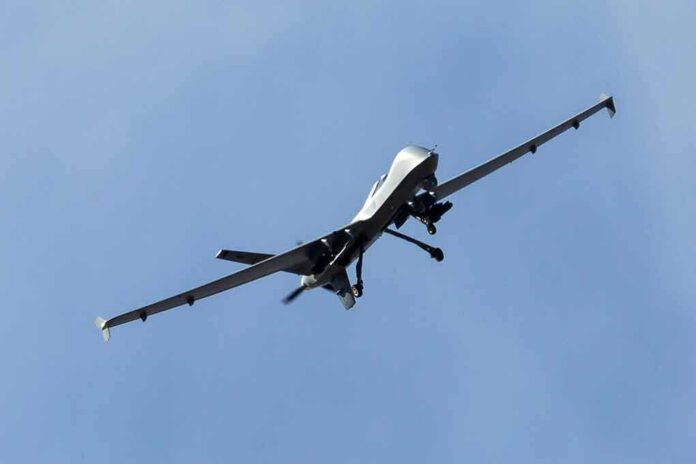
Saudi state media reported that air defenses intercepted and destroyed a hostile drone at 6:50 p.m. on Tuesday, before it entered Mecca’s prohibited airspace. The Saudi announcement said the Royal Saudi Air Defense Forces engaged the drone south of the city, where debris later fell. Reuters and other outlets carried matching details on the intercept and location, citing the Saudi-led coalition’s spokesman for confirmation. No deaths or damage were reported in the immediate aftermath, according to early coverage.
Coalition spokesman Turki al-Maliki framed the incident as an attack on a sacred trust. He said the security of the Two Holy Mosques and pilgrims is a “red line” and warned that any attempt to threaten Mecca would face decisive action. Saudi officials also tied this to a past case, noting a previous Houthi attempt against Mecca tied to a ballistic missile in 2017, reinforcing a pattern claim in the Saudi narrative. The message was clear: sacred sites are non-negotiable.
Competing Claims: Intercept Confirmed, Attribution Disputed
The Saudi-led coalition publicly attributed the drone to Yemen’s Houthi movement, which is aligned with Iran, and positioned the intercept as proof of ongoing cross-border threats. However, senior Houthi figures quickly denied the allegation. A Houthi political bureau member called the claim “an outright lie,” saying their forces did not target Mecca or other holy sites. The denial did not include technical evidence. The Saudi account, while detailed on timing and location, did not release radar logs or debris photos.
Wire reports noted that multiple outlets repeated the same operational details about the intercept south of Mecca and the falling debris, which supports the core timeline but still relies on Saudi statements for attribution. This mirrors a wider regional pattern, where cross-border drones trigger fast military releases and fast political denials. In such cases, independent forensics or debris analysis often lags, if it arrives at all. That gap keeps some questions open even when an intercept is undisputed.
Why This Matters For U.S. Readers And Allies
Threats near Mecca raise risks far beyond one city. Attacks that brush sacred sites can inflame the region, raise oil risk premiums, and invite wider conflict. American travelers, service members, and partners feel those ripples. A proven Houthi attempt would fit years of drone and missile strikes into Saudi territory. A false alarm would still feed the blame game. Either way, the signal to bad actors is that holy places can be leveraged for pressure, which is dangerous.
🚨 Yemen's Houthis refute Saudi Arabia's claim that drone targeted Mecca pic.twitter.com/CjyaN0s5Vz
— Global News & Geopolitics 🌍 (@GlobalNewsGeo) September 17, 2026
Conservatives should insist on two tracks at once: stand firm with allies against terror tactics, and demand real evidence to back public claims. Saudi officials could release radar tracks, engagement logs, and clear photos of recovered parts. Those records could tie the drone to known Houthi systems and show its path toward protected airspace. Independent labs could test fragments and electronics for origin markers. That proof would shut down denials and help shape a stronger, lawful response.
What To Watch Next
Saudi defense officials may publish more data as they weigh the diplomatic cost of disclosure against security needs. Regional partners could add statements or sanctions if attribution firms up. Houthi media may push counter-claims to muddy the waters. If outside analysts gain access to debris, expect a forensic report on components, navigation, and explosives. Until then, the record supports that a drone was intercepted near Mecca, while the debate over who launched it and its exact aim continues.
Sources:
democrata.es, france24.com, reuters.com, spa.gov.sa