

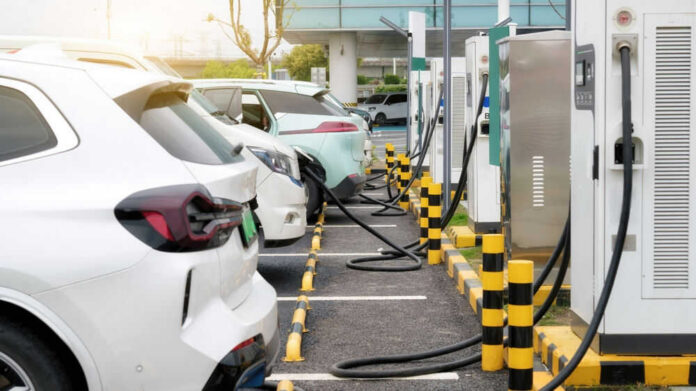
Soaring gas prices are reigniting American interest in electric vehicles just months after the federal government’s elimination of the $7,500 EV tax credit cratered the market, exposing how policy whiplash leaves ordinary families scrambling to manage skyrocketing transportation costs.
Story Snapshot
- EV searches surged 31% on CarGurus in March 2026 as gas prices topped $4 per gallon nationwide
- The abrupt end of the $7,500 federal tax credit in fall 2025 triggered the “Great EV Slowdown,” dropping EV market share to just 6-7%
- Used EV prices have fallen 8.5% year-over-year, making electric vehicles more accessible despite the subsidy loss
- Industry analysts remain skeptical that interest will translate to immediate sales, citing upfront cost barriers and consumer hesitancy
Tax Credit Elimination Crashes EV Market
The sudden termination of the $7,500 federal EV tax credit in fall 2025 devastated electric vehicle sales across America. After consumers rushed to purchase EVs throughout summer and early fall to capture the subsidy, the market collapsed once the incentive vanished. EV sales stabilized at a mere 6-7% market share, prompting automakers to slash production targets and withdraw certain electric models from their lineups entirely. This policy reversal exemplifies how Washington’s flip-flopping on energy priorities punishes working families who lack the financial cushion to absorb sudden changes in vehicle economics.
Gas Price Spike Drives Consumer Search Activity
Gasoline prices climbing above $4 per gallon nationally in early 2026, partially driven by escalating conflict with Iran, triggered a sharp increase in consumer interest for electric vehicles. CarGurus reported a 31% surge in EV listing views during March, while Edmunds tracked a 22.4% consideration rate among car shoppers researching vehicles on their platform. Kevin Roberts from CarGurus noted that online search behavior typically precedes actual purchasing decisions, suggesting these metrics could signal future sales trends if fuel costs remain elevated. The timing coincided with tax refund season, which traditionally boosts all vehicle sales.
Used EV Market Shows Conflicting Signals
The used electric vehicle market presents contradictory data that complicates predictions about consumer behavior. CarGurus and Cox Automotive reported accelerating used EV sales with strong wholesale auction prices during March, while iSeeCars data showed no meaningful shift in purchasing patterns during the same period. Used EV prices have dropped 8.5% year-over-year, creating opportunities for budget-conscious buyers facing painful choices at the gas pump. However, charging infrastructure gaps and range anxiety continue to deter many potential buyers, particularly those in rural areas or households dependent on long-distance commuting.
Analysts Doubt Quick Market Recovery
Industry experts speaking at the New York International Auto Show in early April expressed caution about prospects for rapid EV adoption despite heightened consumer interest. Erin Keating from Cox Automotive emphasized that gasoline prices alone represent insufficient leverage to overcome entrenched barriers, stating that sustained price increases combined with improved vehicle variety would drive gradual growth rather than sudden shifts. Higher-income buyers who dominate the new vehicle market demonstrate less sensitivity to fuel costs, limiting the impact of gas price spikes. Analysts hypothesize that prices would need to reach $6 per gallon or higher to fundamentally alter purchasing decisions across broader demographics.
Government Policy Whiplash Compounds Challenges
The elimination of federal EV incentives reveals how bureaucratic decision-making divorced from market realities harms ordinary Americans trying to navigate transportation choices. Families who invested in gasoline-powered vehicles before the tax credit ended now face doubled fuel budgets, while those who delayed purchases hoping for stable policy lost access to thousands in subsidies. This instability benefits neither consumers nor manufacturers, who require predictable regulatory frameworks to plan production investments. The situation underscores growing frustration with policymakers more focused on political maneuvering than addressing the practical economic struggles of citizens dependent on reliable, affordable transportation options.
Sources:
Drive slower, go electric, don’t drive at all: Americans weigh options for saving gas – KUOW
High Gas Prices Have Americans Reconsidering EVs – Jalopnik
Rising gas prices are pushing more U.S. car shoppers toward EVs – Autoblog