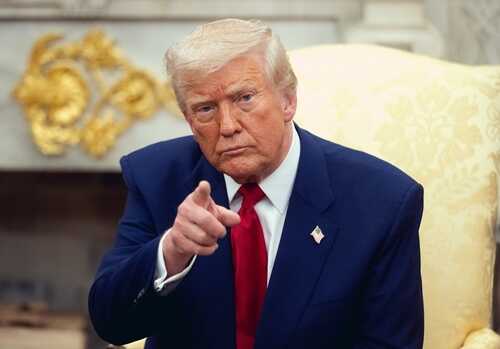
President Trump’s executive order to target Muslim Brotherhood chapters as terrorist organizations marks a major escalation in America’s fight against global extremism and a sharp rebuke to years of Washington’s weak, compromising policies. This action instructs federal agencies to begin reviewing specific chapters in Lebanon, Egypt, and Jordan for official designation as Foreign Terrorist Organizations, signaling a decisive shift toward stronger security and a willingness to confront organizations linked to regional violence.
Story Snapshot
- Trump directs federal agencies to review terrorist designation for Muslim Brotherhood chapters in Lebanon, Egypt, and Jordan.
- The move follows years of bipartisan advocacy and recent Brotherhood-linked violence in the Middle East.
- Executive order requires a formal review process, not an immediate blanket designation, signaling measured but decisive action.
- Potential designations could trigger diplomatic, legal, and financial consequences for foreign and U.S.-based affiliates.
Trump’s Executive Order: A Shift Toward Stronger Security
On November 24, 2025, President Donald J. Trump signed an executive order instructing the Secretaries of State and Treasury to begin reviewing whether Muslim Brotherhood chapters in Lebanon, Egypt, and Jordan should be officially labeled as Foreign Terrorist Organizations and Specially Designated Global Terrorists. This action comes after years of warnings from national security officials and bipartisan lawmakers who have demanded a tougher stance against groups responsible for endangering American interests and global stability.
The order does not immediately impose the terrorist designation, instead mandating a formal 30-day review and a follow-up report. This ensures agencies present evidence-based recommendations before any final determination, a process intended to avoid the diplomatic pitfalls that hampered similar efforts in past administrations. Trump’s move directly responds to violent incidents linked to Brotherhood affiliates and reflects frustration with the slow, toothless responses of prior leadership.
Trump Moves Toward Labeling Parts of Muslim Brotherhood as Terrorists
♦️ President Trump signed an executive order taking a step toward designating parts of the Muslim Brotherhood as foreign terror organizations.
♦️ The order specifically targets branches located in Egypt,… pic.twitter.com/qPN3eg0E0A
— Al Majalla (@AlMajallaEN) November 25, 2025
The Muslim Brotherhood’s Troubling Record
Founded in 1928 in Egypt, the Muslim Brotherhood has evolved into a vast transnational movement, spawning offshoots such as Hamas and influencing Islamist politics across the Middle East. U.S. intelligence and policy organizations have documented the Brotherhood’s involvement in supporting or inciting violence, especially through its chapters in the region. The October 2023 Hamas-led assault on Israel exposed the Lebanese chapter’s direct militant role and calls for violence from Egyptian Brotherhood leaders, underscoring the ongoing threat these networks pose.
Despite the Brotherhood’s claims of peaceful political engagement, repeated evidence links certain branches to terrorism and radicalization. Previous U.S. administrations hesitated to take sweeping action, citing the group’s complex structure and concerns over diplomatic backlash. However, the Trump administration’s targeted approach—focusing on specific chapters with documented ties to violence—reflects a strategic recalibration that prioritizes American security over political correctness or globalist appeasement.
Stakeholders, Process, and Conservative Policy Goals
The executive order empowers the Secretaries of State and Treasury, with input from the Attorney General and Director of National Intelligence, to lead the review. Congressional advocates, including Senator Ted Cruz and Representatives Mario Diaz-Balart and Jared Moskowitz, have long pushed legislation to label the Brotherhood a terrorist entity, arguing that prior inaction risked emboldening extremists and undermining U.S. values. Advocacy groups like FDD Action have applauded Trump’s move, calling it overdue and vital for protecting the homeland.
This measured but firm policy stands in sharp contrast to the past decade’s left-leaning reluctance to confront Islamist extremism. Trump’s approach—requiring a formal process but signaling willingness to act—demonstrates respect for due process and the rule of law while upholding the government’s duty to defend Americans from foreign threats. The administration’s willingness to withstand diplomatic pressure and media criticism signals a renewed commitment to constitutional principles and national sovereignty.
Legal, Diplomatic, and Social Impact
If the review results in terrorist designations, the affected Brotherhood chapters would face severe legal and financial consequences, including asset freezes and travel restrictions. U.S. law enforcement and intelligence would gain expanded tools to disrupt networks that finance or coordinate terrorism. The move could also pressure U.S. allies in the Middle East—especially those with Brotherhood-linked political actors—to clarify their stance and cooperate more closely on counterterrorism.
Critics warn of possible diplomatic fallout and risks to civil society groups, but supporters counter that a strong stance is necessary to deter extremism and protect American interests. The debate underscores a broader struggle: whether the U.S. will continue to tolerate dangerous organizations in the name of political compromise, or assertively defend its people and values. Trump’s executive order signals a clear return to the latter—echoing the frustrations of conservatives who have watched constitutional principles, national security, and common sense eroded by years of weak, globalist policies.
Analysis and Next Steps
National security organizations and congressional sponsors argue the designation is both overdue and essential. The White House and State Department have emphasized the order’s legal rigor and national security rationale, while academic and diplomatic voices highlight the importance of distinguishing between violent extremist chapters and those engaged in legitimate political activity. As the review unfolds, Americans committed to constitutional rights, strong borders, and a robust national defense will be watching closely to ensure the administration’s resolve does not waver. The process may set a precedent for designating other transnational groups that threaten U.S. security and values, reinforcing the administration’s promise to put America first.
Watch the report: Trump signs order designating Muslim Brotherhood as terror organization
Sources:
FDD Action Applauds Trump’s Move to Designate Muslim Brotherhood Chapters as Terrorist Organizations
Muslim Brotherhood Terrorist Designation Act (Congressional Record)
U.S. State Department Foreign Terrorist Organizations