

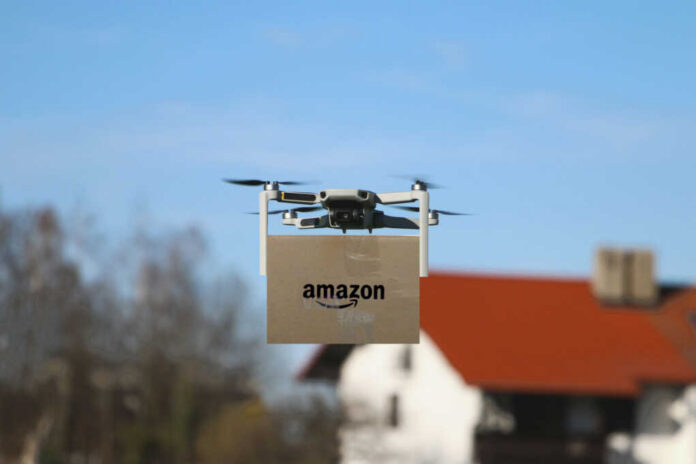
Amazon’s futuristic drone deliveries are smashing customer packages from 10 feet onto concrete, betraying promises of reliable service with broken goods and backyard invasions.
Story Highlights
- Prime Air drones intentionally drop packages from 10 feet without landing, shattering fragile items like syrup bottles in viral tests.
- Incidents include neighborhood internet outages in Texas, crane collisions in Arizona, and privacy complaints over scanning cameras in Michigan.
- Amazon charges $4.99 for under-60-minute deliveries while investing billions in $146,000 drones aiming for 500 million annual drops by 2030.
- FAA probes safety risks as customers face refunds for damaged orders and communities endure disruptions from corporate overreach.
Drone Design Flaws Exposed
Amazon Prime Air drones hover at 10 feet above suburban homes in Arizona, Texas, Michigan, and Florida before releasing small parcels onto concrete driveways. Engineer Tamara Hancock ordered a plastic bottle of blue raspberry syrup to test the system. The package plummeted, shattered on impact, and left a sticky mess. Videos capture packages tumbling and rolling post-drop, contradicting claims of robust “purpose-built packaging.” Customers report frequent breakages despite Amazon’s assurances.
Safety Incidents Spark FAA Scrutiny
A drone clipped internet cables in Texas, causing neighborhood outages and triggering an FAA investigation. In Arizona, collisions with construction cranes forced a temporary program pause. Michigan homeowners filed police reports over drones equipped with cameras scanning backyards for drop zones, raising spying fears. These mishaps highlight risks of deploying high-cost machines—$146,000 each—in populated areas without flawless execution. Local communities bear the brunt of Amazon’s rapid rollout.
Amazon’s Response Amid Backlash
Amazon spokespeople acknowledge “rare incidents,” offering refunds and promising improvements through ongoing “learnings.” The company defends the non-landing design as efficient for under-60-minute deliveries at $4.99 per order. Influencer Hancock questions shipping fragile items via drones, noting even plastic fails. Operations continue unchanged across four states, with ambitions for 500 million deliveries yearly by 2030. FAA probes persist without halting expansion.
Corporate giants like Amazon prioritize speed and scale over reliability, eroding trust in American innovation. Conservatives see this as elite overreach—pushing unproven tech that burdens everyday families with damaged goods and privacy threats. Liberals decry safety lapses widening divides between powerful firms and vulnerable communities. Both sides recognize a deeper failure: unaccountable bureaucracies and big business favoring profits over people, drifting from self-reliant principles. Grounded delivery drivers, rooted in hard work, outperform this flashy failure.
UPDATE: AMAZON delivery drones dropping boxes from 10 feet in air, damaging orders… https://t.co/wtgTYutBok pic.twitter.com/zcJkrco60Q
— NA404ERROR (@Too_Much_Rum) April 18, 2026
Broader Implications for American Families
Short-term refunds strain Amazon’s model while viral outrage slows adoption. Long-term, persistent damage and incidents risk packaging redesigns or regulatory clamps. Neighborhoods face debris, noise, and outages; customers clean up messes from “future-proof” hype. This underscores frustrations with elite-driven solutions that ignore real-world limits. In Trump’s America First era, where limited government reins in excesses, such corporate fumbles fuel demands for accountability over globalist gimmicks.
Sources:
“Video Shows Amazon Delivery Drone Dropping Package Directly …”