

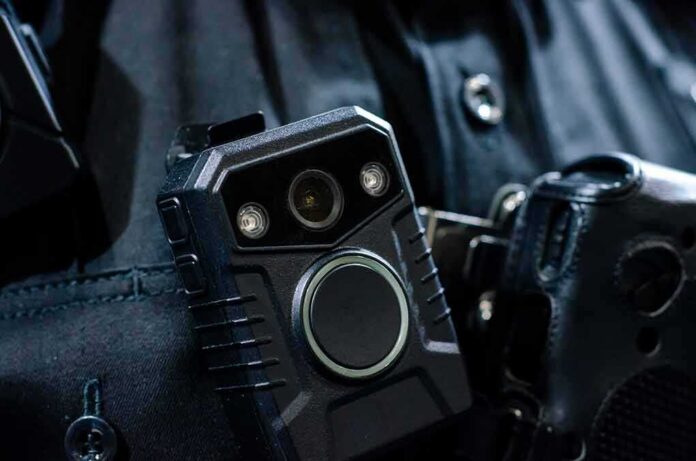
ICE has tightened its traffic-stop rules by requiring body cameras, and that move undercuts the media drama built around the policy.
Quick Take
- Immigration and Customs Enforcement (ICE) now requires body cameras for enforcement activities and vehicle stops.
- The agency says the policy is meant to improve accountability, trust, and transparency.
- At least one officer on a stop team must be recording before the stop can proceed.
- Some reports still noted that ICE controls much of the footage release process.
ICE Puts the Rule in Writing
ICE first set out a body-camera policy in January 2024, then updated its guidance in February 2025 to cover more enforcement work. The written policy says officers will use body-worn cameras during enforcement activity, with activation at the start of an encounter or as soon as it is safe to do so. The agency also said the update was tied to broader Department of Homeland Security standards and a White House order on accountable policing.
That makes the current vehicle-stop rule look less like a stunt and more like a formal enforcement standard. Fox News reported that ICE officers were told they could resume traffic stops only if at least one officer involved wore a body camera, and that officers without access to cameras were not authorized to make those stops. Reuters separately reported that White House border czar Tom Homan said the rule applied to vehicle stops nationwide.
Why the Policy Matters on the Street
The practical effect is simple: an ICE stop cannot move forward unless the team has recording coverage. That matters because vehicle stops can turn fast, and body cameras create a record of what officers saw and how they responded. ICE said the policy covers arrests, detentions, search warrants, removals, and other field actions, but it does not apply to recording people only because they are exercising First Amendment rights.
The rollout also shows why critics were quick to question the agency’s control over the footage. ABC News reported that ICE planned to release video of shootings and other serious incidents only when it decided that doing so was in the agency’s “best interests.” That kind of release rule may be common inside bureaucracy, but it also gives Washington a lot of say over what the public sees after a high-stakes encounter.
What the Reported Change Means for Enforcement
Supporters of the rule can point to a clear public-safety case. The policy is meant to give honest officers a record that can protect them when complaints fly and facts are disputed. Reuters quoted Homan saying body cameras can exonerate more officers than they convict, and ICE’s own release said the policy is designed to build trust through accountability, effectiveness, and transparency. That is a plain win for law and order.
The broader picture is also familiar to anyone who has watched federal agencies after a scandal. They often adopt new rules after public pressure, then spend months fitting the equipment into the field. Fox News reported that full deployment was still underway and could take roughly two more months, while ABC News said more than half of field officers already had cameras and the rest were expected to get them by the end of September. For now, the policy is real, the cameras are real, and the accountability test will be whether ICE follows through.
Sources:
redstate.com, foxnews.com, ice.gov, reuters.com, abcnews.com, uticaphoenix.net