
A 2028 “comeback” storyline for Kamala Harris is colliding with lingering questions about a $500,000 donation to Al Sharpton’s nonprofit that wasn’t disclosed during a friendly MSNBC interview.
Quick Take
- Rev. Al Sharpton is publicly boosting Harris as a major 2028 contender, even as the “Sharpton interview donation” controversy from 2024 continues to shadow the relationship.
- Federal Election Commission filings showed Harris’s campaign gave $250,000 twice to Sharpton’s National Action Network (NAN) shortly before Sharpton interviewed her on MSNBC.
- President Trump has called the donations an illegal “endorsement” payment; Sharpton denies wrongdoing and has threatened legal action over the allegation.
- MSNBC has said it was unaware of the contributions at the time and has not clearly stated whether it took disciplinary action.
Sharpton’s 2028 push revives an older ethics fight
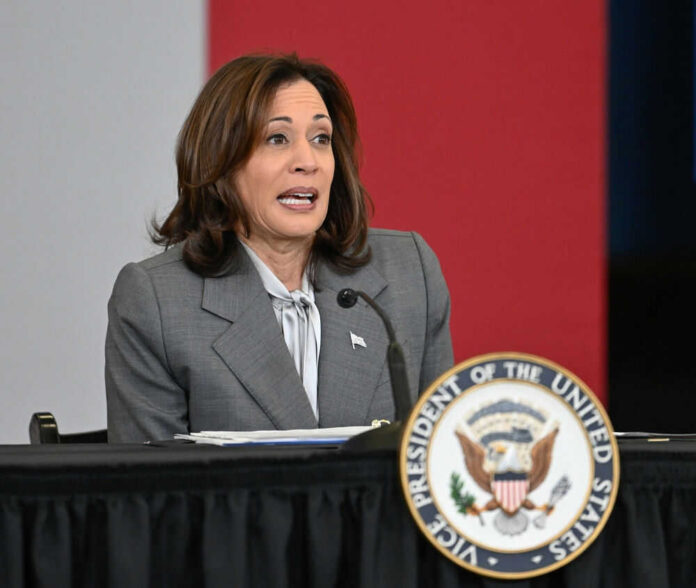
Rev. Al Sharpton recently told reporters that former Vice President Kamala Harris remains “a potent force” in the Black community and said he plans to highlight her at National Action Network events as Democrats quietly size up 2028. The political hook is not simply whether Harris runs again; it is that Sharpton’s renewed promotion arrives after a 2024 controversy involving Harris campaign money routed to Sharpton’s nonprofit shortly before his on-air sit-down with her.
The confirmed reporting centers on Sharpton’s praise, Harris’s public hints about possibly running, and the earlier donation-and-interview timeline.
What the filings show: two $250,000 donations before an MSNBC interview
FEC filings reported in multiple outlets show Harris’s 2024 campaign donated $250,000 to the National Action Network on Sept. 5, 2024, and another $250,000 on Oct. 1, 2024. Sharpton then conducted an MSNBC interview with Harris on Oct. 20, 2024, described by critics as a “softball” segment. The controversy intensified after the election when the donations became widely publicized and were not disclosed during the broadcast.
Those dates are the concrete backbone of the dispute: the contributions were real, substantial, and closely timed to a national TV appearance with the nonprofit’s founder. What remains less clear is whether any law was broken or whether the payments were explicitly tied to an endorsement or favorable treatment. It does not document a formal enforcement action, an official finding of illegality, or a definitive link beyond timing and political inference.
Trump’s allegation vs. Sharpton’s denial—and what’s unproven
President Trump has argued publicly that paying for an endorsement is illegal and framed the Harris-NAN contributions as a bribe. Sharpton has rejected that characterization, pointing to NAN’s internal policy against endorsements and pushing back hard enough to raise the possibility of a defamation fight. With Republicans controlling Washington in Trump’s second term, the political incentive to spotlight media-and-nonprofit entanglements is obvious, but the evidence standard is still the key issue.
The strongest verified facts are the donation amounts, the timing, and MSNBC’s statement that it was unaware of the contributions. The weaker part is the leap from “appearance of influence” to “proven illegal endorsement payment.” Conservatives who prioritize clean governance can reasonably argue that undisclosed financial relationships undermine public trust and demand better transparency, even when a courtroom-level case has not been established.
MSNBC’s disclosure problem and the broader credibility gap
MSNBC has said it did not know about the donations at the time of the interview, and outside reporting has noted the network did not clearly say whether it took action regarding Sharpton’s role. That ambiguity feeds a long-running complaint from many Americans—right, left, and center—that powerful institutions protect their own. When a prominent host runs a politically connected nonprofit and interviews a major candidate whose campaign donated heavily to that nonprofit, viewers expect clear, immediate disclosure.
The larger trend is a credibility gap that keeps widening: voters see politics, media, and nonprofits blending together, then watch accountability get deferred or buried in procedural statements. For conservatives frustrated by “elite” networks and closed-loop influence, the Sharpton-Harris episode functions as a case study in why disclosure rules and ethics policies matter. For liberals concerned about money in politics, it’s also a reminder that friendly access can look transactional even when the intent is disputed.
Why Democrats’ 2028 jockeying could keep this story alive
Sharpton’s new push for Harris also brought scrutiny to his public claims about her electoral strength, including a widely criticized remark suggesting she received more votes than any candidate except Trump—an assertion challenged in the coverage. As Democrats audition 2028 contenders, opponents will likely keep focusing on any factual sloppiness, because small inaccuracies become easy proxies for bigger arguments about competence, credibility, and media protection.
Al Sharpton Asks Kamala Harris If She's Running for President Again (Republicans Will LOVE the Answer) https://t.co/X2CGPjY7Ca
— Fearless45 (@Fearless45Trump) April 10, 2026
For now, the available evidence supports two simultaneous realities: Harris is being positioned—at least by allies—as a serious figure in Democratic politics, and the nonprofit donation timing remains an unresolved ethics flashpoint with no definitive public adjudication shown. If Harris does step toward a run, Republicans can be expected to reuse the episode as a “pay-to-play” narrative, while Democrats will argue it was legitimate nonprofit support.
Sources:
Al Sharpton denounces Trump claim Kamala Harris bribe
MSNBC ‘unaware’ Harris campaign gave $500K to Al Sharpton’s group ahead of friendly interview
Al Sharpton 500K donation from Harris campaign