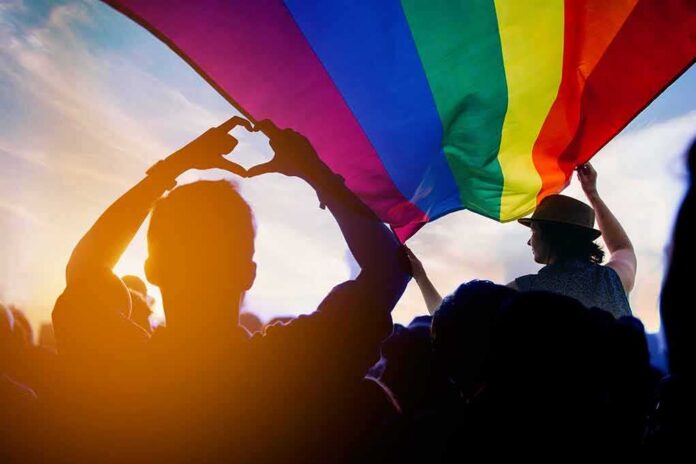
A church official’s Pride-to-swastika image ignited a political firestorm after activists demanded punishment and a harsher diocesan response.
Story Highlights
- Italian bishop’s secretary posted an image turning Pride flags into a swastika during Aosta Pride.
- LGBT activists and political groups demanded a clear condemnation from the diocese.
- The bishop said only official channels state diocesan positions; the secretary later apologized.
- Evidence rests on media descriptions of a deleted WhatsApp status, not the original file.
What Happened And Who Said What
Italian media reported that Gilbert Turcotti, the personal secretary to Bishop Franco Lovignana of Aosta, shared a WhatsApp status showing Pride flags arranged to form a swastika. Reports said the caption read “Question of perspective,” and that the post appeared during the Aosta Pride events on September 26, 2026. Local LGBT leaders called the image an insult to people persecuted by the Nazis, and they pressed the diocese to condemn the content directly.
Bishop Lovignana answered through a note that stressed a boundary. He said the Diocese of Aosta speaks only through its official channels. He added that any other position is the personal opinion of whoever posts it. Activists said that statement did not address the image’s offense. They argued the diocese should state clearly whether comparing Pride flags to a swastika is wrong. The secretary later apologized and said he did not intend to offend.
Why The Backlash Grew
Activist groups, including Arcigay Valle d’Aosta and Aosta Pride organizers, said the response failed to “take distance” from the post. They said a direct judgment was needed from the bishop. National political voices joined in. The Radicali called the Pride-to-swastika comparison “aberrant” and urged a clear distancing by the bishop. These reactions show how fast symbolic images can trigger calls for public shaming or discipline even when a church official frames the act as personal speech.
This case also shows the risk of fast outrage built on vanishing posts. The reported image came from a WhatsApp status that was later removed. Current coverage relies on journalists’ descriptions and screenshots, not the original file with metadata. That makes later review harder and locks debate into rival readings of intent and impact. Still, the concrete facts stand: a named aide shared a swastika-style Pride image; activists demanded a stronger rebuke; the bishop stressed official channels and personal views; and an apology followed.
The Stakes For Speech, Faith, And Civic Calm
Conservatives can see a pattern here. Activists often demand institutions do more than clarify policy. They want leaders to condemn, punish, and internalize a specific social script. That pressure chills debate and mocks free expression. When a diocese draws a clear line between official statements and private speech, it protects conscience in a plural society. That boundary matters whether the post is wise, foolish, or offensive to some readers.
Bishop’s secretary shares Pride flag swastika image
A controversy has erupted in the Diocese of Aosta after a bishop’s personal secretary shared an image arranging Pride flags into a swastikahttps://t.co/OoFeQaIyXq
— AdVaticanum (@RealAdVaticanum) September 28, 2026
Americans know this drill from home. Social media storms become tools to police belief. They push leaders to choose sides fast, not think carefully. President Trump’s supporters value free speech, faith, and the right to speak hard truths about culture. People can reject Nazi analogies and still reject speech policing. A calm standard helps: judge conduct by facts, name what is official, accept apologies when given, and resist mob demands that override due process and conscience.
What Facts Are Firm And What Is Missing
Firm facts come from named outlets: the aide posted the image; activists objected; the bishop limited his statement to policy lines; and the aide apologized. Those claims appear across multiple reports, including local and national press. What is missing is the original file and its metadata, plus a fuller account from the aide about intent. That gap does not erase what happened, but it cautions against reading more into the post than the record supports today.
Bottom Line For Readers
Church staff should use care online. Nazi symbols inflame, and they often swamp any point the poster hoped to make. But the answer to a bad or crude image is not soft tyranny by outrage. The answer is clarity, repentance when due, and consistent rules. Here, the diocese marked speech lines, the aide said sorry, and activists demanded more. Citizens who value free exercise, free speech, and ordered liberty should defend those lines and reject coercive shaming.
Sources:
lifesitenews.com, gazzettamatin.com, quotidiano.net, lastampa.it