

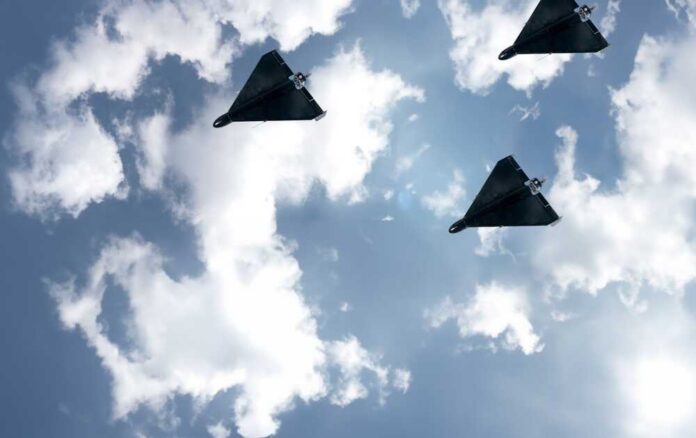
The United States is building a new drone academy in Morocco that could quietly reshape power and security across Africa.
Story Snapshot
- The U.S. Africa Command signed a deal with Morocco to build the Africa Multidomain Training and Experimentation Center (AMTEC), including a drone academy, in Tan-Tan by 2030.
- The academy’s mission is to train African forces to use drones for counter-terrorism, with early courses already tested during the African Lion 2026 exercises in Morocco.
- Training will cover small drones, loitering munitions, counter-drone systems, electronic warfare, and intelligence sharing, making Morocco a central tech hub.
- This “training” footprint fits a long U.S. pattern in Africa where partnership sites can evolve into enduring operational hubs, raising sovereignty and influence questions.
U.S. And Morocco Seal Deal For Africa Drone Training Hub
U.S. Africa Command and the Royal Moroccan Armed Forces have now signed a memorandum of understanding to create the Africa Multidomain Training and Experimentation Center in Tan-Tan, Morocco, with a planned opening around 2030. The center will include three pillars: a multidomain training area, a dedicated drone academy, and an innovation lab for new military technology. Command leaders say the goal is to boost readiness, help African partners fight terrorism on their own, and deepen military cooperation with a trusted ally on the Atlantic flank.
The new drone academy inside AMTEC is designed to train operators, planners, and instructors from Morocco and other African countries in how to use unmanned aircraft systems in real missions. Its curriculum will focus on airspace coordination, combining land, air, and electronic tools, and using drones for strike missions and intelligence, surveillance, and reconnaissance. Officials frame this as a “sustainable, enduring capability” that, once proven, can be copied in other regions of Africa, turning Morocco into a model for future training hubs.
African Lion Exercises Provide First Test Of Drone Academics
The concept is already moving from paper to practice. During African Lion 2026, a major annual exercise hosted by Morocco, the U.S. Army ran inaugural “drone academics” courses that graduated more than 20 service members from four nations at Southern Zone Headquarters in Agadir. Those courses included an eight-day planner track and a ten-day operator track focused on small, cost-effective unmanned aircraft systems, where students learned to integrate drones into maneuvers, manage airspace, and deliver real-time reconnaissance for commanders under realistic field conditions.
Another pilot module tied to the upcoming African Lion 2026 rotation is set to train a smaller group of 16 participants, who will help test the initial management and operations framework for the planned center. These early modules are meant to show how well partner forces can share data, coordinate drone flights, and work together on target identification and threat tracking. After this proving phase, officials plan to expand into more advanced sensor fusion and electronic warfare topics, slowly building a network of African drone professionals who share common standards and tactics.
Morocco’s Strategic Role And The Bigger U.S. Footprint In Africa
Morocco was chosen for this mission because it already has strong military infrastructure, long-standing defense ties with the United States, and a key location near Atlantic sea lanes and the Sahel belt. Reporting also notes that the hub will train Africans in small drones, loitering munitions, counter-drone tools, and integrated electronic warfare, drawing on Israel-linked systems already being built in the country. That mix of U.S. partnership and Israeli technology makes Morocco a growing center for Western-style defense innovation on the continent.
🔴 US to build drone academy in Morocco, shift Africa strategy to partner training
U.S. Africa Command signed a memorandum of understanding Monday with Morocco's Royal Armed Forces to establish the Africa Multidomain Training and Experimentation Center in Tan-Tan by 2030. The… pic.twitter.com/VvLaSMmayN
— NewsTongue (@NewsTongueX) July 14, 2026
This academy also fits a wider pattern in how the United States has expanded its military footprint in Africa over years. Research on U.S. bases shows that many “training” or “lily pad” sites begin as support hubs and later develop into vital nodes for drone operations and intelligence sharing, like the large drone base built in Agadez, Niger. While officials stress that AMTEC is about empowering African partners and not permanent garrisons, the mix of advanced drones, electronic warfare, and data networks raises long-term questions about influence, local control, and how far this model could spread beyond Morocco.
Sources:
taskandpurpose.com, moroccoworldnews.com, africa.businessinsider.com, jpost.com, ecofinagency.com, en.bladi.net, europesays.com, stripes.com, linkedin.com, ynetnews.com