Iran’s claim that it struck a U.S. F-35 is the kind of battlefield reality check that turns “limited operations” into an open-ended war with rising costs and shrinking trust.
Quick Take
- U.S. Central Command confirmed an F-35 made an emergency landing after a combat mission over Iranian territory; the cause and full damage assessment remain under investigation.
- Iran’s IRGC claims a “new advanced air defense system” hit the jet and caused serious damage, but the U.S. has not fully confirmed Tehran’s account.
- Analysts say passive detection methods—especially infrared search-and-track and heat-seeking systems—could challenge stealth aircraft that mainly evade radar.
- The incident complicates claims that Iranian air defenses were “flattened,” and it deepens conservative frustration over another expanding Middle East conflict.
What We Know: An F-35 Returned Damaged After a Combat Sortie
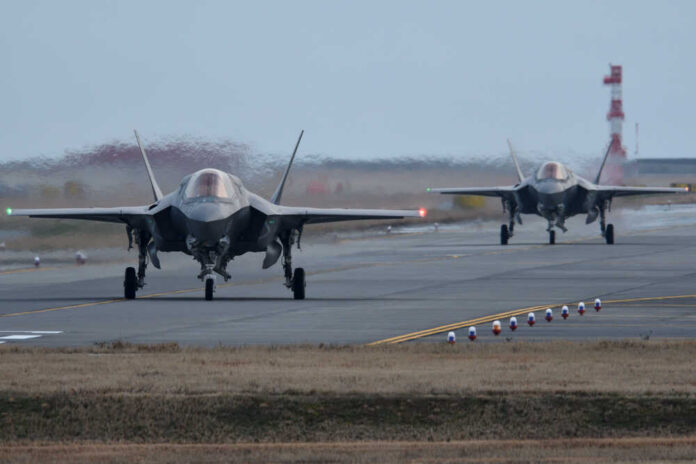
U.S. Central Command has confirmed that an F-35 was forced into an emergency landing at a U.S. facility in the Middle East after flying a combat mission over Iranian territory, and officials said the pilot made it down safely. Beyond that, key details are still unsettled in public reporting. The U.S. has not released a detailed description of the damage or a definitive explanation for what caused it, citing an ongoing investigation.
Iran’s Islamic Revolutionary Guard Corps has publicly claimed responsibility, saying an American F-35 was hit in the early morning hours by what it described as a “new advanced air defense system,” and that the aircraft sustained serious damage. Iranian state-linked outlets also circulated grainy footage presented as evidence of the interception, but that video has not been independently verified in the research provided. The basic event—an emergency landing after the mission—appears more firmly established than Iran’s specific account.
Why Stealth Isn’t Invisibility: The Heat-Signature Problem
The F-35’s edge comes from low observability against radar, not from being literally invisible. Analysts reviewing Iran’s claim point to a different pathway to detection: passive sensors that look for heat rather than emitting radar energy. Infrared search-and-track systems and heat-seeking weapons can exploit the reality that even advanced jets generate strong thermal signatures, especially from engines and exhaust. If Iran successfully tracked the aircraft this way, it would underscore a known limitation of radar-focused stealth.
Reported candidate systems in the research include infrared-guided or heat-seeking options and layered approaches that avoid reliance on radar entirely. The discussion mentions locally developed shoulder-fired missiles with limited range and upgraded surface-to-air systems incorporating infrared tracking elements, along with loitering munitions designed for anti-air roles. None of those specifics have been confirmed by U.S. officials in the cited material, but the technical concept is plausible enough that military planners take it seriously in contested airspace.
A Narrative Collision: “Decisive Wins” vs. Localized Air Superiority
The timing matters. Public messaging in March 2026 featured strong claims of U.S. momentum and degraded Iranian defenses, including remarks that Iranian air defenses were “flattened.” An emergency landing by a flagship stealth fighter—whether from a hit, a malfunction, or another factor—cuts against the clean “mission accomplished” tone many Americans have been conditioned to distrust after decades of shifting war narratives. Research also notes observers describing only localized air superiority in parts of Iranian airspace, not blanket control.
Other reported losses and incidents in the broader conflict frame why this one resonates: the research cites at least 16 U.S. aircraft lost, including multiple MQ-9 Reaper drones, with some losses attributed to accidents and friendly fire. That context doesn’t prove Iran shot down or crippled an F-35, but it does show a high-tempo, high-risk environment where “small” incidents can accumulate into strategic vulnerability. For taxpayers, the question becomes whether objectives are clear enough to justify the mounting bill.
What This Means for Conservatives Skeptical of Endless Wars
For a conservative, Trump-supporting audience already split on deeper involvement in the Iran war—and increasingly willing to question how U.S. interests align with Israel’s security priorities—the F-35 episode lands like a warning flare. The incident highlights how quickly a conflict can expand from strikes and deterrence into attrition, procurement pressure, and higher energy costs at home. When the public is told the U.S. is winning decisively but investigations remain unresolved, skepticism grows across the MAGA base.
Limited data remains a constraint: the investigation’s findings, the true cause of the damage, and the verified method of detection have not been publicly settled in the research provided. Still, the immediate policy implications are clear. U.S. leaders may have to adjust tactics for contested airspace, harden aircraft against passive tracking, and level with voters about risks, costs, and end goals. That’s the accountability test conservatives have demanded for years—especially when promises were made to avoid new wars.
Sources:
How did Iran detect an ‘invisible’ F-35? Viral video points to a passive tracking system
US F-35 stealth jet forced into emergency landing after possible Iranian strike
Iran claims first-ever strike on US F-35; jet makes emergency landing
US F-35 stealth jet shot? How Iran’s infrared systems may have struck the “ghost of the skies”