

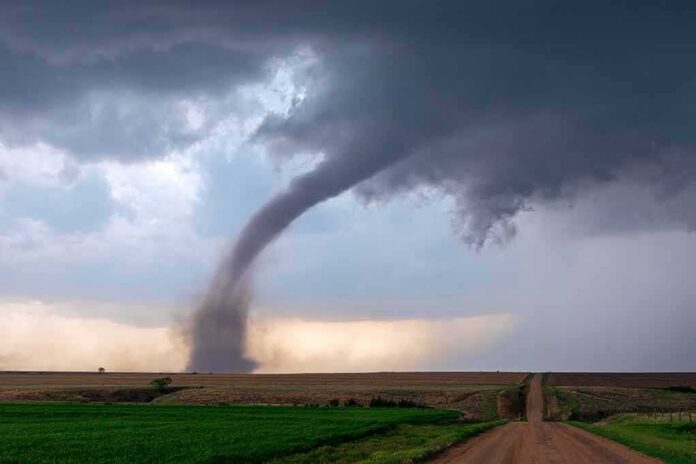
A new federal review shows tornado activity is shifting into the South and Midwest, where more families live in mobile homes and face greater danger.
Story Highlights
- Peer-reviewed research found a significant eastward move in tornado activity since 1979.
- Federal data say activity fell 25% in the West and rose 12% in the East.
- Mobile home residents face 15 to 20 times higher tornado death risk, officials report.
- States like Mississippi, Alabama, Tennessee, and Kentucky show rising trends.
Peer-Reviewed Studies Document An Eastward Tornado Shift
Researchers reported a clear eastward redistribution of tornado activity from 1979 to 2017. The study compared confirmed tornado reports with the Significant Tornado Parameter and found the same pattern in both, which strengthens confidence in the signal. The authors identified fewer events across parts of the Plains and more across the lower Midwest and Southeast. A science release summarizing the work highlighted increasing trends in Mississippi, Alabama, Arkansas, Missouri, Illinois, Indiana, Tennessee, and Kentucky. These findings anchor today’s planning decisions.
A 2026 U.S. Census Bureau story echoed those findings in plain terms. It summarized that tornado activity decreased in the West by 25% and increased in the East by 12%. That federal summary helps local leaders, emergency managers, and families understand risk today, not from maps drawn decades ago. It also aligns with what many Southerners feel each spring and fall. More of the rough weather is showing up east of the old “Tornado Alley” line.
The South’s Mobile Home Exposure Raises Fatality Risk
The same federal story warned about housing risk. It reported that National Weather Service officials say people in mobile homes are 15 to 20 times more likely to be killed in a tornado than people in site-built homes. Many Southern counties have a high share of mobile and manufactured housing. When storms form at night and move fast, warning and shelter gaps turn deadly. This is a practical problem, not a political one. Families need earlier alerts and better anchor systems.
Local officials can act without new red tape. Counties can map mobile home parks, run targeted siren tests, and pre-stage safe rooms at churches and schools. Builders can promote storm-rated anchors and straps when owners replace skirting or porches. State leaders can fund simple shelter grants instead of new bureaucracy. These steps protect life while respecting property rights and tight budgets. They fit conservative values: empower people, use data, and cut waste.
What The Shift Means For Red-State Preparedness
Emergency managers across the South and Ohio Valley face changing seasons and storm hours. Studies describe more tornado-favorable days outside the traditional spring peak and farther east. That means more fall events, more nighttime warnings, and more trees and hills complicating radar coverage. Rural counties should train volunteer spotters, fill gaps in radar with mobile units, and modernize siren coverage. Churches, veterans halls, and small businesses can host hardened safe rooms. These tools save lives without federal overreach.
The research does not claim one settled cause for the shift, but the observed geographic change is robust across reports and atmospheric data. Officials and neighbors should plan for what is measured now. Families can build a low-cost plan: identify a safe interior room, keep shoes and helmets handy, store a weather radio with fresh batteries, and review routes to a nearby shelter. Personal responsibility, backed by clear alerts and strong local leadership, remains the best defense.
Sources:
washingtontimes.com, discovermagazine.com, nature.com