

A crowd-sourced address and a helicopter strike converged in Haiti as forces hit a compound tied to the 400 Mawozo gang leader.
Story Highlights
- Haitian police and Salvadoran troops hit a house linked to 400 Mawozo near Port-au-Prince.
- President Nayib Bukele said the strike destroyed the gang leader’s home and headquarters.
- Bukele first asked social media users for the exact location days before the attack.
- Reports said up to 20 gunmen died, but the total remains unconfirmed.
What Happened During The Strike
Reports from regional outlets said Haitian police led an operation against a two-story compound linked to Wilson Joseph, the leader of the 400 Mawozo gang, with support from Salvadoran troops. Video posted by El Salvador’s President Nayib Bukele showed helicopters circling and firing on the site in the Croix-des-Bouquets area outside Port-au-Prince. His post claimed the gang’s headquarters and the leader’s home were destroyed. Independent reports confirmed the attack but did not certify full headquarters destruction.
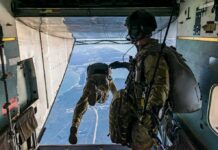
Coverage described four helicopters in the air, with two reportedly operated by Salvadoran forces. Haitian police units, including a drone task force, were cited as key participants on the ground. Outlets reported that armed men were killed inside the compound, with some reports saying as many as 20 died. Those figures were not settled by an official casualty list or forensic count. Newsrooms cautioned that the numbers remained unconfirmed even as the strike footage spread online.
The Social Media Angle And Targeting Claims
Days before the strike, Bukele asked users on the social platform X to send the exact address of a property linked to Wilson Joseph. Users replied with coordinates for a site east of Croix-des-Bouquets. After the operation, Bukele said the residence and gang headquarters had been destroyed. Public reporting verifies the crowdsourced responses and the subsequent strike, but it does not prove the user-supplied coordinates were used in the final targeting chain.
Outlets tracking the raid noted that Haitian police employed explosive drones in recent operations and that private security contractors supported the force. These accounts add detail about who took part and how. They also reinforce that Wilson Joseph, also known as Lanmò San Jou, was not present during the strike. That fact limits claims that the gang’s leadership was neutralized, even if a key safe house or hub was hit and damaged.
Why This Matters For Security And Accountability
Haiti’s fight with armed gangs has pushed security forces toward drone and air support to strike urban strongholds. This operation shows how fast action, air power, and open-source tips can combine in today’s fights. It also shows the risks. Casualty numbers remain unclear. The exact command chain and the rules used to choose the target were not released. Responsible governments should verify targets and release basic facts after strikes to protect civilians and maintain trust.
🔴 El Salvador destroys 400 Mawozo gang HQ in Haiti air and ground strike
El Salvador's military conducted a ground and air attack on the headquarters of the 400 Mawozo gang in Croix-des-Bouquets, a suburb of Port-au-Prince, on Tuesday, according to President Nayib Bukele. The… pic.twitter.com/rM7IrDkvr2
— NewsTongue (@NewsTongueX) November 11, 2026
For American readers, the lesson is simple. Strong borders and tough law enforcement beat chaos. Crowdsourced tips can help, but the state must verify targets with care. Clear records prevent abuse and stop political spin from either side. Leaders who confront gangs and defend innocent families deserve credit. But the process must guard life, property rights, and the rule of law. Haiti’s turmoil is a warning: when criminals rule streets, regular people pay the price.
Sources:
townhall.com, rfi.fr, aljazeera.com, news.com.au, latinamericadailybriefing.substack.com