
Psychological and medical experts are sounding alarms over recent observations of Donald Trump’s behavior, pointing to possible cognitive and neurological decline with increasing frequency and urgency.
At a Glance
- Mental health experts have flagged Trump’s coordination, gait, and verbal clarity as possible signs of decline.
- Concerns focus on early indicators of frontotemporal dementia, a degenerative neurological condition.
- Trump was recently seen with a bruised hand and exhibiting stiffness during public appearances.
- Official statements continue to affirm Trump’s health without providing updated or independent evaluations.
- Analysts warn that these visible and behavioral signs warrant greater medical transparency.
Behavioral Signs Raising Concern
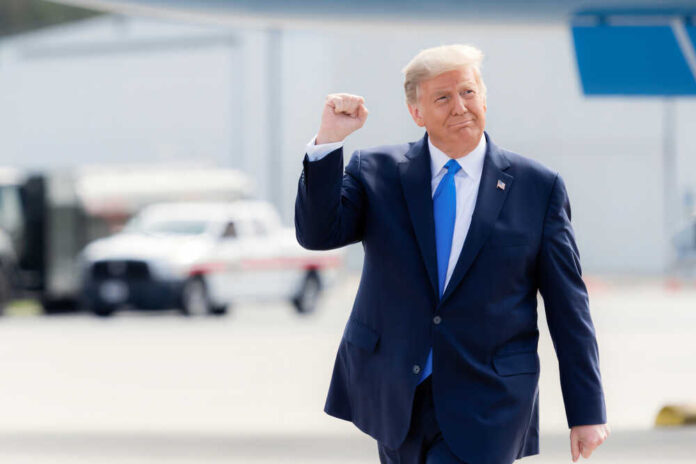
In multiple recent public events, Donald Trump has appeared to move stiffly, at times dragging his feet or gripping nearby furniture for balance. Footage from a Cabinet meeting and a state visit involving South Korea’s president captured him shifting weight unevenly and blinking irregularly. Mental health professionals reviewing the footage point to classic neuromotor indicators of cognitive stress or degeneration.
The most frequently raised red flag is unsteady gait—combined with slowed reactions, flat facial expressions, and occasional lapses in sentence structure or word recall. Dr. Maya Kapoor, a neuropsychiatrist quoted in Hindustan Times, noted that while no diagnosis can be made from footage alone, “Trump’s presentation shows multiple symptoms consistent with early frontotemporal dementia.”
Cognitive Deterioration or Political Theater?
Speculation about Trump’s mental state has ebbed and flowed for years. However, what distinguishes the current wave of concern is its convergence with visible physical anomalies. These include the now widely circulated images of a dark bruise on the back of Trump’s right hand, which White House physician Dr. Sean Barbabella attributed to “soft tissue irritation.” While not conclusive of cognitive decline, it adds to the impression of an aging and physically fragile president.
Watch now: Donald Trump’s Health DECLINE? Psychologists Spot · YouTube
The persistence of behavioral signs—repeated within short intervals—has led some clinicians to call for independent neurological evaluations. Frontotemporal dementia (FTD), unlike Alzheimer’s disease, can emerge subtly, first affecting decision-making, emotional control, and social behavior. Psychologists emphasize that early diagnosis is critical, particularly for individuals in positions of high responsibility.
Limited Disclosures, Expanding Doubts
Despite visible symptoms and heightened media attention, the Trump team has not released updated medical records or addressed cognitive health directly. Previous reports from Dr. Ronny Jackson, now a political ally and no longer licensed, have continued to assert that Trump is in “excellent health”—though these claims remain unsupported by recent testing or documentation.
Political aides insist that Trump’s long appearances and unscripted speeches demonstrate vigor, but mental health experts caution against using energy or speech length as metrics of neurological integrity. Dr. Rajeev Menon, speaking to Mathrubhumi English, likened such appearances to “muscle memory performances” that can mask early-stage cognitive issues.
In the absence of transparency, speculation has filled the vacuum—leaving voters, observers, and clinicians grasping for clarity in a political environment where medical information is treated more like a campaign weapon than a public record.
Sources
The Daily Beast
Mathrubhumi English
Hindustan Times
STAT News
People