

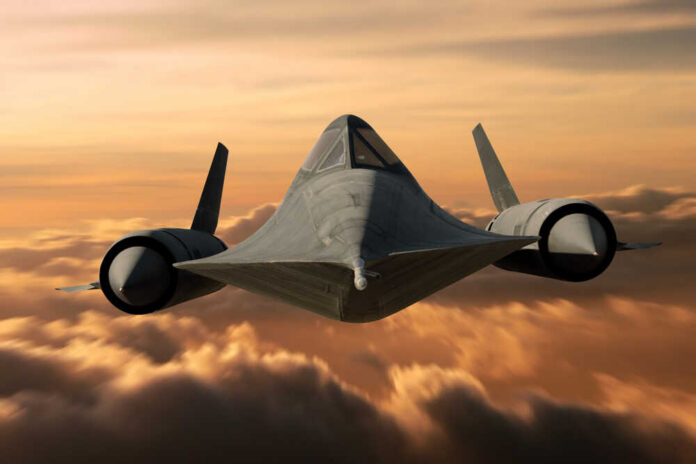
Chinese AI firms with direct ties to the People’s Liberation Army claim they tracked America’s most advanced stealth bombers during combat operations over Iran, raising alarm about whether our military’s technological edge has been compromised by adversaries using nothing more than publicly available data.
Story Snapshot
- Hangzhou-based firms Jingan Technology and MizarVision claim they used AI to track B-2 stealth bombers during Operation Epic Fury strikes on Iran
- Companies marketed tracking data to Chinese military clients, boasting they monitored over 100,000 US military movements using satellite imagery and radio signals
- Jingan released then deleted purported audio of B-2 communications, declaring “in the eyes of AI, there is no absolute stealth”
- US responded by pressuring commercial satellite firms to halt imagery sales in the Middle East, but Chinese firms continue operations
Private Chinese Firms Expose US Military Movements
Two Hangzhou-based technology companies, Jingan Technology and MizarVision, publicly claimed in mid-April 2026 that they successfully tracked US B-2 Spirit stealth bombers and carrier strike groups during Operation Epic Fury combat operations against Iran. Jingan released audio recordings purportedly capturing radio communications from four B-2 bombers before deleting the post, while both firms marketed detailed intelligence on American force movements to clients including the People’s Liberation Army and China’s Central Military Commission. The companies operate as certified military suppliers under China’s military-civil fusion strategy, turning commercial AI tools into battlefield surveillance systems targeting US forces.
AI Platforms Fuse Public Data Into Military Intelligence
The Chinese firms claim their AI platforms analyzed publicly available information from multiple sources—satellite imagery from China’s Jilin constellation, automatic identification systems tracking ships, flight data, and intercepted radio signals—to reconstruct US military operations in real time. MizarVision’s website boasted it “exposed” American refueling operations and force buildups, tracking carrier groups USS Gerald R. Ford and USS Abraham Lincoln plus aircraft stationed at bases in Saudi Arabia, Qatar, and Israel. The firms predicted Operation Epic Fury roughly 50 days before it launched by detecting unusual concentrations of over 100 warships and dozens of aircraft, demonstrating capabilities that blur the line between open-source research and military espionage.
Unverified Claims Raise Questions About Stealth Vulnerability
While Jingan Technology boldly declared “there is no absolute stealth” and claimed to have tracked over 100,000 military movements, independent verification of their most dramatic assertions remains absent. The company deleted its purported B-2 audio recording shortly after posting, and no evidence confirms whether the intercepted communications were genuine or if flight path reconstructions were accurate. Defense analysts note the tracking likely occurred during return phases of missions when stealth protocols relax, not during actual strike operations. An anonymized Chinese defense source acknowledged limitations, admitting the firms lack real-time access to US domestic data and rely heavily on Western commercial satellites and China’s own Jilin imagery constellation.
US Responds With Data Restrictions, Faces Larger Challenge
Following Washington Post exposure of the Chinese tracking operations, American officials pressured Planet Labs to suspend Middle East imagery sales, attempting to cut off one data source feeding enemy intelligence. The US House Select Committee on China warned that AI has become a “battlefield surveillance tool” in adversary hands, highlighting growing vulnerability as commercial technology outpaces military countermeasures. Yet the response reveals a fundamental problem: the very openness that defines free societies provides authoritarian competitors with intelligence advantages. Chinese firms continue marketing their services, their websites actively promoting capabilities to PLA clients, while Americans debate whether this represents a genuine technological breakthrough or merely sophisticated propaganda exploiting open-source information that defense establishments worldwide already monitor.
Chinese Firm Claims It Tracked US Jets Over Iran During Operation Epic Fury https://t.co/Kab8NGGcfT
— zerohedge (@zerohedge) April 14, 2026
This underscores broader concerns shared across the political spectrum about America’s strategic position. Citizens frustrated with government failures now confront evidence that bureaucratic inertia may have allowed adversaries to weaponize commercial technology against our military while officials focused on political theater rather than hard security problems. Whether these Chinese claims prove entirely accurate or partially exaggerated, the firms’ PLA contracts and certified military supplier status demonstrate Beijing’s systematic effort to exploit every available advantage while Washington struggles to respond effectively. The gap between American technological capabilities and the political will to protect them continues widening, leaving service members exposed and taxpayers questioning whether defense dollars are buying real security or just expensive systems that can be tracked by AI algorithms running on publicly available data.
Sources:
Chinese AI Firm Claims to Track US B-2 Stealth Bombers During Operation Epic Fury in Iran War
Chinese firms market Iran war intelligence, exposing U.S. forces
Chinese Firms Market Iran War Intelligence, Exposing U.S. Forces