
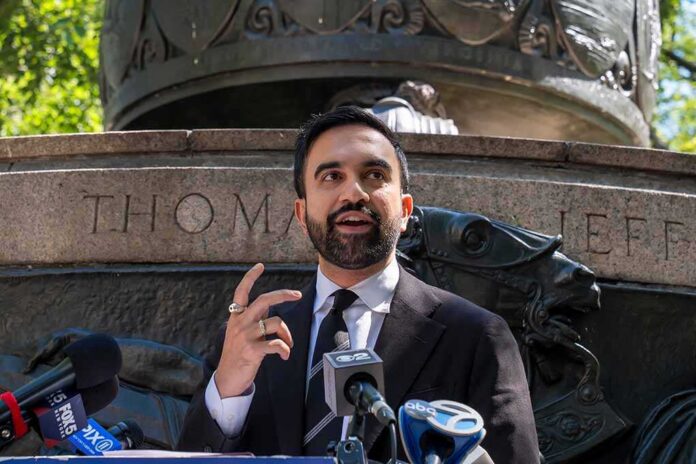
New York City Mayor Zohran Mamdani left a solemn Oct. 7 vigil and then dined at a Palestinian restaurant, triggering sharp backlash over the message that sequence sent.
Story Snapshot
- Mamdani was booed at a New York City vigil marking three years since Hamas’ Oct. 7 attacks.
- Reports say he later met with Palestinian families at a Palestinian restaurant the same night.
- His statement mourned Israeli victims and criticized Israel’s Gaza actions, angering Jewish groups.
- The dinner choice drew new criticism amid an already tense public mood.
Vigil Tension: Booing, Chants, and a Divided Crowd
Eyewitness accounts and video show protesters booed Mayor Zohran Mamdani as he arrived at the Union Square vigil on the third anniversary of the Hamas attacks. Some in the crowd shouted “traitor” and “sellout,” while others pushed past barriers, escalating tensions at what was meant to be a quiet memorial. Local outlets reported the mayor did not address the vigil and stood through the event. The tone on the ground was loud, angry, and deeply split over how to mark the date.
Jewish Telegraphic Agency reporting said Mamdani stood silently and did not speak at the vigil, which had been planned as a remembrance of the Israeli lives lost in the Oct. 7, 2023 terror attack. The crowd dynamics reflected two clashing narratives: grief for Israeli victims and anger over the ongoing war in Gaza. The mayor’s presence in that space became a magnet for frustration from both sides, turning a planned moment of unity into a public confrontation.
A Controversial Statement Sets the Stage
Earlier that day, Mamdani released a statement that condemned the Oct. 7 Hamas atrocities and also accused Israel of “ongoing genocide” in Gaza. That framing sparked immediate outrage from Jewish leaders and groups, who said it blurred a solemn anniversary with heated charges against Israel. Coverage from Jewish Insider and Jewish Telegraphic Agency described sharp pushback to his wording. The statement shaped how many read every move that followed, including the dinner stop.
Multiple outlets noted the mayor’s message tried to hold two ideas at once: mourning Israeli victims and recognizing Palestinian suffering. That balancing act, however, drew fire because of the term “genocide,” which critics called inflammatory on this date. The clash over language raised emotions before the vigil began. By the time the event started, patience was thin. That context explains why the later restaurant choice landed as it did with many New Yorkers.
The Dinner Stop: Meeting or Message?
Reports said Mamdani went after the vigil to Ayat, a Michelin Guide-listed Palestinian restaurant, described as a meeting with Palestinian families, according to unnamed sources. That account fits his public schedule language about meeting with Palestinian New Yorkers. Even so, the choice of venue, timing, and the charged day led many to see the dinner as a political signal. The lack of a detailed guest list or on-record explanation keeps debate alive over the visit’s purpose.
Commentary in conservative and center-right outlets argued the sequence “sent a clear message” to Jewish New Yorkers, suggesting the dinner crossed from outreach into provocation. Aggregated coverage also highlighted the symbolism of dining at a Palestinian spot right after a vigil for Israeli victims. Supporters might see a bridge-building effort, but critics view it as tone deaf at best. The uncertainty about exactly who attended and what was said adds fuel to both sides.
Why It Matters to Public Order and Trust
City leaders set the tone for safety and unity. On days tied to terror and war, words and optics carry extra weight. New Yorkers want leaders who grieve clearly for the murdered and keep politics from hijacking memorials. When officials blend remembrance with charged policy claims, they risk losing trust across communities. Precise language, transparent schedules, and on-record explanations help reduce anger and rumor. Without that clarity, symbolic acts quickly become flashpoints.
What Responsible Leadership Should Do Next
City Hall should release a straightforward account of the dinner: who attended, why that location, and what was discussed. That transparency would let people judge facts, not guesses. The mayor should also draw bright lines for solemn dates: keep memorials focused on victims and reserve policy fights for other forums. Clear separation shows respect for grief and reduces needless conflict. New York is safest when its leaders avoid mixed signals on days that still hurt.
Sources:
mediaite.com, dailywire.com, townhall.com, nytimes.com, abc7ny.com, nymag.com, foxnews.com, jewishinsider.com