

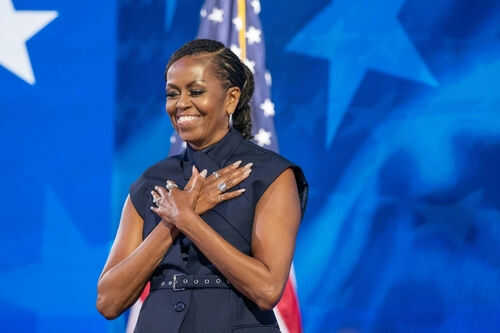
Attacks on Michelle Obama keep resurfacing because many critics still mix politics with ugly identity-based abuse.
Quick Take
- Recent posts describe a new round of criticism as racist, sexist, and dehumanizing.
- Research shows Michelle Obama has faced racial and gender stereotypes since the 2008 campaign.
- Some of the record also shows ordinary political criticism, so the line between debate and abuse matters.
- The available evidence is stronger on public reaction than on the original remarks themselves.
Why the backlash keeps returning
Michelle Obama has remained a target because the public still reads her through race, gender, and politics at once. Sources in the research package describe recent attacks as dehumanizing and note that observers saw them as racist and sexist. That reaction fits a longer pattern in which critics have used the “angry Black woman” stereotype against her since the 2008 campaign [1][2][3].
The deeper issue is not just one incident. Academic material in the research package says Michelle Obama was often framed through stereotypes tied to Black womanhood, while another source says media coverage around her was sometimes unfair, biased, and in some cases arguably racist. Michelle Obama herself has also spoken publicly about the harsh and racialized treatment she and her family faced, which shows that hostility toward her was not imaginary [2][3][4][5].
What the record does and does not prove
The record supports one clear point: Michelle Obama has faced repeated attacks that many people reasonably see as racially loaded or sexist. The research also supports a narrower point that some of the criticism of her over the years was tied to specific public comments or her role as a political symbol. That means not every negative comment about her is automatically hateful, even if some of it clearly crosses the line [1][2][13].
What the record does not prove is a full timeline showing a single, organized, decade-long campaign of hate. The strongest items in the package are social posts reacting to recent incidents, plus academic work on stereotypes and public opinion. Those sources help explain the pattern, but they do not provide a complete archive of every hostile remark or a line-by-line review of each disputed statement [3][7][8][9][19].
Why this matters to conservatives
Conservatives who care about basic fairness should want a clear standard. Real criticism of public figures is part of free speech, but race-baiting and gender attacks poison public debate. The available research shows why this topic stays so charged: Michelle Obama is not treated by many opponents as just another former first lady, but as a symbol of broader fights over race, culture, and power [11][13][16][19].
That climate helps explain why social media can turn a single dispute into a bigger moral fight. Posts in the research package show advocacy groups and commentators quickly labeling the latest incident as racism and dehumanization, while other sources emphasize the need to separate legitimate disagreement from abuse. For readers, the lesson is simple: demand the facts, keep the language clean, and do not let social media outrage replace evidence [8][9][16][20].
Sources:
[1] YouTube – Michelle Obama hate persists nearly a decade after White House tenure
[2] Web – Michelle Obama has spent decades showing the world … – Instagram
[3] Web – What was said about Michelle Obama at the UFC event was not …
[4] Web – [PDF] The Strong Black Woman ≠ Superwoman: Shattering Stereotypes
[5] Web – [PDF] The Trump Effect and the Damage Done – Clemson OPEN
[7] Web – Sistas in Zion – Facebook
[8] Web – Hate Speech – Cambridge University Press & Assessment
[9] Web – NCNW Headquarters – Facebook
[11] Web – Listen to this song. It calls out the hate and racism – Facebook
[13] Web – The Metaphorical Attack of Michelle Obama in US Print Headlines
[16] Web – Hands off Michelle Obama, who has dedicated her life to public …
[19] Web – First Lady Michelle Obama
[20] Web – Understanding Public Opinion Toward Black Women Political Elites