

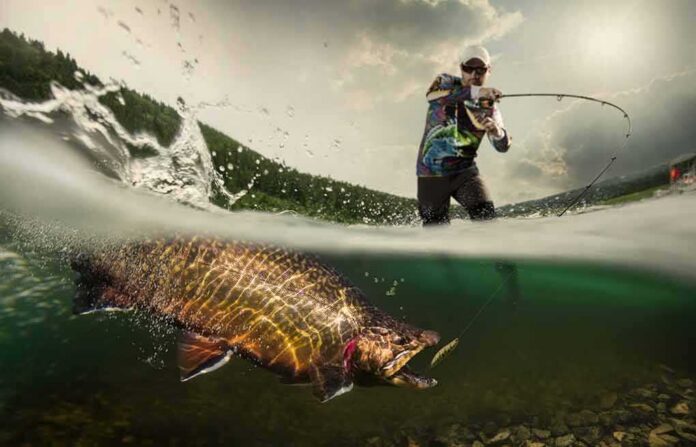
AI-fabricated “trophy fish” are flooding social feeds, eroding trust in real anglers and honest photography.
Story Highlights
- Reports show a steady stream of AI-made or altered fish photos hitting hobby communities.
- Fact-checkers traced viral “giant sea” images to AI posts later admitted as artificial.
- A government fisheries account even posted AI fishing art without clear labels, drawing criticism.
- Experts say provenance tools beat guesswork when spotting fakes online.
AI Catch Photos Are Undercutting Real Anglers’ Credibility
Writers and photographers tracking fishing culture report a surge of fake or altered catch photos on social media. One detailed account describes a “slow drip” of synthetic or edited fish images in surf casting circles, including a stolen shot where an angler’s face was swapped to feign a catch. Hobby pages show how easy tools can invent fish that never existed. The harm lands on honest anglers. They now face doubts every time they post a real catch that looks impressive.
Fact-checkers have traced viral “giant marine creature” pictures to posts that later admitted the images were artificial. These posts were first tied to real events but were then corrected as AI creations, with the original author clarifying that the visuals were generated and not documentary proof. This is a clear pattern. A post grabs attention first, then the correction limps in after the damage. Trust takes a hit, and the audience grows more cynical about anything that looks remarkable.
Government Messaging Stumbled By Using AI Fishing Art
An Australian state fisheries account published AI-styled fishing images without plain labels, which led to public criticism documented by national media. A spokesperson said they had not received complaints that people mistook the images as real photos, but the incident highlights the core issue. When leaders and agencies blur lines between artwork and evidence, people lose faith. Clear labels are simple. Failing to use them invites confusion and feeds the broader trust problem online.
Fishing writers and conservation voices have warned for years that social media rewards shock value over proof. Synthetic fish images are cheap to make and fast to spread. Real catches take time, skill, and patience. Bad actors chase clicks with fake trophies while good anglers carry the burden of proof. The net effect is a market for attention where integrity loses. That dynamic has fueled scams and spam elsewhere online, and the fishing world is seeing the same playbook now.
How To Spot Fakes And Protect The Tradition
Fact-check groups and researchers say to look beyond the image. Check origin, timing, and outside coverage. When a photo claims rare size or species, ask where it was taken, who shot it, and whether any credible outlet confirms the event. One report stresses that verification based on provenance beats guessing by eye. Metadata standards and content credentials help show if an image was captured by a camera or made by software, and what edits were applied.
Common-sense checks still help. Watch for odd hands, bent rods with no line tension, repeating scale patterns, or nonsense text on gear. Compare shadows and reflections. When possible, ask for the full frame or short video from the same moment. A single tight crop is easier to fake. These steps do not solve everything, but they raise the bar. The goal is not to ban creative fishing art. It is to label it clearly so real catches keep their rightful place.
Why This Matters For Families, Faith, And Fair Play
Fishing is a family tradition for many readers. Parents teach kids patience, honesty, and respect for the water. AI trophy fakes mock those values. They turn a day on the shore into a contest of filters and prompts. That is not healthy for kids or for communities. It is also not free speech in the civic sense. It is misrepresentation for clout. The cure is transparency backed by tools that prove what happened and when, and by platforms that reward truth over tricks.
Photos of AI-generated fish filling the feeds of fishing hobbyists may seem like no big deal—but the anger these images produce reveals what happens when AI makes it impossible to trust what we see, @Tyler_A_Harper argues: https://t.co/9QkH8V7fag
— The Atlantic (@TheAtlantic) October 3, 2026
Conservatives care about trust, fair rules, and earned results. That starts with clear labels on synthetic images, stronger platform policies, and better user habits. Ask for proof before you share. Praise honest anglers, not viral fakes. Push brands and agencies to disclose when art is art. These steps defend the culture we love and protect the next generation from a flood of digital counterfeits. The fish are not getting bigger. The lies are. We do not have to take the bait.
Sources:
theatlantic.com, it-boltwise.de, hatchmag.com, factcheck.hkbu.edu.hk