

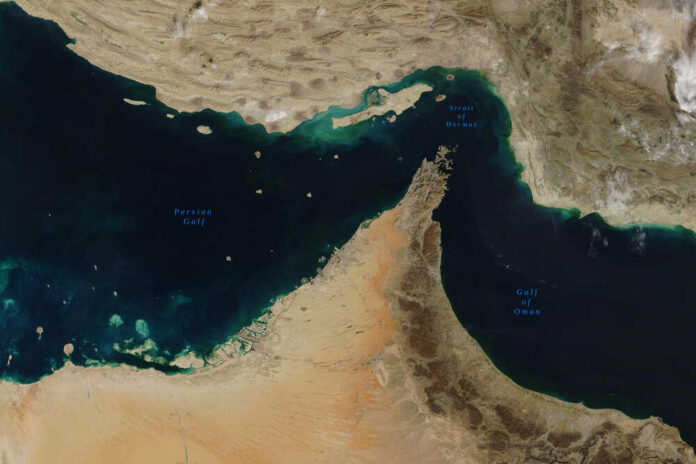
Rubio is warning that Iran’s plan to charge ships in the Strait of Hormuz could become a global chain reaction that punishes trade far beyond the Gulf.
Quick Take
- Secretary of State Marco Rubio says tolls in Hormuz would spread to other waterways like a contagion.[1]
- Rubio says the United States will not accept tolls or fees on an international waterway.[1][2]
- Iran says it wants service fees, not tolls, and says the legal line matters.[3]
- Maritime law sources cited in the reporting say transit passage through Hormuz cannot be blocked or taxed for mere passage.[1][2]
Rubio Draws a Hard Line on Hormuz
Secretary of State Marco Rubio said Thursday that if the United States accepts charges on the Strait of Hormuz, other waterways could follow the same path.[1] He told Gulf leaders that international waterways do not belong to one state and that letting a coastal power charge money for passage would create “total chaos.” His message matched the Trump administration’s push to keep the route open for global shipping.
Rubio’s warning matters because the Strait of Hormuz is one of the world’s most important energy chokepoints. Roughly one-fifth of global oil flows through the area, so even a small fee can ripple into higher costs for fuel, freight, and insurance. That is why his “contagion” line landed with force. If one state can tax passage there, critics say, other governments may try the same thing elsewhere.[1][2]
What Iran Says It Wants
Iran has tried to draw a legal distinction between a toll and a service fee. According to the reporting, Iranian officials say they are not seeking a transit toll, but fees for services rendered instead.[3] That distinction is central to the dispute. A charge for a real service can be legal under maritime rules, while a payment demanded simply to pass through a strait is treated very differently by the treaty framework cited in the coverage.[1][2]
That gap explains why the issue has become more than a technical debate. Iran’s critics see a thin label on the same basic idea: pay to pass, or stay out. The reporting notes that legal experts cited in the story say a toll for mere passage would clash with the rule that ships in international straits must enjoy continuous and expeditious transit.[1][2] Iran, meanwhile, says it is acting within its rights and is not accepting the same legal view.[2][3]
Why the United States and Allies Are Pushing Back
The pushback is not just about legal language. It is about control, leverage, and precedent. The United Nations text cited in the reporting says ships in straits used for international navigation have the right of transit passage and that such passage shall not be impeded.[15] The same legal materials also say states bordering the strait should not hamper that movement or suspend it. That is why Rubio framed the issue as a wider defense of open commerce, not a narrow regional fight.[15]
For readers already fed up with global games and government overreach, the dispute is easy to understand. A key trade route should not become a cash machine for any regime that sits beside it. The Trump administration’s stance is simple: keep the waterway open, keep commerce moving, and do not let a bad precedent spread. Rubio’s warning was meant to signal that the United States sees this as a line worth drawing now, before it hardens into custom.[1][2]
Sources:
[1] Web – Rubio warns Hormuz tolls would ‘spread like contagion’ to other …
[2] Web – TRT World – Who controls the Strait of Hormuz? Iran’s toll plan could …
[3] Web – The Legal Question of Tolling Hormuz
[15] Web – The International Law of the Sea, the Straits of Hormuz and regional …