
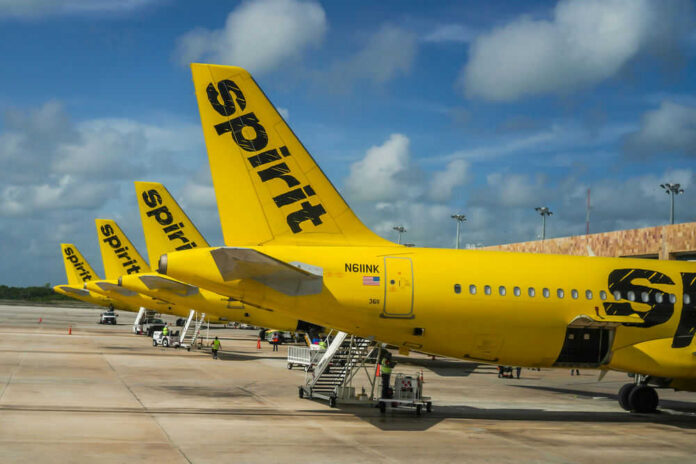
Washington is weighing a rare, single-company bailout for Spirit Airlines—testing whether “taxpayer-first” warrants can justify rescuing a chronically troubled carrier.
Story Snapshot
- The Trump administration is reportedly nearing a financing package of up to $500 million for Spirit Airlines as the ultra-low-cost carrier faces possible liquidation.
- The proposed structure would include government warrants to buy Spirit stock, potentially giving taxpayers upside if the airline recovers.
- Talks are still developing, with no finalized deal and limited public confirmation from Spirit, DOT, or the White House.
- Surging fuel costs tied to the war with Iran are a central pressure point for Spirit’s low-fare business model.
- Transportation Secretary Sean Duffy has publicly raised the core question: is this stabilizing jobs and service, or “good money” chasing an inevitable liquidation?
A developing rescue plan puts “no more blank checks” to the test
Reporting published April 22 says the Trump administration is close to a roughly $500 million financing package to keep Spirit Airlines flying as it teeters on the edge of liquidation. Unlike broad-based pandemic-era aid, this would be targeted at a single ultra-low-cost airline. The reported twist is warrants—an equity-like instrument—intended to give taxpayers a stake if Spirit rebounds, rather than a pure grant with no upside.
President Trump signaled openness to help in a televised interview, saying he’d prefer a buyer but that federal support might be appropriate. At the same time, the public record remains thin because the deal is not final and key parties have reportedly declined comment. That lack of formal confirmation matters for accountability, because the exact price tag, conditions, and repayment protections are the difference between a temporary bridge and a precedent-setting bailout.
Why Spirit is vulnerable: ultra-low fares meet geopolitical fuel shock
Spirit’s business model depends on rock-bottom base fares and add-on fees, which can work when fuel is stable and planes stay full. The current stressor is the opposite: fuel costs rising sharply amid the war with Iran, squeezing margins for carriers that have the least room to absorb higher inputs. Several reports describe Spirit as already financially fragile, with recent restructuring turmoil, making the airline especially sensitive to a sudden oil spike.
That combination—preexisting weakness plus a geopolitical cost surge—helps explain why the administration is even considering intervention. If fuel prices are the immediate trigger, policymakers still have to answer whether the underlying company is viable. For voters frustrated by years of “too big to fail” logic, the key policy question isn’t whether airlines are important; it’s whether a specific airline’s management and balance sheet warrant public risk, even during an external shock.
Duffy’s dilemma: protect workers and service without rewarding failure
Transportation Secretary Sean Duffy has framed the debate in plain terms: Spirit employs many people, but officials must avoid pouring money into an enterprise that ends up liquidated anyway. That tension is central to how conservatives and many populist Democrats now view governance—government should protect the public interest, but it should not socialize losses after private actors make repeated misjudgments. The administration’s approach appears to be balancing those competing concerns in real time.
Executives from low-cost carriers, including Spirit, are scheduled to meet with Duffy as the department assesses smaller carriers’ health amid fuel volatility. That detail suggests this is not only about one company’s survival; it’s also an early signal that oil-driven instability could ripple across the discount travel segment. If Washington moves forward, other struggling firms may argue they deserve comparable treatment, and lawmakers will face pressure to define consistent standards.
What warrants could mean for taxpayers—and what’s still unknown
The reported inclusion of warrants is designed to address the biggest political liability of bailouts: taxpayers take the downside while insiders keep the upside. Warrants can flip that script by giving the government a potential equity gain if the company recovers. Still, warrants are not a guarantee. If Spirit fails, the warrants are worthless, and taxpayers could still lose the cash outlay depending on the seniority and security of the financing.
https://t.co/O8WYpGTrvV
GOVT TO RESCUE SPIRIT AIRLINES… DEVELOPING…
$500 million in exchange for equity stake…— Billy Camou (@billycamou) April 22, 2026
Several key facts remain unclear in public reporting: the final amount, the interest rate or repayment terms, what operational changes Spirit must accept, and how the government would prevent the deal from becoming an open-ended subsidy. Until those terms are disclosed, the most responsible takeaway is that the administration appears to be considering a structured intervention with potential taxpayer upside—but the prudence of the move depends entirely on the final safeguards and Spirit’s real prospects in a high-fuel-cost environment.
Sources:
Trump Administration Nears $500 Million Rescue Deal for Spirit Airlines
Spirit, Duffy, bailout talks at DOT amid fuel pressures
Spirit Airlines Seeking Emergency Government Bailout To Avoid Liquidation