Florida’s attorney general is moving to subpoena OpenAI after court records suggest an accused campus gunman used ChatGPT for tactical help just before a deadly shooting.
Quick Take
- Florida Attorney General James Uthmeier announced an April 2026 investigation into whether ChatGPT aided planning for the 2025 Florida State University shooting.
- Court documents cited in reporting describe the suspect asking about firearms handling and when buildings were busiest, raising questions about AI “how-to” guardrails.
- Florida has no AI-specific law on point, so the probe is reportedly leaning on existing legal tools, including “public nuisance” concepts and subpoenas.
- OpenAI has said it identified the suspect’s account after learning about the attack and shared information with investigators.
What Florida is investigating—and why the timing matters
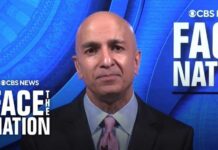
Florida Attorney General James Uthmeier said his office has opened an investigation into OpenAI and its ChatGPT product following reporting that the FSU shooting suspect interacted with the chatbot shortly before the 2025 attack at the student union that left two people dead and six injured. Uthmeier’s public statements emphasized public safety and national security, and indicated subpoenas were being prepared to examine potential dangerous uses.
Investigators and the public are now looking at a narrow but consequential question: when a tool can generate step-by-step guidance on everyday topics, where is the line between general information and instructions that materially help someone commit violence? In this case, the reporting points to queries that were not merely political or ideological, but practical—focused on firearms operation and crowd or building occupancy patterns.
What the court records reportedly show about ChatGPT’s role
According to the accounts summarized in multiple outlets, the suspect’s chat history included questions about firearms mechanics—such as removing a shotgun safety—along with questions aimed at timing and targeting, such as when a building would be busiest. Those details matter because they move beyond broad interest and into operational planning. The suspect remains in custody and is awaiting trial, and the full scope of the chat logs has not been publicly detailed.
The fact pattern also underscores a basic limitation in today’s AI safety debate: the public often sees “AI risk” as abstract until it becomes attached to an identifiable crime with documents, timestamps, and a clear victim community. When court records are involved, the discussion shifts from hypothetical harms to discoverable evidence—what was asked, what was answered, and whether policies and filters worked as intended at the time.
A state-level subpoena fight with Big Tech implications
Florida’s probe arrives as Republicans control Washington in Trump’s second term, but much of the real friction over tech governance still runs through states, attorneys general, and civil litigation. Florida reportedly lacks a dedicated AI statute, so the investigation is framed through existing authority and doctrines that can be applied to emerging technology. A Stetson law professor cited in coverage described “public nuisance” approaches as a way to pursue prevention even without AI-specific legislation.
For conservatives wary of unaccountable corporate power, this is a familiar dynamic: a high-impact product scales nationwide long before legislatures set clear rules, and the public pays the price when edge cases become tragedies. For liberals worried about discrimination or over-policing, the same investigation raises questions about surveillance, data access, and how aggressively states should push private platforms to police speech and information. The available reporting does not yet answer where Florida will draw those boundaries.
What OpenAI has said—and what’s still unknown
OpenAI has said it identified the suspect’s account after learning of the shooting and provided information to investigators, signaling at least some cooperation. That cooperation does not resolve the central policy question, though: whether a company’s internal safeguards and moderation standards are adequate when the stakes are life and death. The sources describing the probe also leave key details unsettled, including what prompts were entered, what exact outputs were returned, and what timeline investigators are using.
Florida Investigating ChatGPT Role in Mass Shooting https://t.co/EJpZlIqQFw
— WE News English (@WENewsEnglish) April 21, 2026
Until more documents are public, the strongest verified takeaway is procedural: Florida is using subpoenas and a public-safety framing to test how much responsibility an AI developer bears when its tool is allegedly used in a violent felony. If the investigation produces clearer facts about the model’s responses and the company’s guardrails, it could shape future state AI laws—or push Congress to clarify liability and standards rather than leaving it to prosecutors, courts, and after-the-fact tragedy.
Sources:
Florida Attorney General Investigates OpenAI/ChatGPT’s Role in FSU Mass Shooting
Florida investigates OpenAI, ChatGPT over deadly shooting