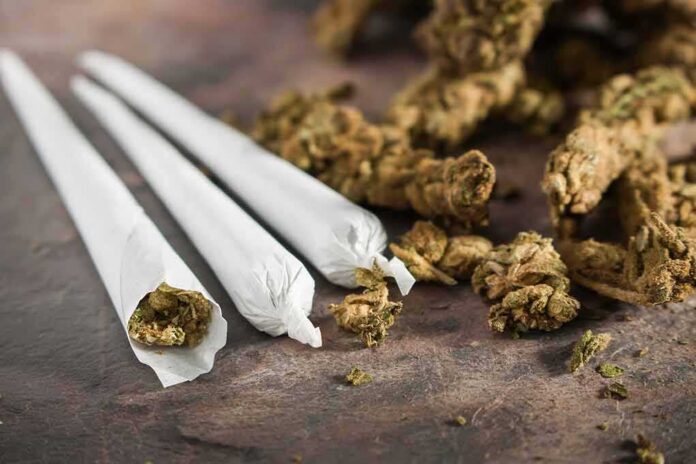
Young Americans are using marijuana at record levels, and the numbers show a trend that should worry every parent.
Quick Take
- Marijuana use among young adults has reached historic highs in federal survey data.
- Teen use has not risen in lockstep, but it remains widespread and daily use still shows up in high school seniors.
- National health data show cannabis use is often highest in the 18-to-25 age group.
- Experts note that daily or near-daily use is rising, which raises the risk of dependence.
Young Adult Use Keeps Setting Records
Federal researchers say marijuana use among young adults climbed to the highest levels ever recorded in the long-running Monitoring the Future study. The National Institute on Drug Abuse reported that past-year use, past-month use, and daily use among 19- to 30-year-olds all hit record highs in 2021, with daily use reaching 11 percent. That is not a minor shift. It is a sign that marijuana has become a regular habit for a large share of young adults.
The scale matters because young-adult use is now far above older survey benchmarks. The same federal report said past-year use reached 43 percent in 2021, up from 34 percent five years earlier and 29 percent ten years earlier. The National Institute on Drug Abuse has also said young-adult marijuana use and vaping were at historic highs in 2022. For readers who care about family stability and public order, that is not a harmless cultural change.
Teen Use Is Lower Than the Peak, But Still Troubling
Teen cannabis use has fallen from earlier highs in some surveys, but the problem is far from gone. A National Institutes of Health review of Monitoring the Future 2025 data said 26 percent of 12th graders, 16 percent of 10th graders, and 7 percent of 8th graders reported marijuana use in the past year. The same review said daily use still showed up in 0.7 percent of 8th graders and 5.1 percent of 12th graders, which means some high school seniors are still using almost every day.
The Centers for Disease Control and Prevention reported similar concerns. In 2022, 30.7 percent of high school 12th graders said they used cannabis in the past year, and 6.3 percent said they used it daily in the past 30 days. That level of use does not fit the claim that marijuana is now a harmless mainstream product for teenagers. It shows that many students are still exposed early, and some are using often enough to risk dependence and school problems.
The Risk Is Less About One Experiment and More About Repeated Use
Public-health sources point to frequency as the key warning sign. The National Institutes of Health said daily or near-daily cannabis use is rising, and that trend matters because heavier use is more likely to cause harm. In its review of cannabis markets, the National Institutes of Health said the share of people using cannabis on a daily or near-daily basis has grown faster than overall use. That pattern suggests marijuana is not just more common; it is becoming more embedded in daily life.
That shift also changes the policy debate. One study summarized in the research package said adolescent use has been stable or lower in some recent periods, while young-adult use has risen since 2002. Another federal summary said marijuana use is most prevalent among people ages 18 to 25. Put plainly, the burden is moving toward the age group that is most likely to be building careers, families, and stable habits. That makes the trend more than a numbers game.
What the Data Say About the Bigger Picture
The broader picture is mixed, but the warning signs are clear. Some federal and academic sources say adolescent use has stabilized or fallen in recent years, while young-adult use has kept climbing. That split matters because headlines often blur teen and young-adult trends into one story. Even so, the data still show a large pool of young users, frequent use among a meaningful minority, and a growing move toward daily use. Those facts support real concern.
For conservative readers, the lesson is simple. Public policy should not pretend that a drug becomes safe because it is common. The research here shows that marijuana use is deeply rooted among young adults and still present at troubling levels in high school. Federal health sources also warn that frequent use is rising. If policymakers want to talk honestly about health, education, and family responsibility, they need to face those numbers instead of downplaying them.
Sources:
redstate.com, cdc.gov, learnaboutsam.org, sciencedirect.com, pmc.ncbi.nlm.nih.gov, publichealth.columbia.edu, ncbi.nlm.nih.gov