
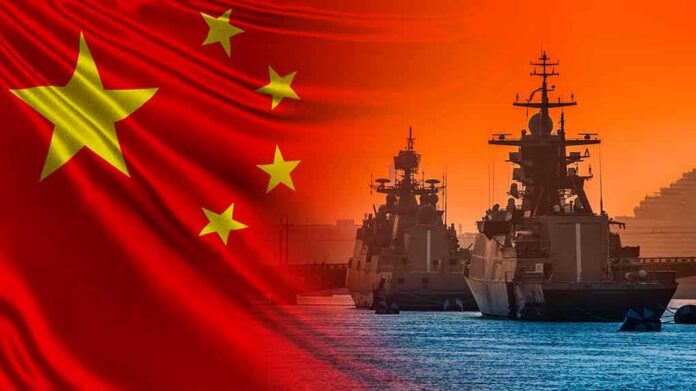
A sweeping purge left China’s Taiwan-facing command without a permanent leader for nine months, exposing real cracks in Beijing’s war planning.
Story Highlights
- China’s Eastern Theater Command, key to a Taiwan fight, sat without a commander for months in 2025.
- Dozens of generals across services were removed, creating gaps in top command seats.
- Analysts say joint operations could suffer under acting leaders and inexperienced replacements.
- Beijing claims purges boost loyalty, but near-term combat readiness likely took a hit.
Key Command Gap on the Taiwan Front
Center for Strategic and International Studies reported the Eastern Theater Command had no commander from March through December 2025. That command directs operations opposite Taiwan. The vacancy came amid broader removals and left a critical post unfilled during rising cross-strait tensions. Analysts said the gap matters because this theater would coordinate air, sea, missile, and amphibious actions in the opening phase of any Taiwan crisis, where speed and trust in senior leaders are essential.
Reporting also linked the October 2025 shake-up to the removal of General Lin Xiangyang, who led the Eastern Theater Command. Other senior figures with combat or operational standing were sidelined. Jamestown described the loss of seasoned leaders such as Zhang Youxia and Liu Zhenli as a blow to experience inside the top ranks, at least in the short term. These steps signaled political control from Beijing, but they also erased institutional memory during a volatile period.
Purge Breadth and Joint-War Risks
The Institute for National Security and Security Studies said dozens of generals were removed across the Army, Navy, Air Force, Rocket Force, and People’s Armed Police. It noted several services lacked formally appointed commanders or political commissars, and even the Political Work Department lacked a director. Chiefs of staff or deputies handled daily tasks, but acting setups are not a full substitute for confirmed authority in crisis. Complex joint war plans depend on stable chains of command.
Center for Strategic and International Studies assessed that such vacancies could hinder any large campaign against Taiwan. A cross-strait fight would need national mobilization and integrated joint operations among several services and theater commands. Analysts warned that gaps and churn at the top complicate planning, rehearsal, and execution under pressure. ThinkChina echoed that concern, noting that inexperienced replacements and acting appointments can weaken joint command performance while the purge cycle continues.
What Continued, What Slowed, and What It Means
Breaking Defense reported that China still operated around Taiwan during the purge period and even moved a third aircraft carrier through the strait. It also said the Eastern Theater Command planned and ran an exercise, called Justice Mission 2025, in 12 days. Those facts show routines did not stop, and Beijing can surge activity for signaling or coercion despite leadership churn. The activity does not, by itself, prove readiness for a major joint invasion.
Xi Jinping's purges have hollowed out China's top military command. But a leadership shake-up doesn't erase Beijing's military capabilities or the risks facing Taiwan.#China #Taiwan #PLAhttps://t.co/aPKqS0gN2D pic.twitter.com/QsmkFH8ShI
— The Storm Media English News 風傳媒英文新聞 (@StormMedia_eng) November 11, 2026
Analysts offered mixed judgments on timing and impact. Jamestown said disagreements over modernization likely fed the cleanout and argued the force might not be ready for a Taiwan contingency in 2027, though plans already exist. Center for Strategic and International Studies added that Xi aims to root out corruption and ensure absolute loyalty, but near-term combat readiness likely suffered even as political reliability rose. In plain terms: loyalty up, experience down, and risk higher if a crisis breaks now.
How to Read Beijing’s Spin Versus the Risks
Chinese voices friendly to the purge say removing corrupt officers will strengthen cohesion and combat power over time. Center for Strategic and International Studies acknowledged that goal, noting the push to modernize and to enforce political control across the force. But the nine-month leadership hole opposite Taiwan, plus broad vacancies across services, points to a current-period readiness tax. War planning depends on confirmed leaders who can task, rehearse, and act without political fog.
For American readers, the bottom line is clear. Xi Jinping’s purge has created real friction in the very command that would lead a Taiwan fight, even as routine shows of force continue. President Trump’s team must factor both truths into deterrence: China can pressure and probe, but a full joint assault is harder when senior chairs sit empty or newly filled. Clear U.S. strength, tight alliances, and stable energy and supply lines help keep that pressure from becoming a shooting war.
Sources:
warontherocks.com, thinkchina.sg, breakingdefense.com, jamestown.org, csis.org, world.storm.mg