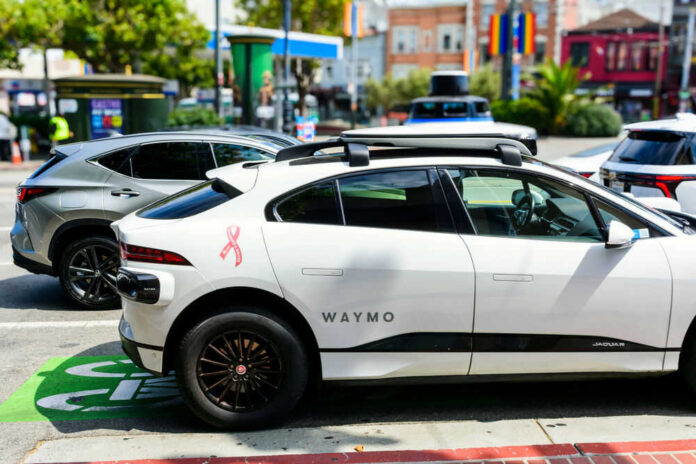
A federal crackdown meant to keep Chinese car tech out of America is being sidestepped in California—one “stripped” robotaxi at a time.
Quick Take
- Waymo is deploying Chinese-made Zeekr vehicles in California by importing them as “gliders” without telematics or connected software, then installing U.S.-sourced systems after arrival.
- Commerce Department rules target Chinese and Russian “connected vehicle” hardware and software over national security and privacy concerns tied to data collection.
- Proposed timelines would restrict Chinese connectivity software by model year 2027 and key hardware later in the decade, but today’s workaround exploits what counts as “connected” at the border.
- Sen. Bernie Moreno is signaling legislation to close loopholes and push broader bans on Chinese cars and parts, escalating pressure on automakers’ supply chains.
How a “glider” loophole put Chinese-built robotaxis on California streets
Waymo, Alphabet’s autonomous vehicle unit, has been linked to a strategy that imports Chinese-made Zeekr vehicles into California as incomplete “base vehicles” or “gliders.” The core idea is straightforward: remove telematics and other data-transmitting components before import so the chassis is not treated as a Chinese “connected vehicle,” then add the autonomous-driving and connectivity stack domestically. Reports describe the Zeekr platform being rebranded as “Ojai” in this deployment.
The practical effect is that Chinese manufacturing enters the U.S. market through business-to-business fleet operations rather than direct consumer sales. Because the vehicles are brought in without the features regulators worry about most—such as connectivity modules and related software—the import can appear compliant under the narrow definition being enforced at the point of entry. That distinction matters in California, where dense cities and permissive testing conditions make robotaxi scale-ups particularly attractive.
Why Washington is targeting connected cars—and what the rules actually say
Commerce Department restrictions and proposed rules focus on the national security and privacy risks of modern vehicles that continuously collect and transmit data. Officials have warned that cameras, microphones, GPS, Bluetooth, Wi‑Fi, satellite links, and advanced driver-assistance software can create a pipeline for sensitive information. The key policy question is less about sheet metal and more about who controls the systems that sense, store, and transmit data—and whether foreign adversaries could access it.
Regulators have pointed to the reality that connected vehicles operate like rolling networks, and the risk profile grows as fleets expand. Proposed timelines described in reporting would prohibit certain Chinese connectivity software by model year 2027 and restrict covered hardware later, with dates stretching into the end of the decade. That delayed implementation creates a window where firms can engineer compliance through supply-chain design—especially if the restrictions hinge on what hardware and software crosses the border.
The political squeeze: closing loopholes versus preserving innovation
Sen. Bernie Moreno has publicly indicated he wants to stop Chinese vehicles and parts from gaining footholds in the U.S., framing the issue around data privacy and the potential for misuse of driver information. That political push is part of a broader Washington trend: even when parties disagree on most issues, China-related security concerns often produce unusual alignment. Still, the debate over how far to go is likely to split along familiar lines of regulation, industry impact, and costs.
Waymo’s position, as described in reporting, is that importing non-connected gliders and installing U.S.-sourced systems after import neutralizes the core security threat. Critics respond that the underlying platform still ties America’s transportation future to Chinese industrial capacity, and they worry loopholes can become precedents. For voters already frustrated that federal agencies often regulate in slow motion, this looks like another example of rules that sound tough but leave workarounds for well-resourced players.
What it means for supply chains, tariffs, and ordinary drivers
Economically, this approach can reduce costs for a robotaxi operator by importing a partial vehicle and paying tariffs on an incomplete chassis rather than a fully connected, fully assembled vehicle. Over time, however, regulators could tighten definitions or Congress could legislate broader bans that erase the distinction between “connected” and “not connected” at import. That uncertainty is now part of the business calculus for any company building fleets in America.
High-tech Chinese cars pop up in California thanks to legal loophole, tempting drivers https://t.co/5DpfAx0xce pic.twitter.com/fZzHJFQoBm
— New York Post (@nypost) April 30, 2026
For consumers, the issue is less about whether a car looks “high-tech” and more about who controls data and infrastructure behind the scenes. For conservatives skeptical of globalized supply chains and elite carve-outs, the biggest takeaway is how quickly sophisticated actors can route around policy. For liberals concerned about privacy and surveillance, the data-risk argument still lands even if the manufacturer’s badge is hidden. Either way, the episode underscores a shared complaint: government rules often lag technology, and loopholes tend to favor the biggest players.
Sources:
High-tech Chinese cars pop up in California thanks to legal loophole, tempting drivers
US crackdown on Chinese hardware, software in connected vehicles