

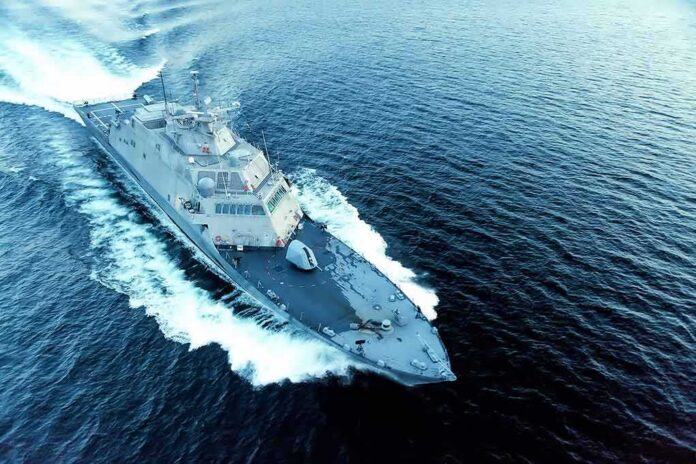
U.S. forces destroyed an Iranian-affiliated boat that officials say was tracking and targeting American warships in the Gulf of Oman.
Story Highlights
- U.S. Central Command said forces destroyed an Iranian-affiliated dhow on October 6 after it surveilled and targeted U.S. Navy ships.
- Crews removed personnel from the vessel before destruction; repatriation is underway.
- Associated Press and other outlets reported the same timeline and allegation, citing U.S. Central Command.
- U.S. Central Command released video showing the vessel’s destruction.
What U.S. Central Command Says Happened
U.S. Central Command said that on October 6, American forces destroyed an Iranian-affiliated dhow in the Gulf of Oman. The command stated the boat had been conducting surveillance and targeting U.S. Navy ships. The statement added that the crew was taken off the vessel before it was destroyed and that repatriation efforts are in progress. Associated Press reporting repeated those details and the date, citing the U.S. military’s account of the operation in the same region.
U.S. Central Command also released video that shows the moment the dhow was destroyed. The clip documents the strike but does not claim to show the earlier behavior that led to the action. The U.S. account identifies the vessel as Iranian-affiliated, signaling it was not treated as a random civilian craft. The military framed the move as a direct answer to a threat against U.S. ships operating in a crowded and strategic waterway.
Why the Gulf of Oman Matters to American Security
The Gulf of Oman sits next to the Strait of Hormuz, a choke point for global oil and gas. Heavy commercial traffic and narrow seas make it a prime place for “gray-zone” tactics, where hostile states use small boats and deniable assets to harass or track ships without starting open war. Scholars describe Iran’s use of such methods to pressure rivals and test limits while avoiding a full-scale clash in the region’s key lanes.
American leaders have long said that safe shipping is a core national interest. When hostile actors use small, unmarked vessels to shadow or target U.S. warships, the risk can grow fast. A dhow can blend in with fishing traffic yet feed targeting data to hostile forces. That threat is not abstract when U.S. sailors are on deck and seconds matter at sea. The October 6 action signaled that the United States will act to stop scouts before a strike forms.
How This Fits Iran’s Playbook and U.S. Deterrence
Public reporting and expert work describe Iran and its partners using spotters, drones, and disguised platforms to track ships and cue attacks. Analysts say human spotters can replace damaged coastal radars and give live updates on U.S. movements. That method raises risk for American crews and for civilian mariners who share the same waters. U.S. Central Command has warned that Iranian forces have threatened mariners across the region in recent months.
The U.S. strike removed the boat after pulling the crew, which shows a focus on the capability, not the people. That approach aims to lower risk to life while still stopping the threat. It also backs up a simple rule at sea: if you help target U.S. ships, you lose that tool. Deterrence needs clear lines and quick action, or bad actors keep pushing. The administration’s posture here supports that standard and protects Americans on the water.
What We Know, What Comes Next
Reports so far line up on the date, location, and U.S. claim that the dhow conducted surveillance and targeting against U.S. Navy ships. The military has not publicly shared the boat’s identity or technical proof of the alleged tracking. The core fact remains: U.S. forces removed the crew and destroyed the vessel, and the command released video of the strike. That public step helps warn hostile operators who try to hide in normal traffic near Hormuz.
For American readers, the bottom line is clear. America’s sailors deserve freedom to operate without being hunted in a busy sea lane. The Gulf of Oman is vital to our economy and to our allies. When Iran-linked assets shadow our ships, the risk can reach our fuel prices, our supply chains, and our national security. President Trump’s team sent a sharp message on October 6: target U.S. warships, and you will lose the means to do it. That keeps pressure off our families and our fleet.
Sources:
facebook.com, apnews.com, gulfnews.com, x.com, article.wn.com, english.alarabiya.net